As Tirana enters the technical phase of EU accession negotiations, the elevation of a seasoned multilateral diplomat signals a shift from political advocacy to institutional diplomacy.
by Ardit Rada (Tirana)
In the corridors of Brussels, the meaning of Albania’s latest diplomatic appointment was understood almost immediately. By naming career diplomat Ferit Hoxha as Minister for Europe and Foreign Affairs, Tirana has signaled that the next phase of its European journey will be driven less by political advocacy and more by institutional diplomacy.
For more than three decades, Albania’s foreign policy has been anchored in a single strategic objective: integration into the Euro-Atlantic community. That ambition produced two historic milestones — accession to NATO in 2009 and the opening of negotiations with the European Union. Yet the stage now unfolding is fundamentally different from the one that preceded it.
The question is no longer whether Albania wishes to join Europe’s political and economic structures. The question is whether it can successfully navigate the intricate institutional process required to get there.
In that context, the appointment of a diplomat who has spent much of his career operating inside the very institutions Albania seeks to join is not accidental.
A diplomat shaped by the institutions Albania seeks to enter
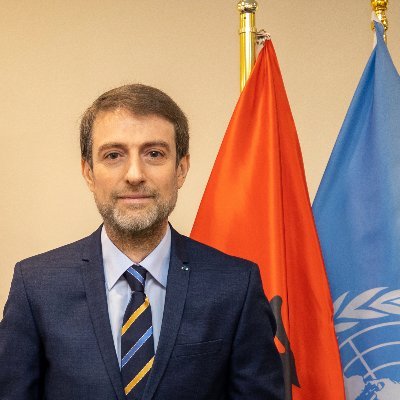
Ferit Hoxha belongs to the generation of Albanian diplomats whose professional lives developed alongside the country’s Western integration. Over the past two decades, he has served in three of the most consequential arenas of contemporary diplomacy: NATO, the United Nations, and the European Union.
As Albania’s Ambassador to NATO, Hoxha participated in the diplomatic effort that culminated in the country’s accession to the alliance in 2009 — a strategic milestone that firmly anchored Albania within the Western security architecture.
He later served as Permanent Representative of Albania to the United Nations, representing the country during its 2022–2023 term on the UN Security Council. For a small state, participation in the Security Council constitutes a rare moment of direct involvement in the core debates shaping global security.
During that period Albania aligned consistently with Western positions on Russia’s invasion of Ukraine and broader questions of international order. In several sessions when Albania held the rotating presidency of the Council, Hoxha chaired debates involving the world’s major powers — a role that requires both procedural discipline and diplomatic restraint.
Such experience is uncommon among diplomats from smaller European states, yet it reflects the increasingly multilateral nature of Albania’s diplomacy.
Brussels: the center of Albania’s strategic horizon
Before returning to Tirana to lead the foreign ministry, Hoxha served as Ambassador of Albania to the European Union, arguably the most strategically significant diplomatic post in the Albanian system.
Brussels is where the mechanics of EU enlargement unfold. It is the arena where candidate countries negotiate alignment with European law, cultivate political support among member states, and manage the technical chapters that structure accession negotiations.
The environment has grown increasingly complex in recent years. While the European Union has reaffirmed its commitment to enlargement, several member states remain cautious about expanding the bloc too quickly. At the same time, geopolitical pressures — particularly Russia’s war in Ukraine — have renewed the strategic importance of integrating the Western Balkans into the European project.
Operating effectively within this landscape requires an intimate understanding of the institutional culture of Brussels: the pace of negotiations, the informal networks that shape decision-making, and the internal political dynamics among EU capitals.
Hoxha arrives in his new role already familiar with that terrain.
From political advocacy to technical diplomacy
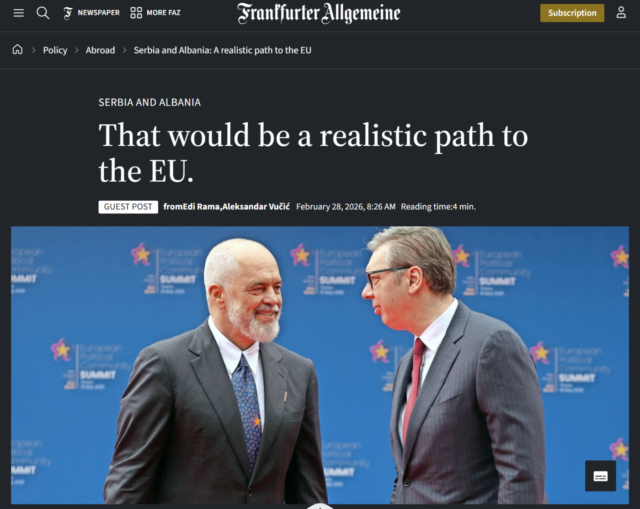
For Prime Minister Edi Rama, the elevation of Hoxha to the position of foreign minister reflects a subtle recalibration of Albania’s diplomatic posture.
Over the past decade, Tirana’s European ambitions were articulated primarily through political messaging. Albania presented enlargement as both a moral obligation and a geopolitical necessity for the European Union, arguing that the Western Balkans belong firmly within Europe’s institutional framework.
Yet accession negotiations require a different form of diplomacy.
Once negotiations begin in earnest, progress depends less on political rhetoric and more on the patient management of regulatory alignment, institutional reform, and diplomatic persuasion among EU member states. The process involves dozens of policy chapters ranging from judicial reform to market regulation, each requiring technical expertise and sustained engagement with European institutions.
In that environment, career diplomats often possess a distinct advantage.
Why Brussels pays attention to profiles
Within the European Commission and among diplomats from member states, the professional background of foreign ministers in candidate countries is followed more closely than public headlines might suggest.
Enlargement negotiations depend heavily on trust and predictability. Ministers who understand the procedural culture of EU institutions tend to inspire greater confidence among their counterparts. Their presence suggests that negotiations will be conducted through institutional channels rather than domestic political spectacle.
In that sense, Hoxha’s appointment has been interpreted by some observers as a signal that Albania intends to approach the next phase of accession through disciplined diplomacy.
For Brussels, such signals matter.
What Hoxha brings to Albania’s diplomatic strategy
The new foreign minister brings three assets that are particularly relevant at this stage of Albania’s European path.
Institutional fluency.
Having served within NATO, the United Nations, and the EU system, Hoxha understands the internal logic of the institutions that shape Albania’s foreign policy environment.
Diplomatic networks.
Years spent negotiating in Brussels and New York have allowed him to cultivate relationships across European and transatlantic diplomatic circles — relationships that often play a quiet but decisive role in advancing negotiations.
Strategic discipline.
Career diplomats are trained to balance public messaging with private negotiation. In accession talks, progress frequently depends less on public declarations than on quiet persuasion within institutional frameworks.
Albania’s next diplomatic chapter
The broader geopolitical environment underscores the significance of this moment.
Russia’s war in Ukraine has revived the strategic debate about enlargement inside the European Union. For many policymakers in Brussels and key European capitals, the Western Balkans are increasingly viewed through the lens of geopolitical stability as well as democratic reform.
For Albania, this evolving context presents both opportunity and scrutiny. The renewed strategic importance of the region may accelerate political momentum for enlargement, yet it also raises expectations regarding institutional reform and governance standards.
Navigating that dual pressure will require sustained diplomatic engagement with European institutions and member states.
A marathon rather than a moment
The transition from ambassador to foreign minister places Hoxha in a position where technical diplomacy and political leadership intersect.
Albania’s European future will not be determined by a single summit or declaration. It will emerge through years of negotiation, legislative alignment, and quiet diplomacy within European institutions.
That process resembles a marathon more than a political campaign.
In such a race, experience inside the system often proves decisive.
And the institutions that will shape Albania’s European future are precisely the institutions where Ferit Hoxha has spent much of his diplomatic career.
About the Author
Ardit Rada is a Tirana-based journalist covering Albanian politics, governance, and institutional developments. His work focuses on the intersection of domestic political dynamics and Albania’s European trajectory.