by Bekim Besimi (Venice, Italy)
Economist Irena Beqiraj published a critique this week of Albania’s 2025 foreign direct investment figures that deserves a careful answer. Her argument is structurally sound and her instinct is correct. The execution has a flaw at its statistical center that matters enough to address directly.
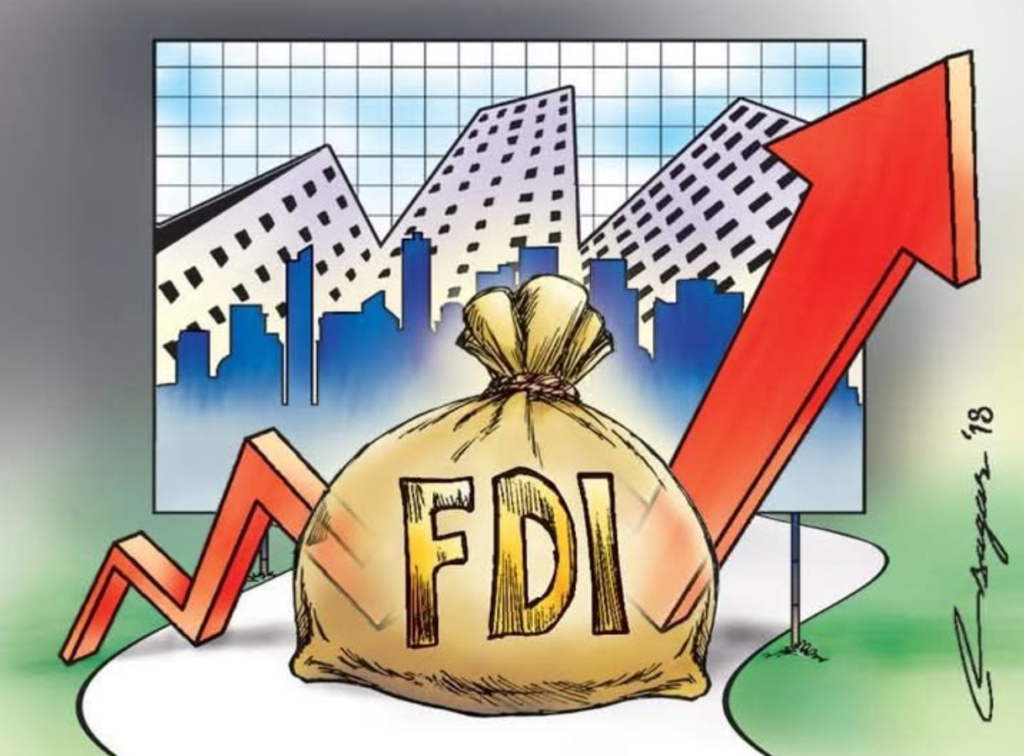
Her case runs as follows. Total FDI reached 1.64 billion euros, up 3.5 percent on the year. The government presented the headline as economic validation. But the composition tells a different story: 51 percent is reinvested earnings from existing foreign companies, 31 percent is real estate purchases by non-residents, and only 18 percent flows into sectors such as financial intermediation, banking, and energy. An economy drawing the bulk of its foreign capital from retained profits and property transactions is not building productive capacity. Volume without structure is not development.
That thesis is directionally right. The numbers used to support it carry a statistical distortion Beqiraj does not account for, and a sectoral collapse that weakens her strongest point.
The 51 percent is partly a currency effect.
Reinvested earnings are reported in lek by the foreign companies that generate them, then converted to euros by the Bank of Albania for balance of payments reporting. The euro value of those earnings therefore moves with the exchange rate, independent of any change in actual investment activity. The lek strengthened 8.6 percent against the euro in 2023 and a further 7.4 percent in 2024, a cumulative appreciation of roughly 16 percent over two years. The Bank of Albania has itself flagged this distortion, noting that lek appreciation statistically inflates the reinvested earnings figure in euro terms and creates what it described as a vicious circle in the reported data.
Think of it this way: a hydrocarbon company retaining the same lek-denominated profit it retained the year before will appear in the FDI statistics to have increased its reinvestment, simply because those lek are now worth more euros. No new capital commitment has occurred. The number grew because the currency moved. Treating the 51 percent share as a clean behavioral signal, without controlling for this effect, means the foundational figure of the entire critique is partially inflated before the analysis begins.
The 51 percent is also not one thing.
Even setting aside the currency effect, reinvested earnings is an accounting category, not an economic behavior. The relevant question is which sectors are doing the reinvesting. Bank of Albania data show that reinvested profits are concentrated particularly in hydrocarbon extraction and the banking and financial services sector, both driven by high capital requirements and, in the case of banking, by rising regulatory capital adequacy thresholds imposed by the Bank of Albania itself. A commercial bank retaining earnings to meet a regulatory capital requirement is not recycling low-productivity rents. A hydrocarbon company expanding extraction capacity is not equivalent to a real estate developer funding the next coastal apartment block. Collapsing all three into a single 51 percent figure and reading it as evidence of economic stagnation conflates an accounting aggregation with a development judgment.
The point is not that reinvested earnings are irrelevant. It is that they cannot be read as a single signal, and a critique built on that single reading is standing on softer ground than it appears.
The real estate concern is the solid ground.
Real estate FDI reached 253 million euros in the first half of 2025, a 40 percent increase over the same period of the prior year and the highest figure ever recorded for that interval, with foreign nationals accounting for approximately 15 percent of apartment sales. Real estate investment does not transfer technology, does not create high-skill employment, and does not build export capacity. It also does something more immediately damaging: it drives asset inflation, pulls construction labor out of productive sectors, and concentrates public regulatory attention on permit pipelines rather than industrial policy. The distortion is not only structural. It is allocative, and it compounds annually.
The more precise version of the concern, however, is not simply that real estate FDI is suboptimal. It is whether that concentration is crowding out productive investment through competition for land, permits, and public policy attention, or whether it is filling a demand vacuum that no manufacturing incentive would displace. That distinction carries different policy implications, and Beqiraj’s analysis stops before reaching it.
The residual 18 percent is where the argument loses precision.
In the fourth quarter of 2025, financial intermediation accounted for 17 percent of FDI flows, energy for 9 percent, and hydrocarbons for 6 percent, with transport contributing a further 5 percent. Energy and hydrocarbons together represent capital-intensive, higher-wage sectors with longer investment horizons and, in the case of renewables, direct alignment with Albania’s EU accession requirements. Treating this as an undifferentiated afterthought compresses the most analytically interesting portion of the FDI structure into a footnote in order to sharpen a rhetorical contrast that the data do not fully support.
The honest diagnosis.
In 2024, real estate led all sectors at 379 million euros in FDI, followed by the extractive sector at 214 million euros and manufacturing at 173 million euros. Manufacturing FDI is present. It is not dominant. That is the precise version of the structural problem: productive sectors exist in Albania’s FDI base but carry insufficient weight to drive a productivity shift. The economy is not failing to attract capital. It is not yet capable of converting the capital it attracts into the kind of sustained productivity growth that changes wage structures and closes the gap with EU peers.
That is a harder problem than a poorly structured FDI headline, and it has no solution that operates on the investment statistics alone. It requires a serious account of what Albania’s factor endowments, regulatory environment, and infrastructure base can realistically support over the next decade, and what policy instruments would shift the composition rather than merely criticize it.
Beqiraj is right that volume is not validation. But a distorted number produces a distorted diagnosis, and a distorted diagnosis produces policy pressure aimed at the wrong target.
Albania’s problem is not that it attracts the wrong capital. It is that it has not yet built an economy capable of forcing capital into the right uses.
Bekim Besimi writes from Venice, Italy, where he contributes to The Tirana Examiber with a focus on economic governance, public finance, and fiscal transparency in the Western Balkans. His reporting examines how political narratives intersect with budgetary realities and institutional data.