Germany helped anchor stability in the Western Balkans through the Berlin Process. But when democratic standards appear unevenly enforced in Tirana, the credibility of that legacy — and Europe’s leverage in the region — comes under quiet strain.
by the Editorial Board
Germany has not been silent in the past.
When political violence erupted in Albania in previous years, the German Embassy in Tirana and senior Bundestag voices were clear: violence has no place in democratic politics, and EU-aspiring countries must uphold peaceful standards of contestation. That clarity mattered. It signaled normative symmetry. It reinforced credibility.
The current moment, however, feels different.
Recent opposition protests in Tirana have failed to broaden into civic mobilization and instead narrowed into partisan actions marked by episodes of targeted street violence, including incendiary attacks on public and private property. These actions do not threaten the Albanian state. But they erode democratic norms.
What is increasingly noticed in Tirana is not the existence of EU engagement — but the tonal imbalance.
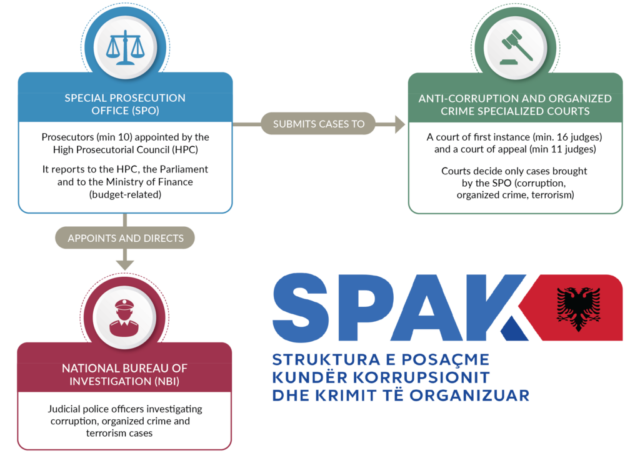
Germany has been exacting, precise and persistent in its expectations toward the Albanian government: judicial reform benchmarks, anti-corruption enforcement, institutional independence, procurement standards. The language has been structured, technical, and firm — as it should be within an accession framework.
Yet when street radicalization occurs, the clarity appears less pronounced.
Even if Berlin has previously condemned violence in general terms, the absence of equally forceful signaling in the present moment creates perception risk. And in the Western Balkans, perception risk quickly becomes political reality.
Democratic conditionality cannot operate asymmetrically.
When incumbents face granular scrutiny while opposition radicalization is addressed with softer vocabulary, the enlargement architecture begins to look uneven. Whether this imbalance is intentional is irrelevant. What matters is how it is interpreted.
And interpretation is strategic currency in the Balkans.
Russia’s influence in Southeast Europe does not depend on military presence in Albania. It depends on narrative opportunity. Moscow thrives on the claim that European standards are selectively applied, that Brussels speaks the language of rule of law while practicing political flexibility.
If ambiguity emerges in moments of democratic strain, the Kremlin’s narrative requires little fabrication.
The risk is not immediate destabilization. It is gradual erosion of normative authority.
Here lies the deeper issue: this moment is also a test of the Berlin Process legacy.
The Berlin Process was conceived as Germany’s stabilizing doctrine for the Western Balkans — a framework grounded in connectivity, institutional reform, and rule-based convergence with Europe. Its strength has always rested on one premise: standards apply universally.
If enlargement policy is perceived as uneven — strict toward governments, elastic toward opposition actors deploying coercive tactics — then the Berlin Process risks losing the moral symmetry that made it credible.
Germany’s authority in the region has never derived from volume of intervention, but from consistency of principle.
Reform must be mandatory.
Violence must be unacceptable.
Standards must be universal.
Berlin does not need escalation.
It needs balance.
In the Western Balkans, even tonal differences are amplified. Silence — or softer emphasis — can be interpreted as positioning. And positioning in this region rarely remains contained within national borders.
If Germany wishes to preserve its stabilizing role and protect the credibility of enlargement, this is not a moment for ambiguity.
It is a moment for symmetrical clarity.
Because in Southeast Europe, credibility once diluted is extraordinarily difficult to restore.