By equating Iran strikes with 1999, Belgrade contests the moral foundation of American power — even as it seeks deeper ties with Washington.
In Washington, Serbia’s diplomacy speaks the language of partnership. It emphasizes economic cooperation, energy security, regional stability, and constructive engagement with the United States. The tone is measured. The message is convergence.
In Belgrade, the message is different.
Responding to U.S. and Israeli strikes against Iran, President Aleksandar Vučić drew a direct parallel to NATO’s 1999 intervention against the regime of Slobodan Milošević. He suggested that the humanitarian rationale of 1999 had been a pretext — that the true objective was regime change in Belgrade and the separation of Kosovo. He framed current American action through that same interpretive lens.
This is not routine commentary. It is doctrinal positioning.
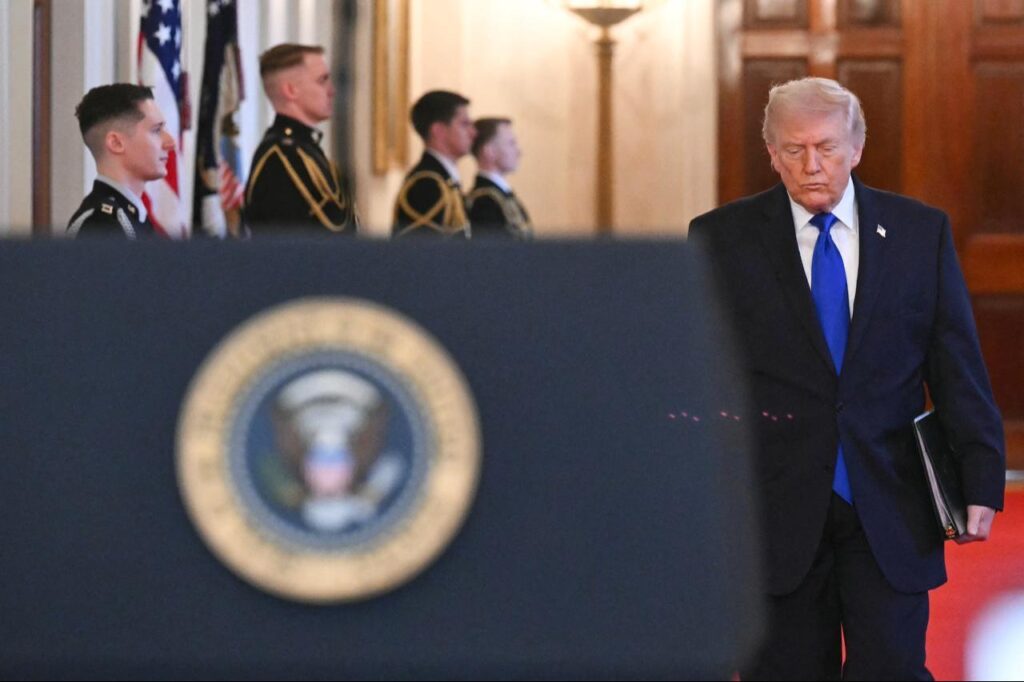
While Serbia’s foreign minister, Marko Đurić, presents Serbia in Washington as a pragmatic strategic partner, Vučić’s remarks publicly question the moral foundation of the very intervention doctrine now being executed by President Donald Trump.
That divergence is no longer subtle.
Reframing American Power
Within American strategic thinking, the 1999 campaign undertaken by NATO remains a defining moment of post–Cold War intervention. It was debated and contested, but it came to represent force employed to halt ethnic cleansing and regional destabilization.
When Vučić characterizes that intervention as grounded in deception, he is not merely revisiting historical grievance. He is reframing American power projection as structurally manipulative — cloaked in humanitarian language but driven by regime engineering.
By extending that framing to current U.S. action against Iran, Belgrade signals that it views American intervention doctrine itself as suspect.
Allies may differ on tactics. They do not typically dispute foundational legitimacy.
This distinction matters.
The Washington Conversation vs. The Belgrade Narrative
Serbia’s diplomatic engagement in Washington has emphasized strategic maturity: dialogue over confrontation, balance over escalation, partnership over isolation. That language suggests a state seeking deeper integration into transatlantic economic and security structures.
But foreign policy credibility depends on coherence across audiences.
If Serbia reassures Washington of partnership while its president publicly equates American intervention with deception and destabilization, policymakers must determine which message reflects Serbia’s enduring orientation.
Is Serbia a state seeking alignment within a transatlantic security architecture?
Or is it a state preserving strategic distance while benefiting from Western engagement?
That is not a moral indictment. It is a structural question.
The Regional Contrast
The contrast in the Western Balkans is instructive.
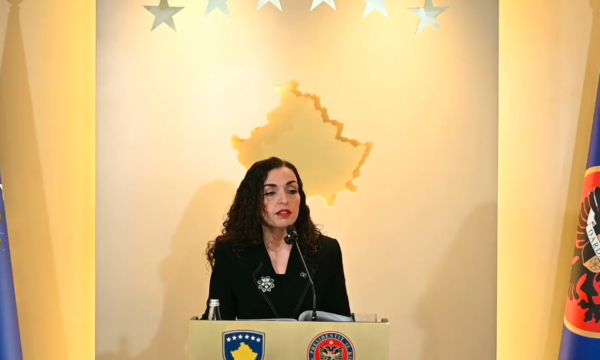
Vjosa Osmani publicly supported U.S. action and framed it within a doctrine of deterrence and democratic solidarity. Edi Rama went further, urging formal designation of the Islamic Revolutionary Guard Corps as a terrorist organization — aligning Albania’s legal posture with American classification.
These positions may generate debate within the European Union. But they do not contest the legitimacy of American intervention doctrine. They operate within it.
Kosovo’s alignment, in particular, is not transactional. It is ontological. Its sovereignty emerged from the very intervention doctrine Serbia now questions. To challenge the legitimacy of that doctrine is, implicitly, to question the moral architecture that underwrites Kosovo’s statehood — and by extension, American credibility in the region.
That is the deeper divide.
For Kosovo and Albania, alignment with Washington reinforces sovereignty.
For Serbia, revisiting 1999 remains central to preserving strategic autonomy and domestic legitimacy.
The difference is doctrinal, not rhetorical.
Strategic Flexibility and Its Limits
For years, Serbia has pursued a balancing strategy: advance European Union accession, maintain ties with Russia and China, deepen economic cooperation with the United States, and preserve military neutrality.
Balancing offers flexibility. But flexibility depends on ambiguity.
Ambiguity narrows when doctrinal skepticism becomes explicit.
When the head of state publicly questions the moral legitimacy of American intervention while diplomats privately cultivate partnership, strategic flexibility risks appearing as strategic ambivalence.
Washington does not demand uniformity. It does track reliability.
The United States can accommodate nuance in policy differences. It cannot anchor long-term regional strategy on partners who contest its foundational legitimacy while seeking its economic and security engagement.
The Question Before Washington
The issue is not whether Serbia must endorse every U.S. action. Sovereign states retain independent judgment.
The issue is coherence.
If Serbia views American intervention doctrine as structurally deceptive — rooted in 1999 and replicated in 2026 — then Washington must reassess how it interprets Belgrade’s assurances of partnership.
Diplomatic language signals intent. Presidential doctrine signals worldview.
Which signal is authoritative?
In an era of renewed geopolitical competition, credibility is cumulative — and contradiction is as well.
In the Western Balkans today, the distinction between doctrinal alignment and doctrinal skepticism is no longer abstract. It shapes the reliability of partnership itself.
The United States can work with complexity.
It cannot build strategy on contested legitimacy.
That line, in the Balkans, is becoming clearer.
This article was first published on the Kosovo Dispatch website.