After incendiary devices were thrown at a cultural residency hosting international artists in Tirana, opposition leader Sali Berisha issued an apology — while disputing key facts. The episode has triggered sharp European reactions and reopened questions about political accountability and the limits of protest in Albania.
by the Tirana Examiner (Albania)
The political and diplomatic repercussions from Saturday’s Molotov attack on “Vila 31” continue to unfold, as opposition leader Sali Berisha sought to distance himself from the most dangerous aspects of the protest while contesting central details about what occurred inside the compound.
The historic villa — formerly associated with the communist-era leadership and since 2025 repurposed as an international cultural residency operated by the French foundation Art Explora — was struck by what witnesses and video evidence show were dozens of Molotov cocktails and pyrotechnic projectiles.
According to confirmations from the residency’s organizers, 13 people were inside the building at the time: 10 foreign artists and 3 Albanian staff members.
The Apology — and the Contradictions
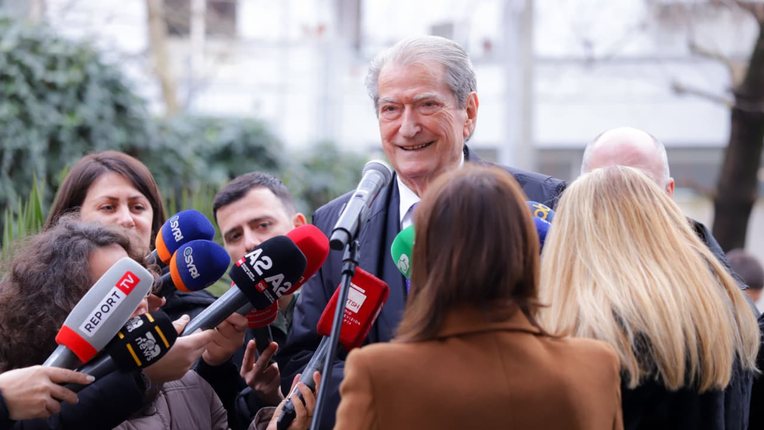
Speaking outside the premises of SPAK, where he was appearing under a “mandatory appearance” security measure in the separate “Partizani” case, Berisha stated:
“We apologize to those two foreigners and express regret because this should under no circumstances have happened, and had it been known that it is a cultural center and that there were foreigners there, this could not have happened. I learned that it had been turned into a cultural center absolutely after the event occurred.”
Two factual discrepancies arise from that statement.
First, the number. Organizers confirm that 13 individuals were inside, not “two foreigners.”
Second, the claim of ignorance. The transformation of Vila 31 into a cultural residency was publicly announced in October 2023 during the visit of Emmanuel Macron to Tirana, when an agreement between the Albanian and French governments was signed. The center was formally inaugurated in January 2025, followed by the arrival of international residents three months later — events marked by public ceremonies and official communications.
Berisha further asserted:
“No, they did not know they were there. There was no one there; they did not see anyone there; they thought there was no one.”
Publicly available footage shows individuals moving inside the compound in visible alarm during the attack. A photograph distributed by the Democratic Party itself also appears to show people inside the premises at the time.
European Reaction
The incident prompted unusually direct language from European partners.
The French Embassy in Tirana described the violence as “of an unacceptable level that put the lives of residents at risk,” and called on organizers to assume responsibility. The Delegation of the European Union emphasized that “endangering human life” falls outside legitimate protest and urged restraint.
The diplomatic framing was clear: while reaffirming the right to protest, both missions drew a sharp distinction between political expression and acts that could have caused fatalities.
Given that foreign nationals were present inside the building, the issue has moved beyond a domestic political confrontation and into the realm of diplomatic concern.
Accountability and Political Responsibility
At present, only Klevis Balliu has reportedly been referred in connection with the events. No proceeding has been announced concerning broader organizational responsibility.
The asymmetry has fueled debate over standards of accountability when political mobilization escalates into actions that create life-threatening risk.
Analyst Ermal Hasimja, who has participated in opposition protests, wrote:
“I am against Molotovs in protests: they may guarantee international headlines and photos, but they risk alienating the non-partisan citizen.”
He added:
“First, I see no intentionality to harm people or property by the protesters.”
And further:
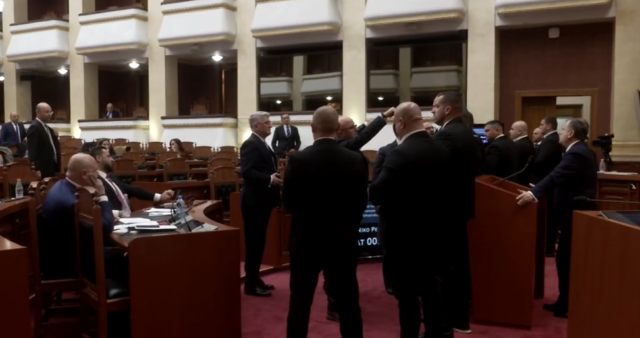
“When you deny the opposition the opportunity to speak in Parliament… what do you expect to happen? That the opposition organizes prayer sessions in the square?”
These remarks illustrate the internal tension within the opposition: rejection of incendiary tactics alongside contextual justification rooted in political grievance.
The Institutional Question
Albania’s constitution protects the right to peaceful assembly. However, the use of incendiary devices against an occupied building shifts the legal and political framework from protest to potential criminal endangerment.
The central issue is institutional rather than rhetorical:
Can political leadership disclaim responsibility once mobilization escalates into actions that put lives at risk?
For a country pursuing European Union membership and deeper integration with its Euro-Atlantic partners, the distinction is not symbolic. It is structural.
“Vila 31” has become more than a historic site. It represents a visible transformation of Albania’s authoritarian past into a space of international cultural cooperation.
The discrepancy between “two foreigners” and 13 confirmed occupants, between “we did not know” and publicly documented state-level ceremonies, is not a semantic dispute. It is a matter of credibility.
In moments of crisis, democratic systems are tested not only by protest — but by the clarity, accuracy, and responsibility of those who lead it.