The Socialist Party of Albania has lost every court case it has faced. That is not a talking point. It is a prosecutorial record. And it is time the international conversation about Albanian justice caught up with the evidence.
by Albatros Rexhaj (Tirana)
The Condescension That Travels Well
There is a particular kind of condescension that travels well. It arrives in Brussels briefing rooms dressed as expertise, gets cited in progress reports as “concern,” and quietly shapes how an entire country’s institutions are perceived abroad — regardless of what those institutions actually do. Albania has been on the receiving end of it for thirty years. It is time to push back.
Start with a provocation from Kreshnik Spahiu, the Albanian jurist who has a talent for the kind of observation that sounds like a joke until you realize it is an argument. Commenting on the margins of the 17th EU–Albania Justice, Liberty and Security Subcommittee meeting in Brussels on March 3 — where European officials asked the Albanian delegation pointed questions about political pressure on the judiciary — Spahiu offered this: the ruling Socialist Party of Edi Rama has lost one hundred percent of its court cases. Every minister, every deputy, every party official who has faced the Albanian judiciary has lost. Either Albania has the most independent judiciary on the planet, he concluded, or its judges feel no pressure whatsoever. Either way, the score speaks for itself.
The standard response to an argument like this, in the kind of analysis that circulates in Western policy circles, is to complicate it. To note that losing cases does not prove independence, that pressure can be subtle, that the real test is what has not been prosecuted. That response is not wrong in principle. Applied to Albania in 2025 and 2026, however, it is increasingly a way of refusing to see what is plainly in front of you.
Look at the Record. Not the Narrative — the Record.
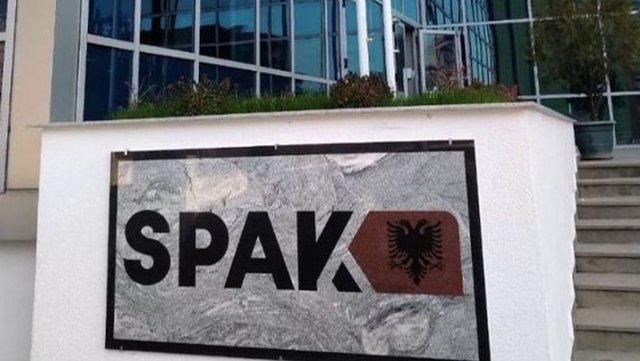
SPAK, the Special Structure Against Corruption and Organized Crime built from scratch as part of Albania’s 2016 justice reform, has in the past two years prosecuted a former president, a sitting mayor of the capital, a deputy prime minister, multiple ministers, mayors across the country, and senior officials at the heart of the ruling party’s patronage networks.
Erion Veliaj — Rama’s chosen political heir, Tirana’s three-term mayor, and the public face of the Socialist Party’s urban modernization project — was arrested while live on camera inaugurating a kindergarten. Belinda Balluku, deputy prime minister and minister of infrastructure, faces charges of manipulating public procurement procedures worth more than €200 million. Former environment minister Lefter Koka has been sentenced to nearly seven years in prison. Former deputy prime minister Arben Ahmetaj fled the country rather than face trial and is now the subject of an extradition request in Switzerland.
These are not peripheral figures sacrificed to protect the center. These are the center. And SPAK put them there.
The EU’s own 2025 progress report — produced by an institution not known for generosity toward Western Balkan candidates — acknowledges that SPAK has further consolidated results in the fight against high-level corruption and strengthened cooperation with member-state law enforcement. Transparency International’s 2024 Corruption Perceptions Index recorded a five-point improvement for Albania, citing specifically the convictions of former ministers, members of parliament, and mayors by the country’s specialized anti-corruption courts. Albania now ranks 80th out of 180 countries — still far from exemplary, but moving in a direction the prevailing Western narrative about Albanian governance struggles to account for.
Behind those prosecutions lies the most radical institutional intervention Albania has undertaken since the fall of communism: the vetting process. Every judge and prosecutor in the country was re-examined against strict criteria covering asset declarations, professional competence, and background integrity. Hundreds were removed. The process was unprecedented in scale within the European context. Its product was not merely a cleaner judiciary. It was an institution capable of arresting a sitting deputy prime minister. That is not a symbolic achievement. It is the entire point of the reform.
This Is Called Politics
Against this record, consider what often passes for sophisticated analysis in Western commentary on Albania: the government criticizes SPAK, therefore it must be trying to control SPAK; Rama defends his officials, therefore the judiciary must be under threat; a legislative amendment is proposed regarding ministerial suspension, therefore judicial independence must be eroding.
Each of these inferences involves a sleight of hand that would not survive scrutiny if applied to a Western European democracy.
When a French prime minister attacks the parquet national financier, no one concludes that French judicial independence has collapsed. When a German chancellor’s party challenges a prosecutorial decision in the Bundestag, the analysis does not immediately pivot to democratic backsliding. Politicians in functioning democracies criticize prosecutors. They challenge court decisions. They propose legislation they believe corrects judicial overreach. This is called politics. It becomes a threat to judicial independence only when it crosses into institutional subversion — threats against judges, manipulation of verdicts, dismantling of prosecutorial autonomy. None of those things are happening in Albania.
What is happening is simpler. A government whose officials are being prosecuted is responding the way governments respond when their officials are prosecuted: with legal challenges, political rhetoric, and institutional friction. The correct analytical response to that friction is not to treat the noise as evidence of control. It is to look at what the courts are actually deciding.
The courts keep ruling against the government.
Rama has lost. Repeatedly. In every venue. That is the test that matters.
Article 242 Is Not the Story
The proposed amendment to Article 242 of the Criminal Procedure Code has been widely mischaracterized in international commentary as an assault on judicial independence. It is not. SPAK retains full authority to investigate, indict, and prosecute public officials at every level. The amendment addresses a narrower and genuinely contested constitutional question: whether courts should have the power to remove a sitting cabinet member from office before indictment, before evidence has been tested, before any judicial determination that a case is strong enough to proceed to trial — on the basis of a precautionary procedural measure designed for evidence preservation, not constitutional restructuring.
That is a legitimate debate about the boundary between judicial procedure and executive authority. It is a debate that France, Germany, and other European democracies have resolved in ways that insulate executive leadership from interim judicial removal while preserving full criminal accountability through verdict. The reform does not create impunity. Officials who commit crimes will still face prosecution, conviction, and sentence. What they will not face is removal from office through an instrument that was never designed to carry that political weight.
Conflating this reform with an attack on SPAK — as much of the Brussels commentary has done — mistakes a constitutional boundary question for an institutional threat. They are different arguments. SPAK’s independence is demonstrated by its prosecutorial record. That record is untouched by Article 242.
The Permanent Conditional Tense
The Western policy community’s difficulty in recognizing Albanian judicial independence is not purely analytical. It is partly institutional. Bodies like the European Commission produce progress reports whose language must remain provisional — “some progress,” “moderate preparation,” “continued concerns” — because the alternative is to close the file, and closing the file removes leverage in the enlargement process. That language is not always a description of reality. It is sometimes a negotiating posture dressed as assessment.
Analytical frameworks can outlive the realities they were designed to describe. When that happens, they stop measuring progress and start obscuring it. Albania has learned to navigate that language. Albanian analysts have largely internalized it as the baseline register in which their country is discussed abroad — the permanent conditional tense of Western Balkans coverage, where nothing is ever quite good enough to say so plainly.
The Tirana Examiner’s purpose is to challenge that register when the evidence warrants it. On the question of judicial independence, the evidence warrants it now.
The Experiment Worked
Spahiu’s provocation is not a complete analysis. But it is closer to the truth than much of what circulates in European capitals as expert opinion on Albanian justice. The Socialist Party does not control SPAK or the Special Anti-Corruption Court. The prosecutorial record makes that case more convincingly than any institutional declaration or reform roadmap ever could.
Albania built something that many assumed would fail. The 2016 reform dismantled an entire judicial architecture and rebuilt it under unprecedented external scrutiny, with the explicit goal of creating prosecutors capable of investigating the country’s most powerful political actors. For years the received wisdom held that Albanian politics would eventually swallow the new institutions whole — that proximity to power would prove, as it always had, to be the ultimate immunity.
It hasn’t.
A former president faces prosecution. A deputy prime minister is under investigation. The political heir to the ruling party was arrested on camera. Ministers have been convicted and sentenced. The courts keep ruling against the government.
That is what judicial independence looks like when it is real rather than declared.
The question now is not whether Albania’s justice institutions act independently. The record has settled that. The more pressing question — the one that actually deserves attention in Brussels — is whether the international conversation about Albania is capable of updating when the evidence changes. Scrutiny remains essential. But scrutiny applied honestly requires acknowledging when something works, not only cataloguing where it falls short.
Albania’s courts should be judged by what they do.
On that measure, the conclusion is no longer ambiguous.
The experiment worked. It is time to say so.
About the author
Albatros Rexhaj is a well known author, playwright, and analyst whose work weaves literary prose, philosophy, and lived experience into thoughtful cultural and political insight. He trained in dramaturgy and screenwriting, holds advanced training in national-security studies, and has spent nearly three decades in political and security affairs before focusing on independent writing and research.