Gazment Bardhi warns that unilateral appointments risk undermining institutional independence as Albania advances toward EU integration.
by the Tirana Examiner (Albania)
Albania’s opposition has raised fresh concerns over the independence of state institutions following a new round of appointments by the parliamentary majority.
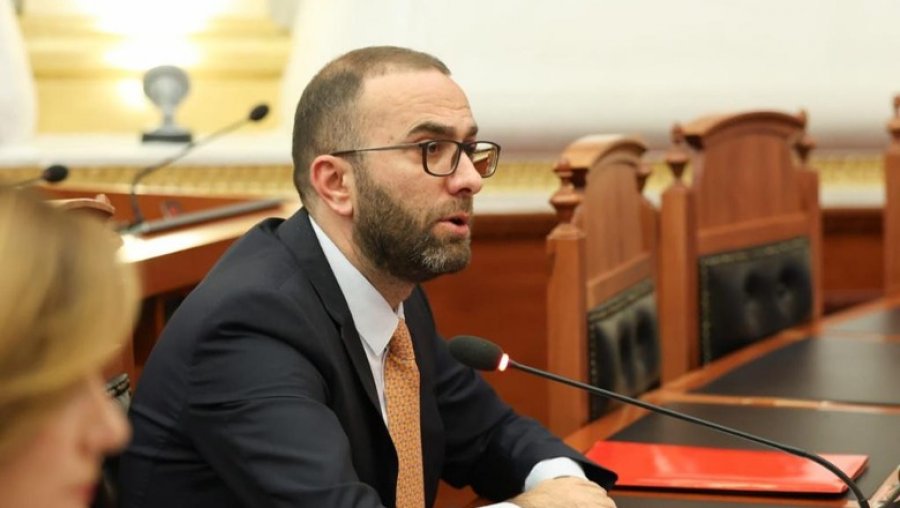
Gazment Bardhi, head of the Democratic Party’s parliamentary group, warned on Tuesday that the country risks drifting away from parliamentary democracy if the ruling majority continues to fill positions in constitutionally independent institutions without broader political consensus.
In a statement published on social media, Bardhi argued that the governing majority is effectively consolidating control over bodies designed to provide institutional oversight.
“The majority is appointing alone institutions that should be independent of it, from the Ombudsman to the Bank of Albania,” Bardhi wrote.
According to the opposition leader, such appointments undermine the principle of checks and balances that underpins democratic governance.
“When a single party takes control of constitutional institutions that are supposed to oversee it, the balance of powers disappears,” he said. “This is no longer parliamentary democracy. It becomes a one-party state.”
Bardhi further argued that the concentration of power in the hands of the executive majority risks weakening Albania’s democratic credentials at a time when the country is seeking deeper integration with the European Union.
“A government that concentrates power, weakens independent institutions and controls them does not move closer to the European Union — it moves further away from it,” he added.
Institutional Appointments Under Scrutiny
The opposition’s criticism comes amid ongoing debates in Tirana over the appointment procedures for several key public offices, including positions in constitutionally mandated oversight bodies.
These institutions — among them the Ombudsman (Avokati i Popullit) and the Bank of Albania’s governing structures — are intended to function with a high degree of autonomy from day-to-day political influence. In practice, however, their leadership is typically selected through parliamentary procedures, where the governing majority often holds decisive influence.
Opposition parties have increasingly argued that this mechanism risks politicizing institutions that are meant to operate independently.
Majority Response
Government officials have repeatedly rejected accusations that Albania is moving toward a concentration of power, arguing instead that institutional appointments are conducted in accordance with constitutional procedures and parliamentary rules.
Supporters of the government maintain that the opposition’s criticism reflects political contestation rather than structural democratic decline.
A Broader Political Debate
The dispute reflects a familiar tension in Albania’s political landscape: the balance between parliamentary majorities exercising their legal mandate and the need for broad political consensus in filling posts that safeguard institutional independence.
For Albania — currently negotiating its path toward European Union membership — the functioning and perceived neutrality of oversight institutions remains a recurring topic in both domestic political debate and international monitoring.
Whether the current dispute will translate into concrete institutional reforms or remain part of Albania’s ongoing partisan confrontation remains to be seen.