Bardhi, Tabaku, and Balliu met with senior CDU figures and the Foreign Ministry’s Western Balkans director; Këlliçi held separate talks at EPP headquarters in Brussels.
by the Newsroom (Tirana)
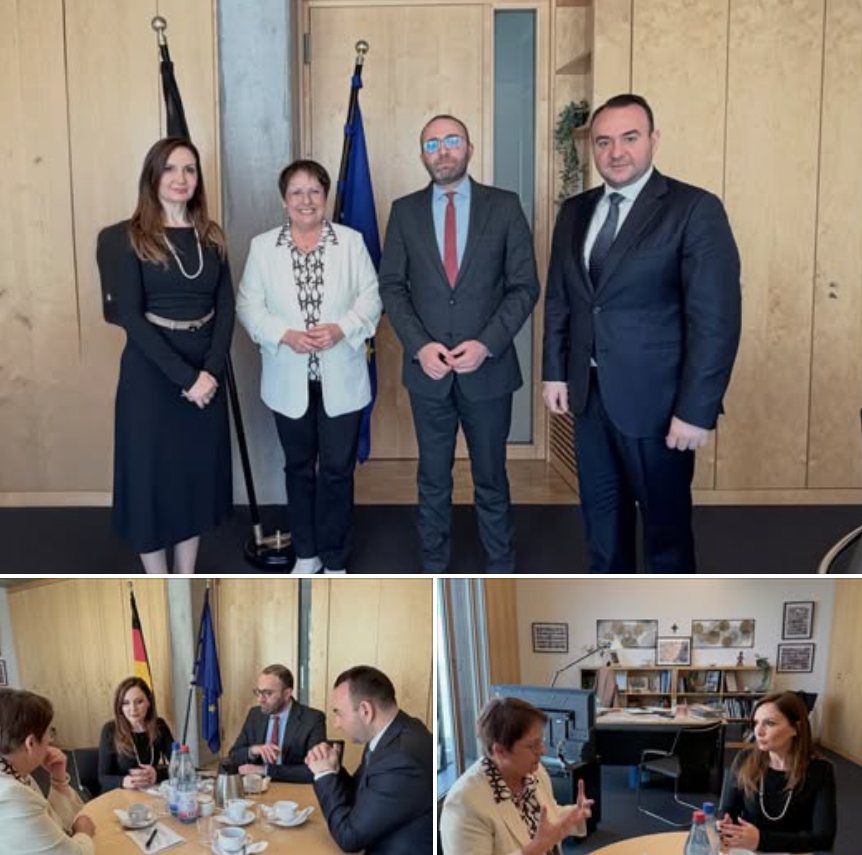
Albania’s EU accession conditions — anti-corruption enforcement, judicial independence, and free and fair elections — were at the centre of a series of meetings held Wednesday in Berlin by a Democratic Party parliamentary delegation, culminating in talks with the director responsible for the Western Balkans at the German Federal Foreign Office.
The delegation, led by parliamentary group chairman Gazment Bardhi and including deputies Jorida Tabaku and Klevis Balliu, met Niels von Redecker, Director of the Western Balkans Department at the German Federal Foreign Office. A readout attributed to the delegation noted that the meeting reaffirmed the merit-based character of the integration process and stressed that Albania must demonstrate serious commitment to transformative reforms — specifically in combating corruption, preventing obstruction of justice, fighting organised crime, and ensuring democratic governance grounded in free and fair elections.
The delegation also raised Kosovo at the Foreign Ministry meeting, thanking Germany for its role in securing the removal of all EU punitive measures against Kosovo in June 2023. The gesture was notable given the current state of Kosovo-EU relations and signalled PD’s intent to position itself as a voice for pan-Albanian interests within its European interlocutions.
Earlier in the day, the delegation met Patricia Lips, Deputy Chair of the CDU/CSU parliamentary group responsible for European affairs, and separately with Olav Gutting, a CDU/CSU deputy engaged in economic and enlargement debates. Both conversations covered the same core terrain: the gap between Albania’s legislative framework and its practical implementation, and the role of political culture in shielding corruption from accountability. Bardhi described Germany as Albania’s most valued ally on the European path.
In Brussels the same day, deputy Belind Këlliçi was at EPP headquarters exchanging assessments of electoral standards with European colleagues. He described Albania as among the most problematic cases in the region, singling out the May 11, 2025 parliamentary elections as the clearest illustration. Këlliçi also referenced the recent parliamentary vote on the immunity of former Defence Minister Niko Balluku — in which the governing majority blocked SPAK’s prosecution request — as evidence that the government’s priorities lie elsewhere than European integration.
The parallel engagements in Berlin and Brussels amount to an intensive week of PD parliamentary diplomacy within its EPP network, arriving at a moment when Albania’s accession file is under active European scrutiny and the Balluku vote has drawn pointed criticism from Western embassies.