A geographic coincidence is not a chain of authority. But it is enough to build a political claim.
by Aurel Cara (Tirana)
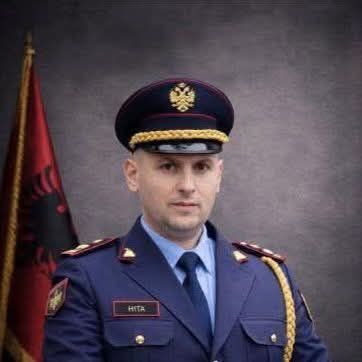
When Besfort Lamallari presented Skënder Hita’s appointment as Director General of the State Police to parliament, he offered two verifiable claims: that Hita is a career officer, and that the selection process was monitored throughout by international partners, primarily from the European Union.
The opposition did not contest either claim. It replaced them.
Klevis Balliu’s argument rests on a sequence: Hita’s most recent posting was in Fier. Belinda Balluku is the Socialist Party’s regional party coordinator in Fier. Therefore, Balluku selected him. In his own words: “Balluku’s next pawn. Three days ago we already knew Skënder Hita would be appointed. Today only the next crime was formalized.”
This is not an argument. It is an implication presented as one.
Balluku’s role is party-political. It concerns organizational control of the Socialist Party’s structures in the district, electoral coordination, party hierarchy, political messaging. It does not extend into the institutional chain that governs State Police appointments, which sit within the Interior Ministry and, at this level, involve a competitive process conducted under ministerial authority and subject to documented international monitoring.
To move from shared geography to institutional control is to substitute proximity for power.
The evidentiary standard applied in parliament is equally thin. No document was presented. No communication was cited. No account was offered of any intervention in the selection process. What was offered instead was timing: three days of prior knowledge dressed as insider confirmation.
Prior knowledge of a likely outcome is not evidence of manipulation. Senior appointments of this kind produce finalists. Finalists circulate. Outcomes are anticipated before they are formalized. This is not irregular. It is how such processes function.
The record that was not addressed is more substantial.
Hita’s career was built across some of the country’s most operationally demanding environments. In Shkodër, he served as deputy director of criminal investigation in a district where the interface between policing and prosecution requires continuous coordination under pressure. In Durrës, he led the regional directorate in a jurisdiction defined by the country’s largest port and the corresponding volume of movement, legal and illicit. During that period, investigations linked to the Beqiraj brothers contributed to the exposure of criminal networks extending beyond the district itself.
Most recently, under his direction in Fier, recorded levels of criminality declined over an eighteen-month period.
Across this trajectory, his name does not appear in connection with criminal groups, narcotics cultivation, or other forms of institutional compromise that have defined past controversies around senior appointments. At this level, absence of such exposure is not incidental. It is one of the criteria selection processes are designed to surface.
The alternative explanation implied in parliament carries its own burden. It requires that a selection process monitored in real time by international partners either failed to detect, or chose to ignore, a politically directed outcome originating at the level of a party’s regional structure.
That claim was not made explicitly. It was not supported implicitly. It does not withstand scrutiny.
What was presented instead was an insinuation, constructed from adjacency, insulated from verification, and delivered as conclusion.
It does not hold.
Hita’s appointment can be contested. His future performance can be judged. But the argument offered against him does not meet the standard required to do either.