ALBANIA PARLIAMENT | DISPATCH 7 April 2026
Albania’s Socialist Party voted down two Democratic Party requests for parliamentary investigative committees Tuesday, extending what the opposition described as a systematic shutdown of oversight mechanisms, while a separate confrontation erupted over proposed rules changes touching on an unresolved Constitutional Court ruling.
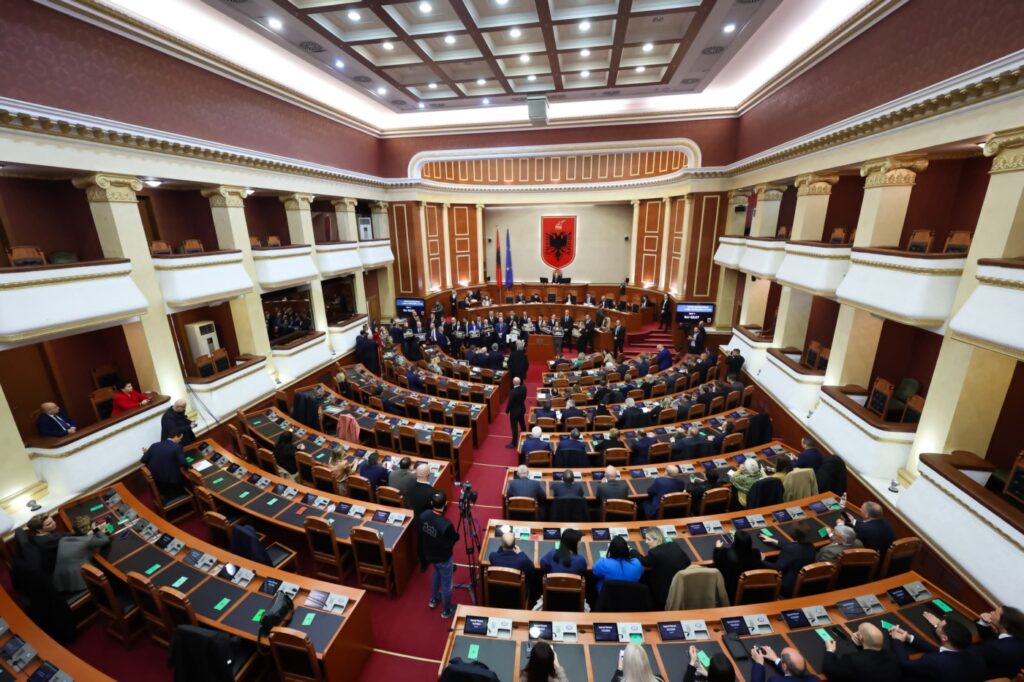
The session of the Conference of Speakers, convened to approve the parliamentary work calendar for April 13 through April 30, ended without agreement on any item.
The Two Rejections
The Democratic Party sought investigative committees on two matters: the collapse of road infrastructure across Albania, and the conduct of the National Agency for Information Society, known by its Albanian acronym AKSHI, which is currently the subject of criminal proceedings.
Taulant Balla, head of the SP parliamentary group, defended both rejections on procedural grounds. On the roads committee, he argued the request lacked the specificity required under Constitutional Court precedent dating to 2003, which holds that investigative committee mandates must be focused on a defined question rather than a broad review of executive conduct. On AKSHI, he argued the legislature could not move into territory already occupied by the prosecution.
“We offer full support to the prosecution for all its investigations, but under no circumstances should the legislative branch interfere in the judicial branch,” Balla said.
Bardhi’s Rebuke
Gazment Bardhi, the DP’s parliamentary group leader, rejected both the procedural rationale and the pattern it extended.
“If opposition requests are voted down out of political hatred, this is not parliamentarism,” Bardhi said. “I ask you, Speaker, what is the role of deputies when you refuse investigative committees, interpellations, motions with debate, amendments, and legislation? What is the role of the opposition? To fan you?”
He directed his sharpest remarks at the Speaker personally: “You, Speaker, are the guarantor of the Assembly’s functioning. You read us a speech that moved us, yet today I cannot find a single matter that you, as Speaker, have defended on behalf of the opposition.”
On integration, Bardhi inverted the majority’s framing: “There is not a single case of an opposition deputy who speaks or works against integration. But unlike you, we do not act as a shield for corruption.” He argued the EU progress report itself identified the problem: “It says parliament is hindered by limited oversight of the executive. Who is blocking it? Us, who demand parliamentary control, or you, who vote against oversight?”
The Rules Row
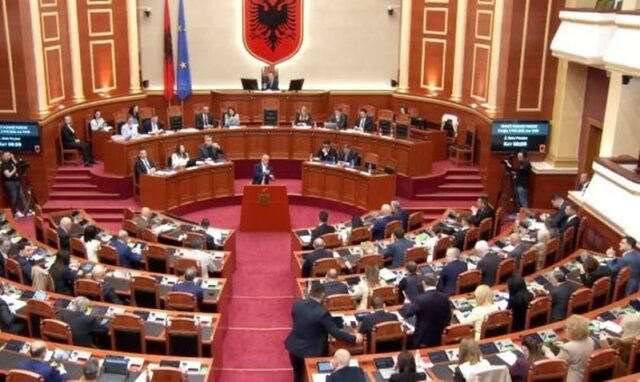
A separate confrontation developed when the SP moved to place a Balla proposal on rules of procedure amendments onto the plenary agenda. Bardhi objected on constitutional grounds, arguing the Assembly could not proceed before the Constitutional Court published its reasoning for an 8-0 ruling that struck down the earlier expansion of parliamentary committees.
“With full awareness you have violated the Constitution — and not once, but twice,” Bardhi said. “With 8 votes to 0, the Constitutional Court ruled that the Speaker of the Assembly had thrown the Constitution to the wind. The Constitutional Court has not yet published the reasoning for its ruling. Therefore the rules amendments are not urgent.”
Balla countered that the Court had itself broken the law by missing the mandatory 30-day publication deadline.
“The Constitutional Court has violated its own law by not publishing the ruling within the 30-day deadline,” Balla said. “The Assembly must formally call on the Court to publish, because the work of parliament cannot be blocked.”
Context
Tuesday’s rejections were the fifth time in the current parliamentary term the SP majority has voted down DP investigative committee requests, according to Bardhi. The session also saw a DP interpellation request on a United States State Department report on Albania’s investment climate defeated.
The AKSHI committee request carries particular political weight. The agency has been described in opposition statements as functioning as a structured criminal group — a characterisation that, if it reflects the content of active prosecution files, would make the question of parliamentary oversight versus judicial primacy a live constitutional question rather than a procedural one. That boundary is precisely what both sides claimed to be defending Tuesday.