Asked to call the Nartë project an accession problem, the Enlargement Commissioner declined. Read against the Commission’s own statement a week earlier, her refusal is the news.
by Ardit Rada (Tirana)
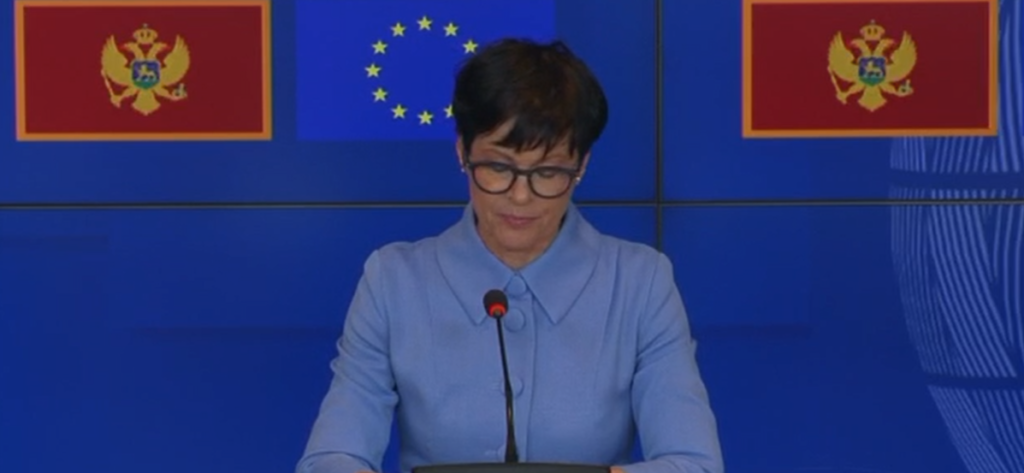
Marta Kos was handed an easy invitation to escalate, and she turned it down. Asked at the Commission’s briefing this week whether the disputed coastal development at Nartë threatened Albania’s path to membership, the Enlargement Commissioner did not say that it did. She called Albania a frontrunner that had made important progress on environmental protection, progress she said should be protected. She said it was important that everyone work on the basis of facts. She said Chapter 27 is open and cannot close until the situation is fully clarified, with closure planned for the end of 2027, and that the Commission’s role would be to verify whether the benchmarks are met. She said the Commission had received the government’s assurance that a full environmental assessment will be carried out and European standards respected. On the investor, she said what mattered was not where the money came from but whether it complied with EU law. And on the protests, unprompted, she added that the right to demonstrate was being respected in Albania.
Every one of those is a conditional, an assurance, or a procedure. Not one is a finding. She did not say the project complies. She said it must, and that the chapter stays open until it is shown to. That is the whole content of her answer, and the restraint is the point.
It is restraint that shows only against the Commission’s own voice a week earlier. Through a spokesperson speaking to POLITICO, the same institution had told Albania to refrain from actions that could undermine the fulfilment of the closing benchmarks, and to act without delay. Set the two beside each other and the shift is not subtle. The first is an instruction. The second is a description of a process. The first carries the implication of a deadline owed at once; the second points to a timeline two years off. The spokesperson spoke as though the task were to prevent a breach that might be coming. The Commissioner spoke as though the task were to establish whether a breach exists at all. That is the deeper distance between them, the difference between heading off a future fault and verifying a present one.
Nothing about the file changed in those eight days to account for it. The assessment that did not exist still does not. The chapter that was open stayed open. What changed was the Commission’s account of its own role, and a candidate state’s standing can turn on precisely that, on whether Brussels addresses it as a subject under instruction or as a negotiator inside a procedure.
The question that drew the Commissioner out had supplied its own answer in advance. It described a luxury development on protected areas, by a firm linked to a member of the US president’s family, set against two weeks of protest, and then asked what that meant for accession. The construction does the convicting: protected, luxury, linked, arranged so that the verdict is reached by adjacency before a benchmark is tested. A reporter is free to put a question that way. What is telling is that the Commissioner declined every assumption inside it. She took the bundle apart. The protected area became progress to be verified rather than a breach established. The investor became a question of compliance rather than identity. The protest became a right being honoured rather than a disorder to be managed. Three separate answers, where the question had offered a single charge.
This is the part most of the coverage has missed by filing the exchange as an environmental story. It is at least as much a story about institutional voice. The Commissioner’s answer sounds like accession conditionality as it is meant to run: benchmarks, assessment, a verdict deferred until the facts are in. The spokesperson’s intervention did not. Asked effectively the same question twice in eight days, the Commission answered once as a regulator and once as something closer to a political actor, and only the second answer matched the process it claims to be conducting.
So nothing at Nartë moved between the two statements. What moved was the Commission’s description of its own role. The verb went from act to clarify, and the burden with it, from presumption to procedure.
READ ALSO: A Candidate, Not a Defendant