Albania’s new energy minister is a technocrat in a sector that has burned through political appointees. That, right now, is exactly the point.
by Dorina Muka (Tirana)
In the autumn of 2021, Albania declared an energy emergency. The country’s electricity import bill for the first eleven months of that year had reached 213 million euros — almost half of OSHEE’s total annual revenues — as global prices surged to between 220 and 320 euros per megawatt-hour. The government injected emergency liquidity, called in international lenders, and watched its largest public enterprise accumulate the kind of short-term commercial debt that, left unresolved, breaks institutions. The underlying vulnerability was structural: Albania depends almost entirely on hydropower and has no pumped storage capacity, meaning that when the rains fail and global prices spike simultaneously, the country has no buffer. The crisis did not create that problem. It revealed it.
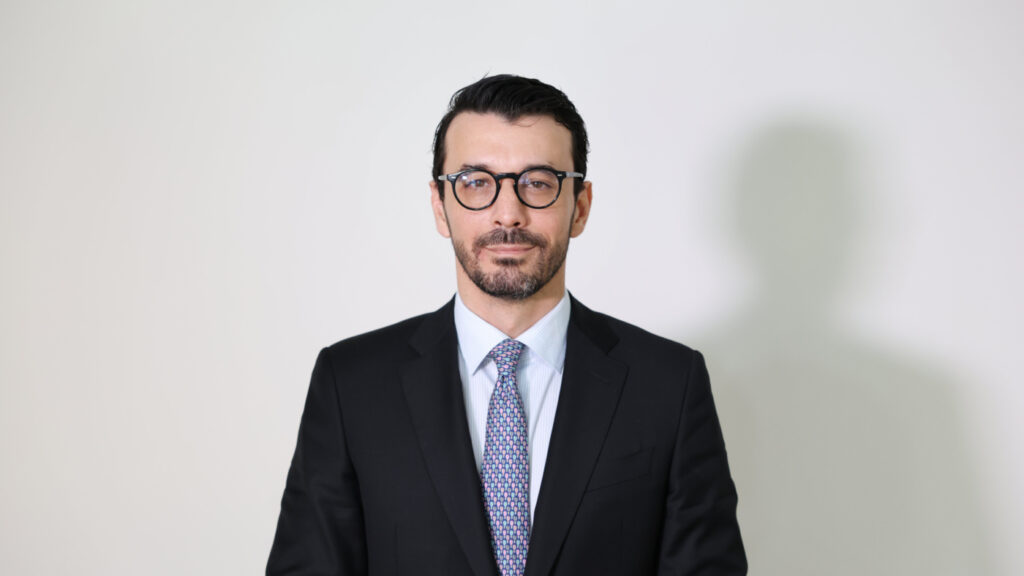
Enea Karakaçi was watching from inside the ministry. He had been there, in various capacities, since 2013 — drafting legislation, advising ministers, directing energy policy. He knew the legal architecture of the sector as few people in Albanian public life do, because he had spent fifteen years building it. When Edi Rama appointed him to lead OSHEE in June 2023, it was to clean up the wreckage. When Rama appointed him minister in late February 2026 — replacing the suspended deputy prime minister Belinda Balluku, whose portfolio had become entangled in a SPAK criminal investigation — it was because the cleanup had worked, and because the sector’s next phase demands someone who understands what the cleanup revealed.
That is the case for Karakaçi, and it deserves to be stated on its merits rather than in the defensive key of damage control.
His career is not the resume of a politician who passed through an energy ministry as a stepping stone. He began at the Energy Regulatory Authority in 2011, moved to the Ministry of Energy as Head of Legislation in 2013, rose through adviser and legal director roles, and served as Director General for Energy and Industry Policies from 2021 to 2023 — a trajectory built entirely on understanding how power is produced, priced, distributed, and regulated in Albania. An LLM from the University of Amsterdam gave him the European law framework onto which a decade of domestic institutional knowledge was later layered. When he arrived at OSHEE, he did not need a briefing on what had gone wrong. He had been in the room when some of it was decided.
What he then did matters more than the biographical arc. OSHEE had accumulated approximately 178 million euros in publicly guaranteed loans during the crisis years, the bulk of it covering liquidity shortfalls. Rather than stabilise and hold — the instinct of institutions that have been burned — Karakaçi moved. In 2023, he recorded a reduction in network losses to 18.93%, a record for the company, while maintaining collection rates at approximately 99%, on par with advanced EU member states, and turning a group profit of around 5.08 billion lek. By 2024, net profit had risen to 7.3 billion lek, losses had been pushed below 18%, and collections exceeded 100% of targets. That year, he oversaw an investment plan of 40 billion lek — covering the construction and reconstruction of more than twenty substations and the laying of new cable networks across the country.
The numbers matter for reasons beyond accountancy. Albania is at an inflection point in its energy sector, and foreign investors are watching how the country manages it. The government’s solar auction launched in early 2025 was notable precisely because the projects on offer required no subsidies — a signal, in the language of energy markets, that investor confidence in Albania’s regulatory environment had matured to the point where returns could be calculated without government guarantees underwriting the risk. Voltalia of France, Ayen Enerji of Turkey, and a queue of others have committed capital. What those investors need — what they have always needed in the Western Balkans, where the history of regulatory reversals is long — is a counterpart at the ministry who speaks their language, understands the acquis, and will not be replaced in six months by someone who does not.
Karakaçi is that counterpart. His negotiation of an EBRD sovereign loan of 45.75 million euros — converting OSHEE’s crisis debt into long-term structured financing, tied to a committed investment plan for network modernisation and renewable integration — demonstrated that he can operate in the register that multilateral lenders require: transparent balance sheets, credible reform commitments, and institutional follow-through. The EBRD does not extend that kind of engagement to enterprises it does not trust. That it did so under Karakaçi’s administration is itself a form of external validation that no ministerial press release can replicate.
The challenges waiting at the ministry are not managerial. They are structural and political. Albania’s energy market liberalisation is mid-process, with the progressive integration of industrial customers into the free market already underway and further rounds to follow. The EU’s most recent progress report called on Albania to improve the predictability of its regulatory measures — language that is diplomatic in form but pointed in substance, aimed at precisely the kind of opaque decision-making that has unsettled investors in the past. A new National Energy and Climate Plan, drafted and circulated for public consultation in early 2025, had still not been adopted by year’s end. The Power Sector Law, overdue for years, remains unfinished. These are the files that will determine whether Albania’s energy transition is real or rhetorical — and they require a minister with the technical depth to move them and the institutional credibility to make the commitments they contain stick.
None of this makes Karakaçi a transformative figure. He has no independent political agenda, no announced departures from established government direction, and no record of friction with his principals. He is, in the precise sense, a technocrat: his value lies in command of a brief, not in the willingness to rewrite it. His appointment allowed Rama to sever the ministry’s most exposed portfolio from Balluku’s political and legal troubles — a defensive move wrapped in the language of governance continuity.
But continuity, in this case, is not nothing. It means that the investors who signed power purchase agreements, the EBRD officials who structured loans, and the Energy Community negotiators waiting for Albania’s regulatory alignment will find, on the other side of the table, someone who knows what they are talking about. In a sector where institutional memory is the scarcest resource, that is not a modest qualification.
It is the whole argument.
Dorina Muka is an energy and economy professional with experience in Albania’s infrastructure and regulatory environment. Her work focuses on technical standards, system performance, and compliance, contributing to the operational foundation of the country’s energy sector.