On the constitutional merits, the Prime Minister was right. On everything else, he was Rama.
The Tirana Examiner Editorial Board
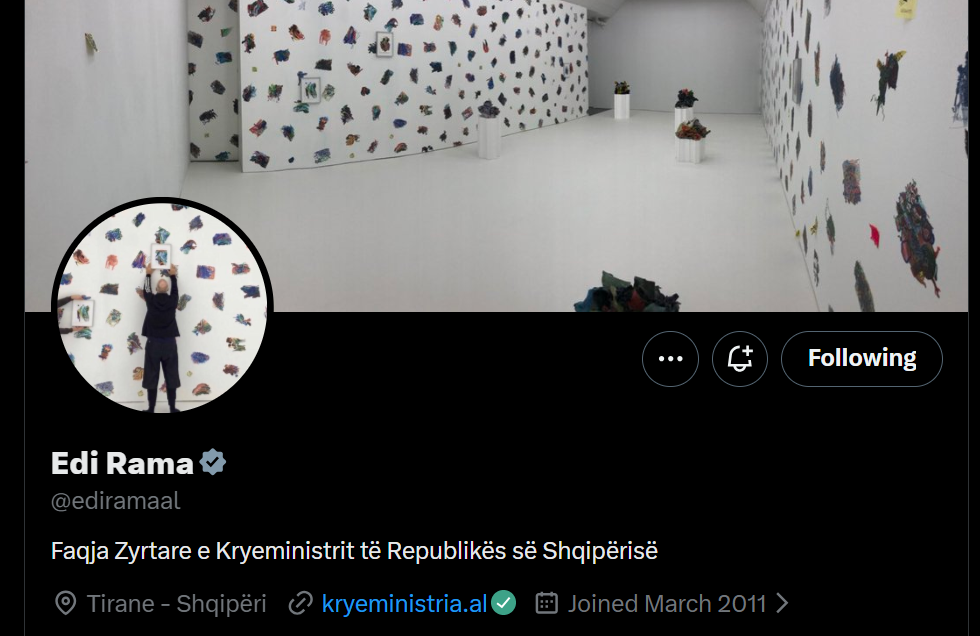
Edi Rama was right today. He was also, in the same post, exactly the problem.
The Prime Minister’s response to the British and German embassy statements deserves to be read carefully — not dismissed as political reflex and not accepted uncritically. On the core political argument, his instinct was correct. On the method, it reveals precisely the habit that has made Albania’s constitutional case so easy for its diplomatic partners to discount.
Begin with what he got right. Rama’s post makes the essential political claim: that the parliamentary vote followed the constitutional procedure correctly, that the conditions for arrest were not met, and that SPAK’s independence and the judicial reform remain intact. He does not elaborate the legal structure in detail — the procedural mechanics of what parliament can and cannot decide, the continuing force of the travel ban, the open path to indictment — but the political position he staked is consistent with that structure, and staking it publicly and on the record matters. He also noted, in a line that has received less attention than it deserves, that Balluku is under investigation for alleged violations of public tender procedures — distinct, in their current formulation, from corruption offences as defined elsewhere in Albanian law. That distinction has been consistently flattened in the political debate. Rama put it on the record today.
He was also right, in structural terms, about what happened with the embassy statements. One side of Albania’s political divide has spent months framing this case in the language of European values — reform, accountability, judicial independence — and that framing was absorbed by diplomatic interlocutors who repeated it as their own expectation. That is a real phenomenon with real consequences. Naming it is not paranoia. It is accurate political observation.
But then came the Molotov line.
By invoking the “Molotov Association of Tirana” in the same breath as a principled constitutional defense, Rama did something that has become his signature move: he converted a correct argument into a weapon. The constitutional position does not require mockery to stand. It stands on its own. The moment Rama reached for the taunt, he shifted the register from institutional defense to partisan combat — and every diplomat reading that post had their prior assumptions confirmed rather than challenged. The argument did not fail. The instinct to arm it did the damage.
There is a deeper failure the post does not acknowledge. Rama’s party spent weeks allowing this case to be framed publicly as a test of political loyalty rather than a legal question. The majority committee report made the right constitutional arguments — carefully, with reference to ECHR standards and procedural law. Rama’s public communications did not reinforce that framing. They largely avoided it. The diplomatic narrative that the German and British embassies absorbed was not built in a vacuum. It was built in the space that the governing majority’s communications operation left empty. Rama now claims the constitutional high ground, but the ground was ceded gradually — and today’s post does not change that.
This editorial board applies the same standard regardless of who occupies the constitutional position being defended. Had the majority voted to authorise arrest and the opposition accused the embassies of interference, our argument would be identical. We are defending a procedure, not an outcome. Correcting a misread diplomatic narrative requires sustained, precise, institutionally grounded communication over time — the register of the committee report, not the register of the Molotov line. When a Prime Minister reaches for the taunt at the moment the constitutional argument most needs to be heard clearly, he does not weaken the argument — he ensures it will be heard by fewer of the people who need to hear it.
That is the specific cost of the instinct Rama cannot seem to suppress. And it is a cost Albania pays, not him.
The Tirana Examiner is an independent publication covering Albanian politics and policy. Editorial board pieces represent the collective position of its editors.