Tirana Examiner — Legal Desk
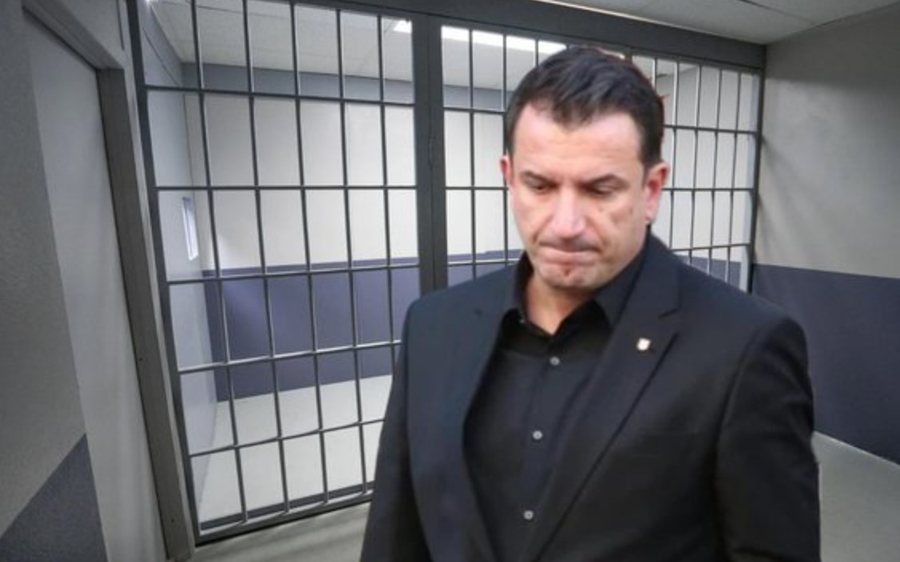
The March 10 report published by Kasowitz LLP — retained international counsel for Erion Veliaj, the detained Mayor of Tirana — raises issues that warrant serious legal examination independent of the advocacy context in which they were produced. Kasowitz is defense counsel; its report is an advocacy document, not a neutral finding. This assessment applies Albanian criminal procedure, the European Convention on Human Rights, the jurisprudence of the European Court of Human Rights, and Venice Commission standards to the documented facts, and names where the record is incomplete or contested.
Two threshold observations govern everything that follows. First, procedural legitimacy and substantive guilt are separate questions. Nothing in this analysis bears on whether Veliaj committed the offenses for which SPAK has charged him. Second, SPAK’s institutional credibility — painstakingly constructed over nearly a decade with significant international investment — is not separable from how it conducts individual prosecutions. Institutions are the sum of their cases.
I. Pretrial Detention: The Legal Standard and Whether It Is Being Met
Albanian criminal procedure, governed by the Code of Criminal Procedure, permits pretrial detention under Article 228 only where the court finds concrete and specific grounds establishing at least one of three risks: flight, re-offending, or obstruction of the investigation. These are not cumulative — one is sufficient — but each must be grounded in individualized, evidence-based assessment, not presumption.
This framework directly mirrors Article 5(1)(c) of the European Convention on Human Rights, which permits deprivation of liberty only where it is reasonably considered necessary to prevent flight or re-offending. The European Court of Human Rights has elaborated this standard extensively. In Buzadji v. Moldova (Grand Chamber, 2016), the Court held that reasonable suspicion is a necessary but not sufficient condition for continued detention — authorities must demonstrate “relevant and sufficient” reasons at each review stage. In Idalov v. Russia (Grand Chamber, 2012), the Court reaffirmed that national courts must conduct genuine reviews, not formulaic renewals, and that the burden of justification increases with the duration of detention. Veliaj has now been detained for over a year.
The Kasowitz report states that at the February 1 hearing, SPAK opposed release on the ground that Veliaj’s engagement of U.S. counsel for lobbying purposes “delegitimizes the bodies judging the case and shows his will to avoid the criminal process.” The sourcing is an audio recording of the hearing published by Hashtag.al. The full hearing transcript has not been made public, and we are relying on a characterization of SPAK’s argument produced by interested counsel. That caveat is not incidental — it is analytically central.
If the characterization is accurate and complete, the argument has no procedural foundation. Lawful petitioning of foreign policymakers does not constitute obstruction of a concluded investigation, does not establish flight risk, and does not demonstrate intent to re-offend under any standard recognized by Albanian criminal procedure or ECtHR jurisprudence. A prosecutor could respond that the lobbying remark was incidental — that detention was justified on other grounds and this was one observation among several. If so, the legal analysis of that specific argument changes considerably. On the available record, we cannot resolve this. What can be said is that if SPAK’s primary opposition to release rested on this ground, it would represent a serious departure from the procedural standards the CPC requires — and one that no court should accept.
Plain-language synthesis: Albanian law and the ECHR permit extended pretrial detention only where concrete, individualized reasons justify it at each review. The lobbying argument, as characterized, has no basis in either framework. Whether it was SPAK’s primary position or an incidental remark remains unverified. The full hearing record is the operative document, and it has not been published.
II. Access to the Case File: Due Process and the Right to Prepare a Defense
Article 6(3)(b) of the ECHR guarantees every defendant “adequate time and facilities for the preparation of his defence.” The ECtHR has interpreted this as imposing affirmative obligations on states — not merely the absence of active interference. Critically, the Court’s standard is effective access through counsel, not necessarily personal access by the defendant in all circumstances. In Öcalan v. Turkey (Grand Chamber, 2005), the Court found a violation where restrictions prevented effective preparation, but the analysis turned on whether counsel — not the defendant personally — had meaningful access to the materials needed to mount a defense.
This distinction matters in the Veliaj case and the piece must engage it directly.
Albanian CPC Article 49 provides defendants the right to examine the acts in the case file. For represented defendants, courts have generally treated counsel’s access as satisfying this obligation for Article 6 purposes, provided counsel can consult effectively with the defendant. SPAK may be in a position to argue that defense counsel had file access throughout the investigation period, and that the personal access question only arose when Veliaj elected self-representation — a decision that, under both Albanian law and ECtHR jurisprudence, carries procedural consequences the defendant assumes voluntarily.
Veliaj’s decision to represent himself is relevant here and deserves direct acknowledgment. Self-representation is a protected right under Albanian law and Article 6(3)(c) of the ECHR, as affirmed in Melin v. France (1993). But it is also a strategic choice. Courts may legitimately note that a defendant who discharges counsel and assumes his own defense takes on corresponding responsibilities, including the management of file access in a complex case. Veliaj’s lobbying campaign and rejection of private counsel are choices that courts may view as litigation behavior rather than passive exposure to procedural injustice. A legally complete assessment cannot ignore this.
What the self-representation choice does not do, however, is extinguish the access obligation. If anything, it transfers it directly to the defendant — meaning the state’s duty to provide meaningful file access becomes more acute, not less, when counsel is absent. The state-appointed counsel assigned alongside Veliaj, whose own court statement described the conditions as making effective preparation “impossible,” cannot substitute for the access the law requires if those conditions are genuine.
The Kasowitz report documents that for approximately one year, SPAK and the Preliminary Hearing Court denied Veliaj personal access to a file of nearly 60,000 pages. On March 9, 2026, the Trial Court overruled this position and ordered the file delivered directly to Veliaj, postponing proceedings to March 24. Two things are simultaneously true. The Albanian judiciary corrected the position through ordinary process — which is the system functioning as designed. And the correction came after a year of denial, with trial now scheduled fourteen days after file delivery.
The fourteen-day window is where the legal argument is most intuitively compelling and most legally fragile. Courts frequently reason that defense counsel has been involved throughout the investigation, that the evidence is not new to the defense as a whole, and that a defendant catching up with materials already known to his legal team is not starting from zero. If SPAK can establish that defense counsel had substantive file access during the investigative phase, this argument weakens the adequacy-of-time claim considerably. The counter is that Veliaj’s self-representation means counsel’s prior familiarity does not transfer to him — and that the relevant preparation window for the defendant personally begins when he assumed his own defense. Whether fourteen days satisfies Article 6(3)(b) in that specific context is a question the Trial Court’s management of the March 24 date will answer in practice.
Plain-language synthesis: The ECtHR standard is effective access through counsel, not unconditional personal access. SPAK may have arguments that counsel’s access satisfied Article 6 during the investigative phase. The self-representation complication changes the calculus — the state’s obligation to the defendant personally becomes more direct, not less. The fourteen-day window is tight and potentially inadequate, but its legal weight depends on facts about counsel’s prior access that are not fully established in the public record.
III. Democratic Mandate and the Venice Commission Framework
The November 2025 Albanian Constitutional Court ruling affirming Veliaj’s mayoral mandate is relevant — not to the criminal proceedings, but to the proportionality assessment that must accompany measures affecting an elected official’s capacity to serve.
Venice Commission standards on pretrial detention of elected officials, referenced in the EU’s 2025 Enlargement Report on Albania and invoked in the B40 mayors’ January 2026 joint statement, hold that detention of sitting elected representatives warrants heightened scrutiny because its effects extend beyond the individual defendant to the democratic mandate of constituents. These standards are soft law — they are not binding on Albanian courts and the ECtHR has upheld detention of elected officials in corruption cases where the procedural justification was sound. Elected office does not create special immunity from pretrial detention, and any analysis suggesting otherwise would misstate the law.
The proportionality argument is more limited and more precise than an immunity claim. It holds that where Albanian courts assess whether detention is necessary and proportionate — as they must under Article 5 ECHR and the CPC — the democratic cost of excluding a reinstated official from his duties is a factor the proportionality calculus must weigh. The Constitutional Court restored Veliaj’s mandate in law. Detention conditions that functionally prevent him from exercising that mandate operate in tension with that restoration even if they do not formally contradict it. That tension is real and legally cognizable in a proportionality framework, even if it does not resolve the detention question alone.
For EU accession purposes, the Venice Commission framework carries operational weight that transcends its non-binding status. The Fundamentals cluster, which Albania is currently navigating, treats pretrial detention practices as a direct rule-of-law variable. The EU’s 2025 Enlargement Report’s “serious concerns” language on prolonged pretrial detention and inconsistent prosecutorial standards is a formal assessment, not commentary. The Veliaj case is now a data point in that assessment.
Plain-language synthesis: Venice Commission standards are soft law and do not confer immunity on elected defendants. The proportionality argument they support is narrower: democratic cost is a cognizable factor in the necessity assessment, not a trump card. For accession purposes, the distinction between binding and non-binding matters less — the EU’s Fundamentals assessment treats these standards as operative benchmarks.
IV. SPAK’s Institutional Position
This analysis would be incomplete without stating clearly what it cannot assess: the substance of the charges and the evidentiary basis for the 60,000-page file.
We do not know this because SPAK has not made it publicly accessible and the Kasowitz report does not engage it — predictably, given its function. A prosecutor could argue that the seriousness of the alleged corruption justifies procedural measures that would be disproportionate in lesser cases. That argument has limits under the ECHR — the Court has consistently held that the gravity of charges cannot alone justify indefinite pretrial detention — but it is not without legal basis in the early stages. Without knowing what SPAK has, the procedural assessment floats without a factual anchor.
SPAK’s institutional mandate is to prosecute corruption and organized crime with independence from political interference. That independence is non-negotiable and this publication has defended it consistently. Independence, however, is not synonymous with exemption from procedural standards. The March 9 Trial Court ruling — which overruled SPAK’s position on file access — demonstrates that Albania’s judicial architecture has correction mechanisms that function. It also demonstrates that correction required a change in court composition and twelve months of contested proceedings to materialize. Both observations are accurate. Reform supporters who read the Trial Court’s ruling as proof the system works are not wrong. Nor are observers who note that the system required sustained pressure before it corrected. These are not contradictory conclusions — they describe the same sequence from different vantage points.
Plain-language synthesis: SPAK’s independence must be defended. So must the procedural standards it is bound to follow. An independent institution that operates outside those standards does not demonstrate independence — it demonstrates that independence has been confused with impunity. The Trial Court’s March 9 ruling is evidence that the correction mechanism works. How long correction takes, and what it requires to arrive, is a separate institutional question.
V. What Remains Unknown
Honest legal analysis requires naming its limits.
The full content of SPAK’s February 1 detention argument. The hearing transcript has not been published. The lobbying characterization is sourced through advocacy counsel and may be incomplete or taken out of procedural context.
The extent of defense counsel’s file access during the investigative phase. This is the central variable in the Article 6 analysis and it is not established in the public record.
The nature and weight of the underlying charges. Sixty thousand pages suggest substantial investigative work. Whether that work sustains the charges brought is a question for trial.
Whether the March 24 date will proceed, be continued, or produce further procedural disputes. The next hearing is the operative test of whether the March 9 correction translates into a genuinely fair proceeding.
Assessment
The documented procedural record in the Veliaj case raises specific and serious legal questions under frameworks Albania has committed to uphold. A detention justification argument that — on the available record — appears to have no basis in Albanian criminal procedure or ECHR standards; a year of obstructed personal file access resolved only by a change in court composition; and a trial timeline that compresses preparation into fourteen days: each of these warrants scrutiny. Together they warrant more.
The legal picture is not clean in the other direction either. SPAK may have arguments about counsel’s prior file access that weaken the Article 6 claim. The self-representation and lobbying choices are litigation strategy, not passive victimhood. The underlying charges — unknown in their detail — may carry weight that the procedural analysis cannot account for.
One question now concentrates everything. When the Trial Court convenes on March 24, will it grant Veliaj the additional preparation time that Article 6(3)(b) requires — or will it proceed on a timeline that no serious reading of that standard can sustain? The March 9 ruling showed the court is capable of correcting SPAK’s procedural overreach. What it has not yet shown is whether it will do so again when the cost is delay rather than a preliminary ruling. That is the difference between a correction and a pattern. Albanian courts have the opportunity — and under the Convention, the obligation — to make that distinction legible on March 24.
The Tirana Examiner Legal Desk analyzes judicial and legislative developments in Albania. The Kasowitz LLP March 10, 2026 report, which serves as a primary source document for this analysis, is linked HERE.