A procedural dispute in one of Albania’s most prominent corruption trials reveals a deeper question about prosecutorial discipline, judicial independence, and the credibility of a reform system heavily backed by the EU and the United States.
By Ardit Rada (Tirana)
A seemingly technical dispute during this week’s hearing in the “Sterilization” case involving former Health Minister Ilir Beqaj has opened a window into a deeper institutional dynamic within Albania’s justice system.
During the session, the Special Court Against Corruption and Organized Crime (GJKKO) required prosecutors from SPAK to explain why the criminal charge against Beqaj had been altered and to formally communicate the revised accusation to the defense.
At first glance, the court’s request concerns procedural clarity. But in Albania’s judicial landscape — where prosecutors have often been perceived as the dominant actors in criminal proceedings — the exchange carries broader significance.
For perhaps the first time in a high-profile corruption case, the court has openly required the prosecution to justify its procedural choices before the trial can move forward.
The change in accusation
The immediate issue before the court was the modification of the charge brought against Beqaj.
Initially, prosecutors had accused the former minister of abuse of office committed in collaboration. At a later stage, the accusation was reformulated as abuse of office within the framework of a structured criminal group.
This is not a semantic adjustment.
The introduction of the “structured criminal group” element shifts the legal framing of the case from administrative corruption into the terrain of organized criminal activity, a classification that carries heavier legal consequences and a more complex evidentiary burden.
Because of that escalation, the court requested that SPAK explain in writing the legal reasoning behind the change and formally notify the defense of the corrected charge.
The judges emphasized that clarity of the accusation is a prerequisite for the effective exercise of the right to defense.
The defense’s objection
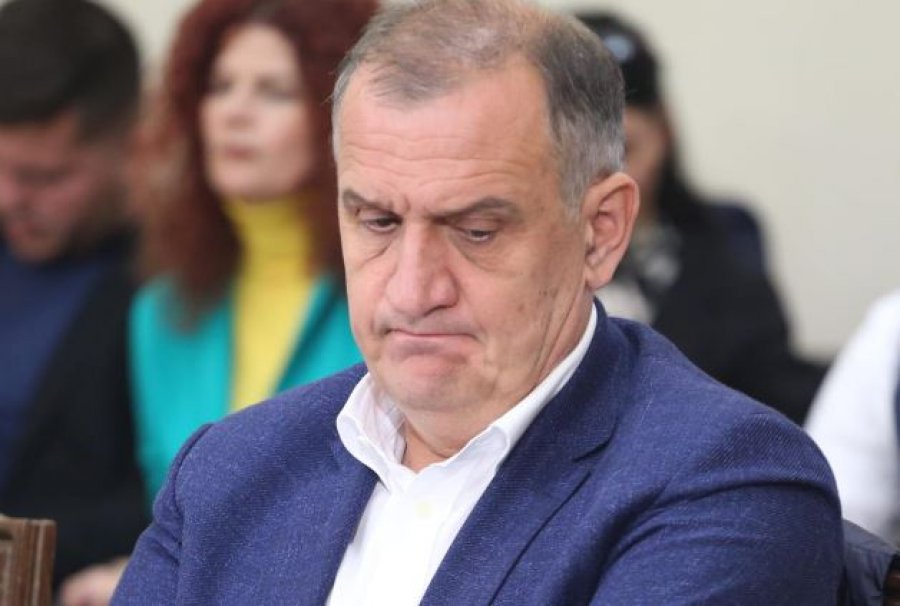
Beqaj told the court that the revised accusation had never been formally communicated to him.
“I have not been informed of the new accusation, neither in writing nor verbally,” he said during the hearing.
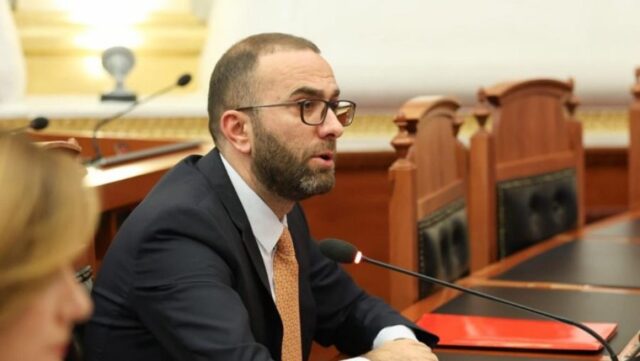
His defense lawyers argued that they cannot prepare an effective defense without a clearly articulated indictment. They noted that prosecutors appeared to rely on the audio recording of a previous hearing as the moment when the accusation was clarified.
The defense disputes that interpretation, maintaining that the recording contains no explicit statement of the revised charge.
Why the court intervened
The court’s intervention reflects a basic principle of criminal procedure.
Under the Albanian Constitution and Article 6 of the European Convention on Human Rights, a defendant must be informed promptly and in detail of the nature and cause of the accusation.
Without that clarity:
- the defense cannot organize its strategy
- evidentiary challenges become impossible
- the integrity of the trial itself may be compromised.
For that reason, the court required the prosecution to clarify and justify the revised accusation before proceedings continue.
The next hearing has been scheduled for 7 April.
A procedural lapse that raises wider questions
The episode also touches on a more sensitive institutional issue.
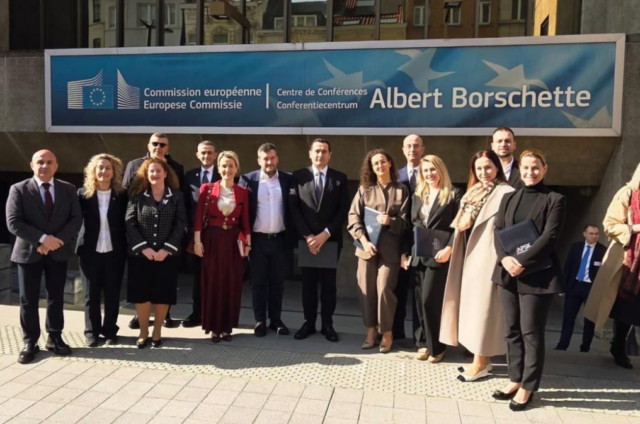
SPAK, Albania’s Special Anti-Corruption Structure, is one of the central pillars of the country’s justice reform. Its prosecutors have benefited from extensive training and technical assistance provided by the United States and the European Union, with particular emphasis on procedural discipline, evidentiary standards, and European human-rights jurisprudence.
For that reason, a dispute over something as fundamental as the formal communication of a criminal charge inevitably raises concern.
This does not prejudge the merits of the case itself. But complex corruption prosecutions depend on meticulous procedural discipline. When ambiguity emerges at such a basic stage of proceedings, it risks weakening the institutional credibility that the reform architecture was designed to strengthen.
A shift in courtroom dynamics
Beyond the procedural dispute, the hearing may signal something more structural.
For years, a widespread perception in Albania has been that prosecutors drive criminal proceedings while judges tend to follow the prosecutorial course. In that narrative, courts sometimes appear to function less as independent arbiters than as validators of prosecutorial strategy.
The exchange in the Beqaj courtroom suggests a different posture.
By requiring the prosecution to justify a substantial change in the accusation, the court reaffirmed a core principle of adversarial justice:
the prosecution is a party to the process, not its director.
Why international observers may be watching
The stakes extend beyond a single courtroom dispute.
Albania’s justice reform has been one of the most heavily supported rule-of-law projects backed by the European Union and the United States in Southeast Europe. Institutions such as SPAK were designed precisely to demonstrate that complex corruption cases could be prosecuted with procedural rigor while remaining anchored in European due-process standards.
When questions arise about procedural clarity in one of the system’s most visible corruption trials, it inevitably attracts attention not only in Tirana but also among the international partners who helped construct the reform architecture.
A test for the reform’s institutional balance
At the same time, the court’s intervention may signal a healthy institutional development.
Justice reforms succeed not when prosecutors become dominant actors, but when courts demonstrate the confidence to scrutinize them.
If Albania’s special courts increasingly assert that role — testing prosecutorial decisions, demanding procedural precision, and enforcing due-process guarantees — the credibility of the entire system ultimately becomes stronger.
The Beqaj hearing may therefore represent more than a procedural correction.
It may be an early indication that the equilibrium between prosecution and judiciary inside Albania’s justice reform system is beginning to take shape.
And that equilibrium — where prosecutors investigate, defense lawyers contest, and judges rigorously arbitrate — is the true measure of whether a rule-of-law reform has begun to mature.
For Albania’s international partners, who invested heavily in building this architecture, the real question now is not only whether corruption cases move forward — but whether they do so with the procedural discipline that gives those cases lasting credibility.