Tirana Examiner, Legal Desk
For fifteen years, the standard governing pretrial detention in Albania asked whether “arrest në burg” was suitable for the case. As of May 4, 2026, it asks whether any less restrictive measure would suffice. The Joint Chambers of the High Court issued the full reasoning of their April 9 decision in the Begtash Zeneli case, partially modifying unifying decision nr. 7/2011, the doctrine that has governed Albanian pretrial detention practice since.
The case itself was ordinary. A Lezhë defendant arrested in flagrancy under Article 283/1, his detention measure converted to house arrest at the Court of Appeal, the prosecution seeking restoration on cassation. The doctrinal architecture the Joint Chambers built on top of this routine procedural posture is what makes the ruling consequential.
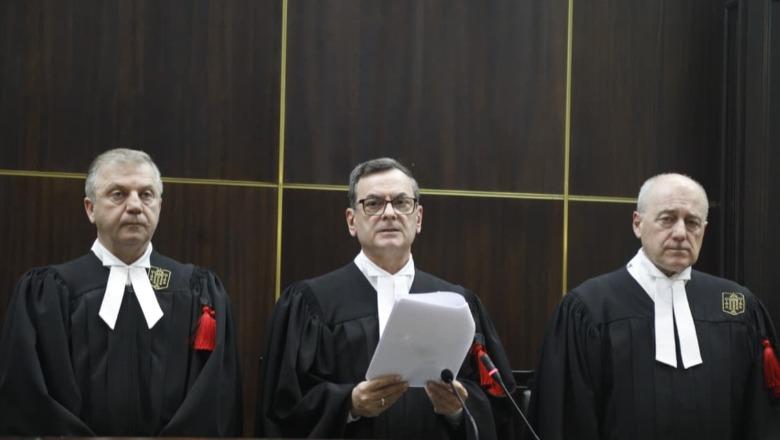
Three observations should govern how the decision is read. The Court did not abandon the 2011 standard; it refined three formulations whose practical application had drifted from what Articles 228 to 230 of the Criminal Procedure Code actually require. The prosecutorial representative at the Joint Chambers, Arqilea Koça, formally supported the partial modification, even while seeking a different disposition in Zeneli’s specific case. The prosecution service was institutionally on board. And the bench was unanimous: sixteen judges across both Chambers, including the Chair of the High Court, Sokol Sadushi.
I. What the Standard Now Requires
The Joint Chambers issued three rules of law, each addressing a separate point at which the 2011 doctrine had drifted.
Genuine consideration of alternatives. A court can no longer justify “arrest në burg” by simply finding it appropriate. It must analyze, on the record, why each less restrictive measure available under the Code is inadequate in the specific case. The reasoning must be individualized, grounded in the evidentiary record, and tied to the concrete risk identified under Article 228(3), with explicit treatment of necessity, suitability, and proportionality.
Individualized dangerousness. Article 230(1) permits detention based on “particular dangerousness of the offense and the defendant,” but the Joint Chambers held, definitively, that this dangerousness cannot be derived solely or principally from offense category, general gravity, or sentencing margin. A narcotics charge does not, on its own, establish particular dangerousness. Neither does a corruption charge. Neither does an organized crime charge. What is required is an integrated assessment combining the specific facts, the manner of execution, the consequences, the personality of the defendant, his or her behavior, individual and family circumstances, and any other indicator relevant to real procedural or social risk.
The burden lies with the prosecution. This is the most consequential rule. The Joint Chambers held, in plain terms, that the burden of justifying both imposition and continuation of “arrest në burg” rests with the prosecution. The court has the corresponding duty to verify and reason that justification at every stage. The Court expressly rejected any standard that conditions release on the defendant producing “positive evidence” of unsuitability. The defendant carries only the lighter burden of raising factual circumstances when invoking them in support of less restrictive measures.
II. The Convention Anchor
The doctrinal alignment is with Article 5 § 3 of the European Convention on Human Rights as elaborated through Buzadji v. Moldova (Grand Chamber, 2016) and Idalov v. Russia (Grand Chamber, 2012): reasonable suspicion is necessary but not sufficient, “relevant and sufficient” reasons must be demonstrated at each review stage, courts must conduct genuine reviews rather than formulaic renewals, and the burden of justification increases with duration. Albania has been bound by this standard since accession to the Convention. The 2011 decision was not in open conflict with it, but the formulations that developed in practice were drifting from what Strasbourg requires. The May 4 ruling closes that gap.
III. The SPAK Implications
The Special Anti-Corruption and Organized Crime Structure has built its detention practice, particularly in its highest-profile files, on three interlocking assumptions: that the gravity of corruption and organized crime offenses establishes dangerousness on its own, that the institutional position of the defendant supplies the procedural risk, and that the defense bears the practical burden of demonstrating that house arrest would suffice. Each is now in tension with binding doctrine. This recalibration shifts the center of gravity from offense classification to evidentiary demonstration.
This is not a constraint imposed on SPAK by political opponents. It is a constraint imposed by the High Court, with the institutional support of the prosecution service itself at the Joint Chambers hearing.
The Veliaj file
Erion Veliaj’s constitutional challenge to his pretrial detention measure is pending before the Constitutional Court on a documentary basis, with the hearing scheduled for May 20. The defense brief argues that democratic authority cannot itself constitute a detention justification, that the exercise of constitutional rights cannot become an aggravating factor for continued detention, and that proportionality requires renewed evidentiary justification at each extension.
Nothing in the May 4 ruling prejudges the merits of SPAK’s underlying allegations against Veliaj, nor does it bind the Constitutional Court, which operates under a different review standard. The substantive case against the Mayor of Tirana stands or falls on its own evidentiary record. What the ruling does is sharpen the doctrinal lens through which the existing detention reasoning will be read. The duty to analyze alternatives, the individualized dangerousness requirement, and the prosecutorial burden of justification are now rules of law that any reviewing court must apply alongside Article 5 § 3.
The Balluku file
The Balluku file is more complex. SPAK’s stated grounds, witness intimidation and evidence destruction detected through special investigative measures, are precisely the kind of concrete, individualized procedural risks the ruling continues to recognize as legitimate. Nothing in the May 4 decision undermines those grounds.
What changes is the structure of the motion. SPAK can no longer treat witness intimidation as self-justifying for “arrest në burg.” The motion now requires explicit analysis of why house arrest, electronic monitoring, communication restrictions, or contact prohibitions would be insufficient to address the same risk on the specific facts. Some of this reasoning was already present in SPAK’s December 2025 request to the Mandates Council. After May 4, all of it must be present, on the record, and individualized.
The broader caseload
The pattern extends well beyond Veliaj and Balluku. Ilir Meta has been in pretrial detention since October 2024, with substitution requests rejected at every level including the Constitutional Court in April 2026. Ilir Beqaj has been held at the Durrës detention center since July 2024, with substitution requests rejected by the Special Court, the Constitutional Court, and most recently a March 2026 offer of financial guarantee. Arben Ahmetaj remains under an “arrest in prison in absentia” measure issued in July 2023, with Switzerland extradition proceedings pending and a parallel SPAK money laundering investigation opened in November 2025. Each of these files features detention reasoning that derives substantially from offense category and institutional position, with limited individualized analysis of why less restrictive measures would be inadequate. Every SPAK detention motion filed after May 4 will need to demonstrate, in writing, the analysis that the previous standard permitted to remain implicit.
IV. What the Ruling Is Not
The ruling does not weaken SPAK’s prosecutorial authority. Reasonable suspicion, the catalogue of qualifying offenses, and the substantive grounds under Articles 228 and 229 remain identical. The ruling does not invalidate existing detention orders; it governs forward-looking review. And it does not represent foreign-imposed reform: the procedure was initiated by the Chair of the High Court, supported by the prosecution service, and decided unanimously by sixteen judges, aligned with jurisprudence Albania has been bound by since accession to the Convention.
V. The Standard Going Forward
For the defense bar, the ruling provides clean appellate handholds. Any first-instance order imposing “arrest në burg” without a documented alternatives analysis, or that derives dangerousness chiefly from offense category, is now vulnerable on review. The May 4 decision will become the most-cited authority in cassation briefs over the next twelve months.
For SPAK and ordinary prosecution offices, the ruling requires a different style of motion. Generic dangerousness language will no longer suffice. Individualized factual reasoning, with explicit treatment of why each less restrictive measure was rejected, becomes the floor.
The 2011 unifying decision was issued two years after Albania’s Stabilisation and Association Agreement entered into force, seven years before the institutional architecture SPAK now embodies began functioning. The framework has aged unevenly. The Joint Chambers, sixteen judges across both Chambers, voted unanimously to refine it. What changed on May 4 is not the law, but the tolerance for reasoning without evidence.