Ferit Hoxha is Albania’s foreign minister. Someone should remind him.
Editorial Board | Tirana Examiner
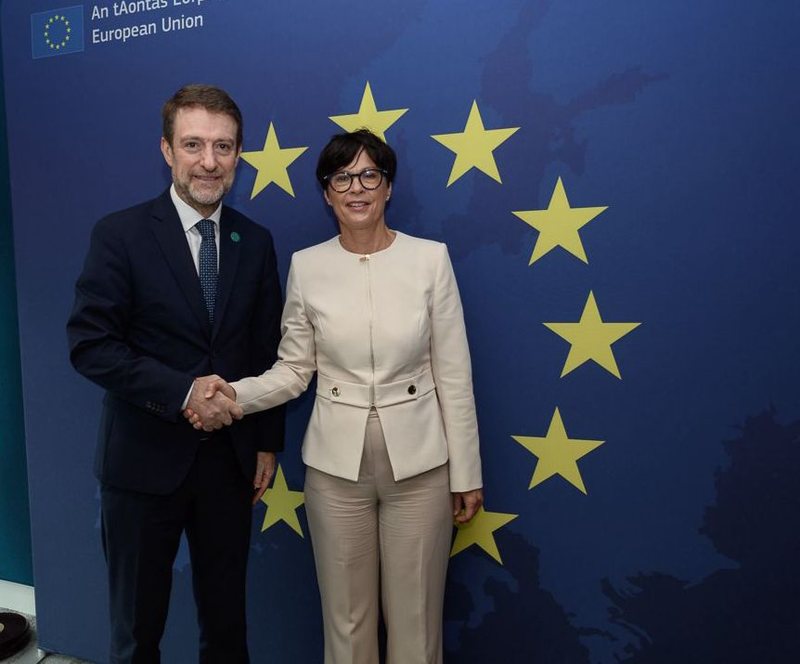
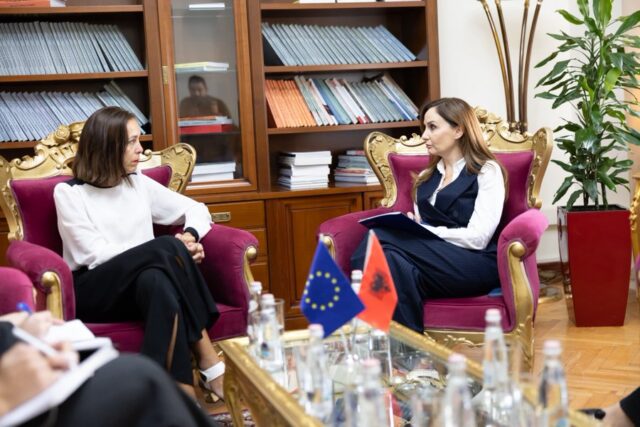
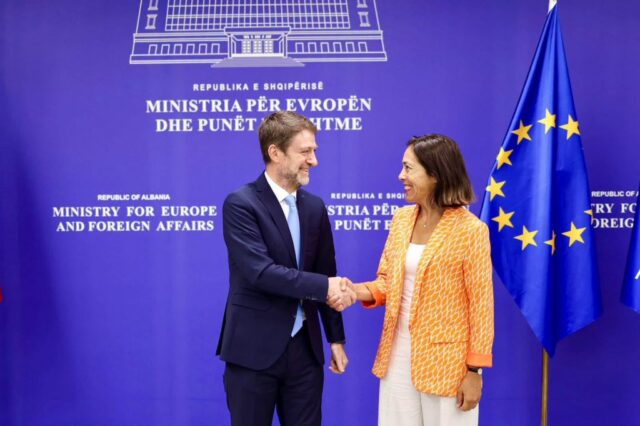
Ferit Hoxha went to Dublin on Thursday, met Marta Kos on the margins of the informal General Affairs Council, and produced another readout that could have been drafted on the Commission’s own letterhead.
“Enlargement is about merit, momentum and result,” he posted. “Albania is ready for all three.”
Mister Bruxelles strikes again.
We use the name deliberately.
Because somewhere on the road from Luxembourg to Dublin, Albania’s foreign minister confused representing Albania in Brussels with representing Brussels in Albania.
Follow the summer. In Luxembourg in July it was “not a menu, we take the full package.” On RTL the same week it was a pledge that Albania would write into its own accession treaty a promise never to use a veto when standing alone against the rest. In Alpbach and Bled last week it was the model applicant on every panel that would have him. Now Dublin: “we will never miss a chance to be present wherever enlargement is discussed.”
Never miss a chance to be present.
There is the problem in one sentence. A foreign minister should not aspire to be in the room. He should arrive with a bill.
Let us dispose of the usual rebuttal first. We want Albania in the European Union, and we wanted it before Mr Hoxha’s ministry had a building. We also know what his team delivered: all thirty-three chapters opened in thirteen months, a record no other candidate holds, and a Commissioner in Ms Kos who wants enlargement more than most of the Council she answers to.
None of that is in dispute.
The price is.
Consider the scoreboard. In March, chief negotiator Majlinda Dhuka said Albania aimed to meet the technical closing conditions for between twelve and sixteen chapters this year. By July the government’s stated target was ten. On 14 July Brussels closed three: science, education and external relations. Nobody mistakes them for the hard chapters.
Nothing since.
Four months from the end of the year, in Dublin, the number disappeared altogether and the target became “as many as possible.”
That is how Mister Bruxelles negotiates. Albania names an ambition. Brussels decides the result. The minister adjusts his vocabulary until the second sounds like the first.
Albania has spent years proving it is the reliable Western ally. It aligns with every foreign policy declaration, contributes to every mission and causes Brussels no geopolitical trouble whatsoever.
What has that reliability purchased?
More instructions.
On that same 14 July, at the press conference after the conference, the Commissioner told the Albanian prime minister to his face that the 2024 protected-areas amendments and the strategic investments law would be repealed this year: “even before these protests began, we had agreed with Albania.” Chapter 27 would not close otherwise.
Read it again.
A candidate had pre-agreed to strike its own statute, a statute the Kuvend’s own European affairs committee found approximates no EU directive, as the entry fee for one chapter.
That is how Brussels treats the countries it considers safe. Loyalty carries no strategic weight there. It qualifies you as a laboratory for whatever governance fashion is circulating through the Berlaymont that season.
A new theory of environmental regulation? Try it on Albania.
Another architecture designed by officials who will never answer to an Albanian voter? Send it to Tirana and call it Europeanisation.
Brussels does not behave this way with governments that know how to create a problem. Serbia, which has asked for nothing and delivered less, receives envoys, exemptions, calibrated language and endless concern for its “domestic political context.”
Albania receives homework.
Mister Bruxelles turns it in early.
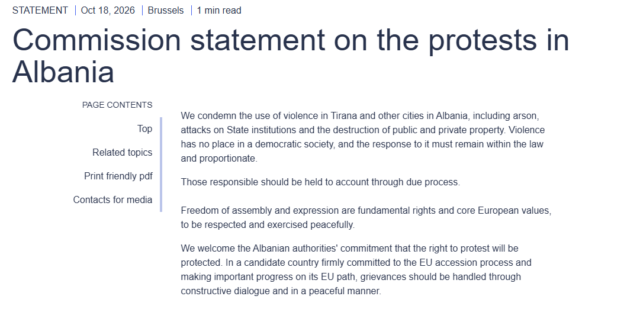
Read the Dublin post for what it leaves out. No date for the next intergovernmental conference, though the Irish presidency has promised a regular autumn series. No word on which member state sits on which file. No mention of the country that had, that morning, entered its ninety-sixth consecutive day of street protest against the government he serves.
Momentum, in this vocabulary, is something that happens to Albania.
It is never something Albania might decline to supply.
Hoxha speaks like the class monitor. He reports compliance before anyone has asked what Albania got for it. He celebrates movement as if movement were a national interest.
Supplication with good tailoring.
His own line, the one he gave RTL, was that merit has to work on both ends.
He was right.
He should try it.
So by all means, Minister, go to Dublin. Go to Brussels. Go wherever enlargement is discussed.
But the next time you enter the room, stop telling them how ready Albania is.
They know.
Tell them what Albania expects.
You are not Mister Bruxelles.
You are the Foreign Minister of Albania.
Try sounding like it.