Editorial Board
On the day Albania crossed the hardest procedural threshold in its accession process, the most authoritative German voice on the Western Balkans published a thread about the future of European enlargement. Michael Martens of the Frankfurter Allgemeine Zeitung named the candidates for whom the European Union should now consider transitional architecture below full membership. Ukraine. Moldova. Montenegro. The rest of the Western Balkans appeared as a residual category. Albania did not appear at all.
The omission is not careless. Martens writes from inside the Berlin and Vienna policy consensus that has shaped German enlargement thinking for two decades, and the consensus is what the thread reflects. The countries he names are the countries that consensus treats as accession files requiring political imagination. Albania, on Tuesday, became the second candidate in the region to clear the interim benchmarks of Cluster 1. By the methodology’s own metric, no candidate has moved faster. The line-up nevertheless excludes Albania, and that exclusion is the most plausible reading of what the omission marks.
Examine the candidates Berlin is willing to think about. Montenegro is methodologically advanced and strategically exposed. Russian financial, political, and security networks persist inside the state, the 2016 coup attempt sits in the public record, and the current governing coalition includes elements whose orientation cannot be called European in any honest sense. Moldova and Ukraine are candidates because of Russia, not despite it. Their vulnerability to subversion, energy capture, and electoral interference is the operational reality their governments fight every week. Berlin advances them because the alternative is losing them. That is legitimate strategic logic. It is not values alignment.
Albania has no Russian channel inside the state. No Chinese accommodation that the government tolerates. No strategic ambiguity deployed as a negotiating instrument. The pro-European orientation is not a posture adopted for accession purposes. It is the structural position of the country, supported across the political spectrum to a degree no other candidate matches. Albania is the only candidate in the region whose accession requires no containment logic, no geopolitical insurance, no special architecture to compensate for unreliability. It is the candidate that needs least and delivers most.
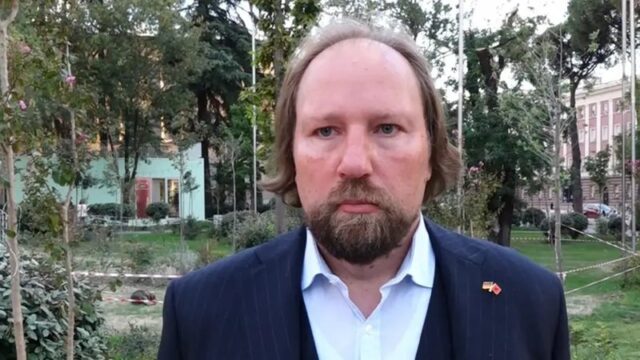
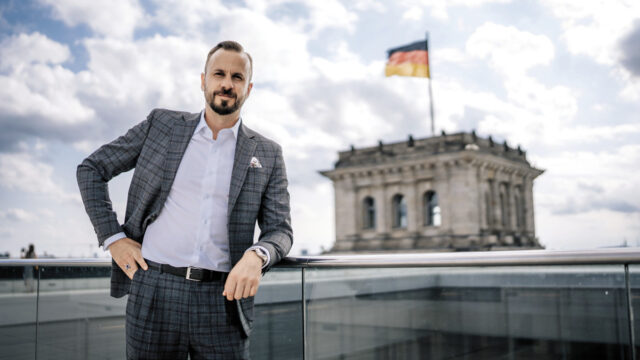
It is also the candidate receiving the harshest treatment. Berlin authored the harshest interim benchmark text applied to any candidate in recent years and applied it to the candidate moving fastest. Berlin’s Minister of State for Europe received an opposition delegation built around contesting that benchmark. The Bundestag rapporteur for the region rehabilitated engagement with a non grata former prime minister. The Commissioner who described Serbian legislative regression as backsliding has not used comparable language about anything that has happened in Tirana. None of this is enlargement policy applied evenly.
Martens’s thread is the journalistic shape of that inversion. Single-market workarounds are designed for candidates Berlin wants to help past obstacles. The candidates Berlin treats as strategically necessary appear in the line-up, vulnerabilities and all. The candidate Berlin treats as strategically reliable does not appear, because reliability under this framework produces calibration rather than confidence. That is the inversion. Vulnerability is rewarded with patience. Reliability is rewarded with conditionality.
The country missing from the list is the country that has done the most to belong on it, and the only one in the region whose European credentials require no qualification. The silence is louder than the paperwork.
That is what the omission tells us.