By Ardit Rada (Tirana)
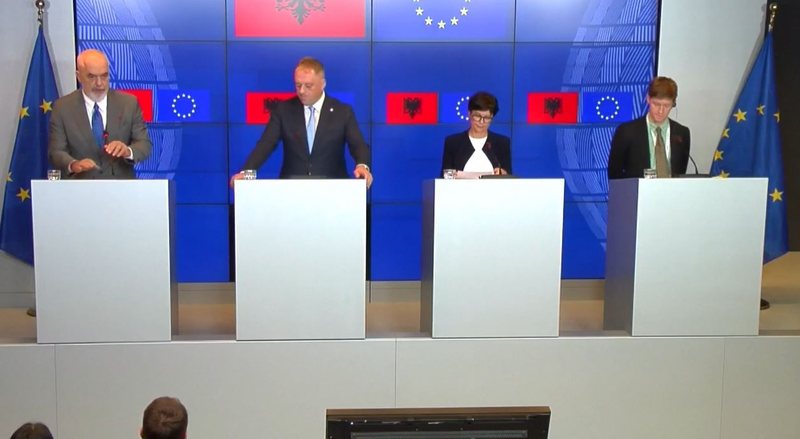
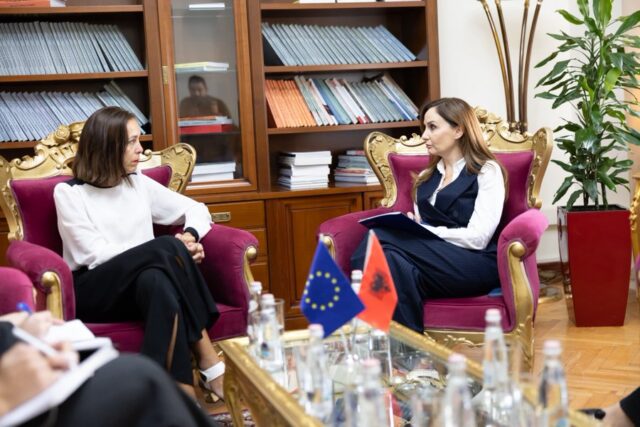
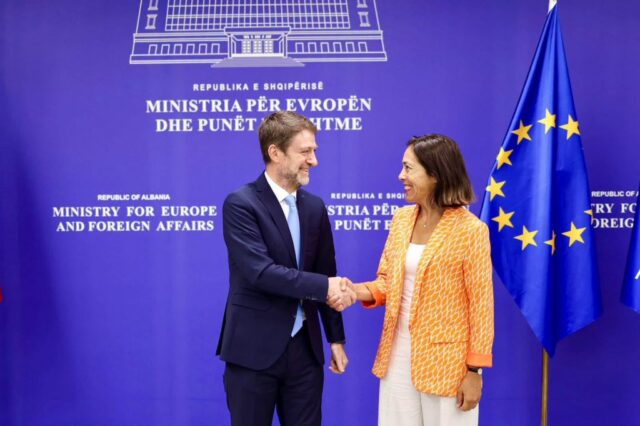
At 18:12 in Luxembourg, Edi Rama told the tenth intergovernmental conference that Albania had taken another decisive step toward its place in the European Union. Chapter 20, enterprise and industrial policy, was provisionally closed. Four chapters down. Marta Kos said membership before 2030 was possible if the pace held. The Irish foreign minister said Dublin wanted to close more before its presidency ends.
At 18:37 in Tirana, three fires were burning on Rruga e Durrësit.
The protest at the Ministry of Education had a programme. Students who gathered at 14:00 carried banners about university conditions, financial support and jobs. One told BIRN he came to Tirana to study and was forced to work instead. Those are real grievances, and nothing in them explains what happened at 15:00, when a line of young men in black masks and surgical masks moved to the front, tore the railings off the pavement and threw them at the building. Paving slabs followed. Then molotovs. By 20:30 masked men were inside Tirana Municipality lighting flares. By 21:46 the wooden stalls of Pazari i Ri were on fire and shopkeepers were putting them out by hand. A branch of Iute Credit, next to the Vatican embassy, was gutted, its furniture burned in the street, its ATM smashed open and searched.
The Health Ministry’s evening count was 26 treated: six special-forces officers with blunt-force injuries, two journalists, one hit on the head with a brick, a foreign diplomat, bystanders, protesters. A 19-year-old protester has a fractured femur, and four officers and the chief of Commissariat No. 1 were suspended within hours pending an investigation into how he got it.
A student with a banner about dormitories does not bring a molotov. Someone did, and someone taught the men behind the banners to split in two, fall back from the water cannon and come back through the side streets. The police and the prosecution now have the job of saying who. Until they do, the people who called the protest, the Flamingo movement by AP’s account, and the party whose figures stood in it owe the public an answer to a simpler question: how a demonstration about universities became an evening of fires across the capital, and why the people doing the burning had covered their faces before they arrived.
Luxembourg was on the calendar for days. Everyone in Albanian politics knew 13 October would produce the images of Rama beside Kos, of an Albanian delegation celebrating a closed chapter, of the video Rama posted saying Albania will not leave until its flag is on the wall. Those images were made for the evening news. The evening news ran a burning advertising board on Zogu I instead.
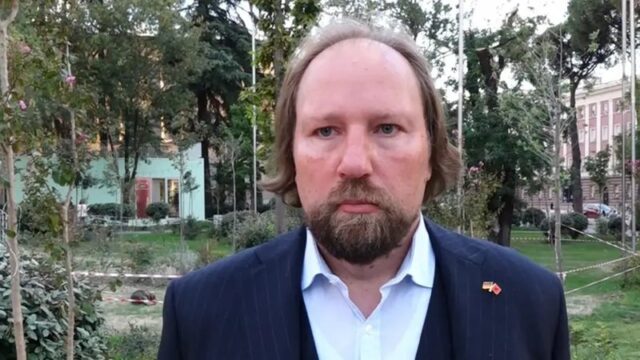
Gjin Gjoni, PD member of parliament. Ilirjana Kuçana of PD, filmed trying to stop the police from detaining a man with a bloodied face. Erald Kapri of Partia Mundësia. PD’s youth forum. Jamarbër Malltezi, Sali Berisha’s son-in-law, posting video from the street. Berisha himself shared footage of the police and called it terror against students. Seven PD MPs went to the Trauma hospital that night. The parliamentary group meets at noon tomorrow. Shqiptarja went further and called the protest PD-sponsored under a student mask; that is the paper’s judgment. The names above are photographed.
Kos said something in Luxembourg meant as encouragement. Membership is a national project, she said, and it must include the government, the opposition, civil society and citizens. On the day she said it, the opposition’s visible contribution to the national project was on Rruga e Durrësit, in front of a masked line, and its leader’s contribution was a video calling the police terrorists.
Whoever wanted Albania’s European day to end in smoke got what they wanted. Tomorrow’s headlines in Tirana are about suspended policemen and a broken leg, not Chapter 20. The people who stood in that street now have a choice the masks did not leave them: explain the date and the molotovs, or own them.