A Serbian-facing collector is watching Albania’s army. The purchase meant to shut that window sits in a criminal file that leaked on its first day. SPAK has every right to investigate; Albania’s allies have every reason to ask whether the country is investigating itself into permanent exposure.
Drizan Shala, Security Desk
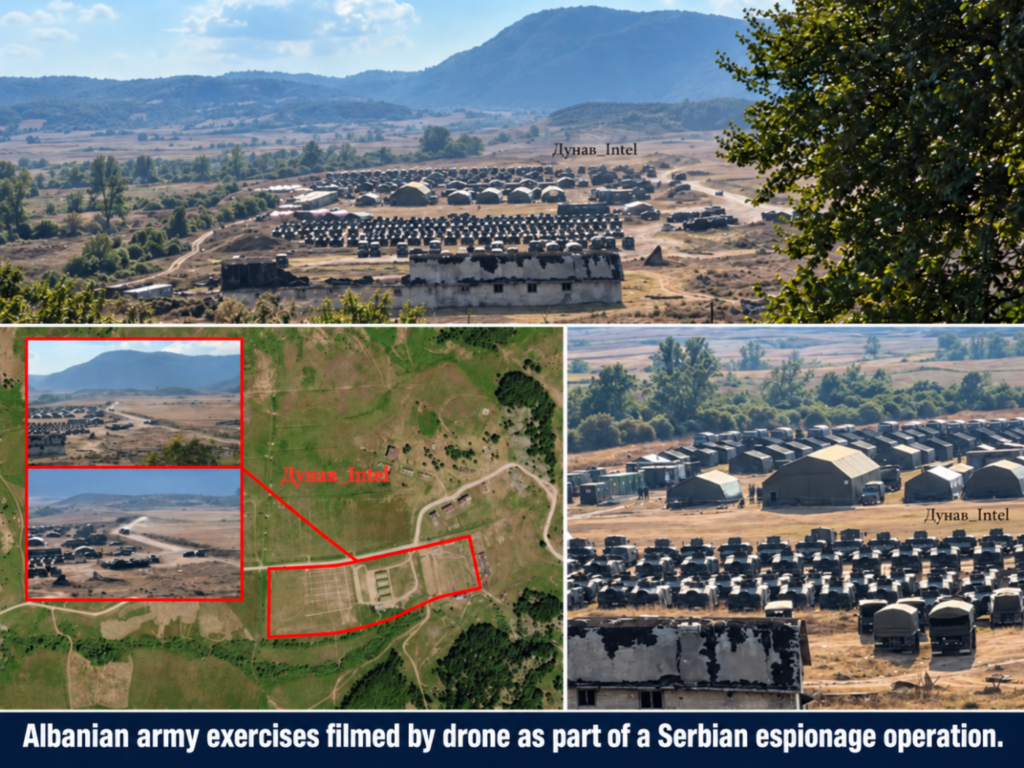
On 2 October an account on X called Dunav Intel, which stamps its pictures in Serbian Cyrillic, published what it called exclusive images of the Albanian Armed Forces in the field at Bizë: tent lines, columns of tactical vehicles, the old barracks, photographed from a position overlooking the range while the troops were there. By its own statement it has watched the site for more than two years. It logs Albania’s Bayraktar drones out of the NATO air base at Kuçovë by transponder code, one flight at a time.
A senior defence official told Tirana Examiner that this is a persistent problem, and that Albania has no counter-drone capability against this kind of espionage or against other threats. The gap is written into public documents: the Military Strategy names counter-drone defence as a modernisation priority, and the 2026 defence budget was presented as paying for anti-drone systems.
My assessment is that the feed is one visible part of a wider surveillance effort against the Albanian Armed Forces, hostile in character and Serbian in interest. President Vučić calls Albania’s defence partnership with Croatia and Kosovo “directed against Serbia”. Serbia runs the region’s largest defence budget, and three weeks ago it exercised an offensive operation on Pešter with the leadership of Republika Srpska in the stand. Once a state defines a partnership as a threat, collection against its members is routine work.
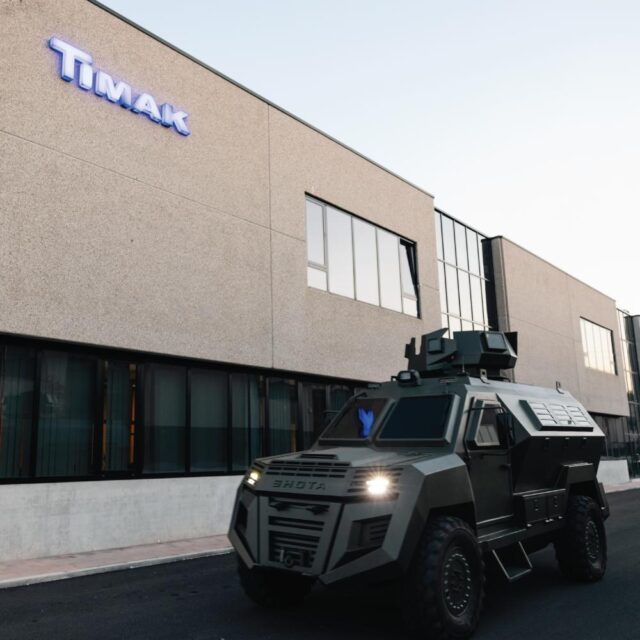
Albania is exposed, knows it, and is trying to close the gap. After decades of neglect it is building everything at once: its first home-made tactical vehicles, an ammunition line, a reserve, counter-drone and air defence, a partnership with two neighbours. Most of those capabilities begin with procurement, and procurement is the stage at which a capability is easiest to kill.
There are two ways to keep a military site exposed. One is to defeat the system that protects it. The other is to make sure the system never arrives. Albania is making the second remarkably cheap.
One broadcast was enough to start it. On 7 September Arben Ahmetaj, a former deputy prime minister charged by SPAK with corruption and money laundering and internationally wanted since 2023, played cut segments of a covert recording on Syri TV from Switzerland. It caught a broker boasting, and no shipment, payment or state order. Within three weeks a defence industry Albania had spent two years building was answering for arms trafficking. The fugitive still holds the recording. So far as is public he has not handed it to a prosecutor, and he releases it a few minutes at a time, on his own calendar.
Foreign partners asked for additional compliance review, and at least one signing has slipped, as this publication has reported. An Albanian ammunition line does not enter an empty market. Each signing that slips is a contract a competitor in the region can take.
Then the prosecution arrived, and it was right to. This desk asked for the investigation. That is what makes the mechanism so effective. Once an allegation of that size is in circulation, SPAK cannot pretend it has not heard it. The investigation becomes the next headline, and its existence is offered as proof that the allegation contained something. A claim produces a file. The file authenticates the claim. Leaks from the file produce the next claim. The partners go on waiting.
On Friday investigators took documents out of the Ministry of Defence. By mid-afternoon the file number, the court’s approval of a personal search and the kind of papers taken were on the portals, credited to sources. By Saturday one outlet had the offences said to be registered, the seizure of a senior official’s telephone and the first witness summonses, part of it attributed to Bureau investigators. The prosecution had said nothing. The file was speaking anyway.
Tirana Examiner reported on Saturday that prosecutors are examining whether a defence purchase should have gone to tender. According to our information, which does not come from the investigative file, the purchase is a counter-drone system: the equipment that detects and brings down hostile drones over ranges like Bizë, bases like Kuçovë, and the NATO summit Albania is due to host. The procurement meant to close the gap is being investigated by a process that is itself failing to stay confidential. If the papers carried out of the ministry are the ones our information describes, they set out what Albania lacks and what it is buying to fix it. On the evidence of the first day, nobody can promise they will stay where they are.
The camera on the hill gives a hostile service the outside of Albania’s defence. The scandal machinery supplies what the camera cannot see: which procurement is under investigation, which officials are under scrutiny, and whether the State can keep its own file closed. Nobody had to coordinate a Serbian-facing account, a fugitive in Switzerland, a television programme and a leaking file, and I do not claim anyone did. Coordination is unnecessary when the result is the same. A hostile collector could not have asked for a better sequence.
Intent can be left to the courts. The effect is on the ground: the repair is under suspicion, the partners are hesitating, and the camp is still being photographed. The light infantry battalion group certified to NATO standards at Bizë last month trained under that camera. The reservists returning to service for the first time in three decades will train under the same open sky. The scandal has a timetable. So does the collector. Only one of them benefits from delay.
A country rebuilding its defence cannot protect itself if an allegation is enough to turn the acquisition of a capability into proof of corruption before the facts are in. Scrutiny is owed. SPAK should take every page it needs, read it under seal, with cleared officers and few hands, and decide fast. If Friday’s disclosures came from an official entrusted with the file, Article 295/a of the Criminal Code is explicit about the prosecutor and the judicial police officer. Where they came from should be established with the same energy as the purchase.
The enemy does not need to break in. It does not need to recruit the fugitive, brief the studio or place a man inside the prosecution. It only needs enough people in Tirana to go on turning the repair of its defences into a scandal. The question used to be who is watching Albania’s army. Now it is why so many people inside Albania are making it harder for the army to stop them.
Drizan Shala is a security researcher and doctoral candidate at the University of Sarajevo. He writes on defense, private security, and the security architecture of the Western Balkans.