A party meeting held in secret produced five televised versions of itself. The studios are to blame, and so are the people who shut the doors and then explained nothing.
By Musa Kurtulaj (Tirana)
Editor’s note: The National Assembly is the governing forum of Albania’s ruling Socialist Party, not the country’s parliament. It met on Saturday 14 November 2026 at a resort on the Bay of Lalëz, near Durrës. Prime Minister Edi Rama, the party’s chairman, had the media feed cut as he began to speak, and the session went on without journalists or cameras. Accounts of what followed, including a reported confrontation over former Speaker of Parliament Elisa Spiropali, reached the public through unnamed sources. This piece first appeared in Albanian on 17 November 2026.
The meeting of the National Assembly of the Socialist Party of Albania, held behind closed doors on Saturday, seems to have had a second and much noisier life outside the hall. On Monday night four or five of Tirana’s main television studios devoted themselves almost entirely to it. They built their discussions, analyses and scenarios on claims from anonymous sources who were supposed to have been in the room or to have been told what went on there.
What stood out was not simply the media’s interest in an important political event. It was the confidence with which information was served up that, for the most part, came with no official confirmation at all. Divisions, discontent, clashes, backroom dealings and every kind of interpretation were turned into television, while the public was left without a credible answer as to what had really happened in that meeting.
So the Assembly was held behind closed doors, but the public discussion of it was held with doors, windows and gates wide open. Every anonymous source seemed to have its own version and every studio its own truth. That raises questions about the standards of media reporting, and also about the responsibility of the people who organised the meeting.
There is something deeply paradoxical in the way television reporting works in Albania today. A political party has only to hold a meeting behind closed doors, and at once several television studios turn into courtrooms. Accusations are raised, discontent is uncovered, splits are announced and dramatic developments are forecast, all in the name of mysterious sources whom nobody knows, nobody identifies and, above all, nobody will vouch for!
And there is the paradox: a meeting about which the public knows almost nothing suddenly becomes the subject of long stretches of television analysis, in which everyone knows something, everyone has an exclusive, and all of them together produce a media truth that may have nothing to do with the real one. A marvel of our modern journalism: the less official information there is, the more amateur expertise in the studio!
But the responsibility does not rest on the media alone. Should the organisers of these meetings not reflect as well? What is the point of closing the doors to the media when inside the hall there are always people ready to become anonymous couriers of information, often selected, distorted or served up to suit their own interests? In these conditions, secrecy no longer protects the confidentiality of the discussion. It creates the ideal ground for manipulating it and for deceiving the wider public.
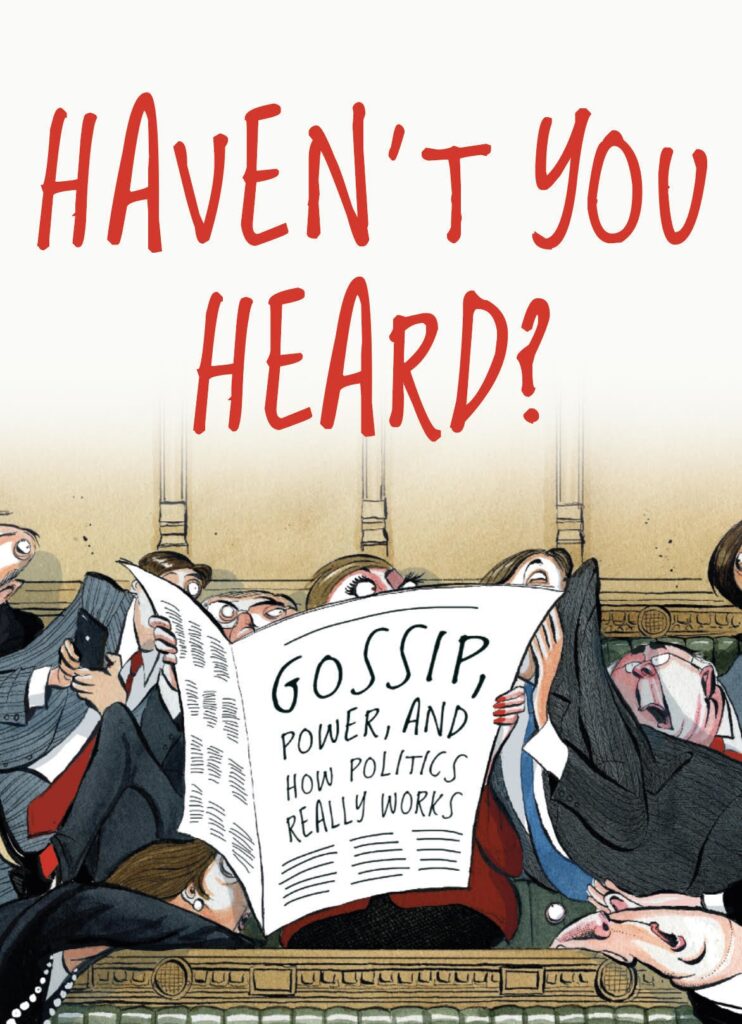
At times one even has the impression that these meetings do not end when the door of the hall closes! No, that is exactly when the second meeting begins: the one in the television studios, where each builds its own version, with no minutes, no identifiable witnesses and no obligation to prove what it claims.
If a political body chooses to discuss internal matters away from the public eye, that may be its right. But it cannot then ask the public not to believe everything in circulation while taking no trouble to clarify anything itself. Institutional silence, in a country where gossip has become an industry, is not always a sign of maturity. Often it is a form of irresponsibility that leaves the interpretation of events in other people’s hands.
Hence an uncomfortable question: whom does this fog of information really serve? The parties that claim to be protecting their unity? The media that have discovered audiences feed better on intrigue than on facts? Or those figures who, through deliberate leaks, seek to strike at opponents, shape perceptions or negotiate their positions behind the scenes?
As things stand, it might be more honest to hold such meetings in the open, wherever the nature of the discussion allows. At least the public would hear directly what is said, instead of having to choose among five television versions, each more dramatic than the last. And if there are strong reasons for keeping the doors closed, then serious public communication from the organisers must follow, not a few foggy sentences that raise more questions than they answer.
In the end, the public has no need of fairy tales served up as exclusives, nor of analysts who, with “admirable” confidence, interpret even what they did not hear. It needs facts, transparency and accountability. Journalism is not the art of filling gaps with guesswork, and political communication is not a game of hide-and-seek in which everyone pretends to know nothing after half the hall has talked!
When everyone speaks in the name of sources but no one answers for the truth, what we have is no longer journalism that informs, but a market where fog is bought and sold. And unfortunately, in this market, the victim is the last one in the chain, and that is always the citizen!
Musa Kurtulaj is a journalist and commentator based in Shkodër, where he is director of the television station TV1 Channel. He writes regularly on Albanian politics for the national press.