By Albatros Rexhaj (Tirana)
Ivica Dačić was born in Prizren. So was I.
He was born on 1 January 1966. His father was a Serbian policeman who had come from Serbia on a posting to our city. Those were the Ranković years, and Kosovo Albanians know what the police of those years meant for them. Six months after the boy was born, the family went back to Serbia. I am a native of the place, with highland roots going back generations. I do not know what memories a man can have from the first six months of his life. I know my own.
On Wednesday, 7 October, at a campaign rally in Raška, a short way from the Kosovo border, Dačić told his own people: “Sooner or later the Serbian flag will fly over Prizren, you can be sure of it.” Then he added, unprompted: “They will say we are threatening someone.”
He is right. That is what we say.
Today he is Serbia’s deputy prime minister and interior minister. He commands its police. In the 1990s he was the spokesman of Slobodan Milošević’s party. Two days after his speech, at President Vučić’s rally in Kragujevac, Milan Radoičić, the man who has taken responsibility for the Banjska attack, appeared beside the president’s son.
I have heard this language once before. In 1988 I was fourteen. I had grown up with Brotherhood and Unity and I believed in it. I could not understand where all that hatred had come from.
Three years later, in September 1991, the Serbian police stopped us at the school door. The Serbian children our age went in. They were the ones we had played with in the neighbourhood, the ones we shared childhood memories with. They did not say a word. Our childhood friends thought the school belonged to them alone. That is when I understood that to them we were something less than human.
First came the words. Then the door was shut on us. Seven years later came the tanks, and with them the graves and the columns of people heading for the border. The younger generations do not remember that time. I want it to stay that way.
That is why I am writing to two men: Edi Rama and Albin Kurti. You are the prime ministers of the two states of one nation. We have heard all your quarrels, and often we have taken sides. Today I do not care who started the quarrel. I care who sets it aside first.
Serbia has allocated to its army this year 3.3 percent of everything the country produces. It has bought Chinese missiles that fly at several times the speed of sound. It is bringing back compulsory military service. In September, on the Pešter plateau, its army rehearsed what it itself called an “offensive operation”, with the leadership of Republika Srpska in the stands. Nobody is threatening Serbia. No neighbour wants land from it. Who, then, are all these weapons for? Dačić gave us the name.
The Croats, who know the Serbs better than anyone, no longer hide it. On 2 October, in Zadar, their defence minister, Ivan Anušić, said that “nobody buys this many weapons just to have them”. Croatia, he said, is not the first target, “but unfortunately some neighbouring states may be”. Serbia has two neighbours outside NATO: Bosnia and Kosovo. I believe the Croats. They too have heard this language once before. Serbia is preparing for war.
The world has changed. War clouds are gathering over Europe. The war in Ukraine has entered its fifth year. The rules we grew up with, that borders are not changed by force and that America always comes, are no longer certain.
You will tell me Kosovo has KFOR. It does, and that is why we sleep soundly. The Armenians of Karabakh slept soundly too. Some two thousand Russian soldiers were guarding them. Azerbaijan armed itself for years with oil money, while the Armenians were busy with each other. It waited until Russia was bogged down in Ukraine. On 19 September 2023 it attacked. The war was over within a day. The Russian soldiers did not move from their barracks. Within a week more than a hundred thousand Armenians left the homes where they had been born.
NATO is not Russia, I know. But Azerbaijan did not defeat Russia. It waited for Russia to be busy. I believe Belgrade has read this story with a pencil in hand and is following it point by point: it arms, it rehearses the attack, and it waits for the day NATO’s mind is elsewhere, for a lightning war that is over before the world wakes up.
And we, militarily, are weak. This has to be said without blushing.
Beneath the noise of the quarrel, though, national consciousness has moved forward. On 18 March 2025, in Tirana, Albania, Kosovo and Croatia signed a declaration on defence cooperation. The states had understood the danger even while the men at the top were busy with each other.
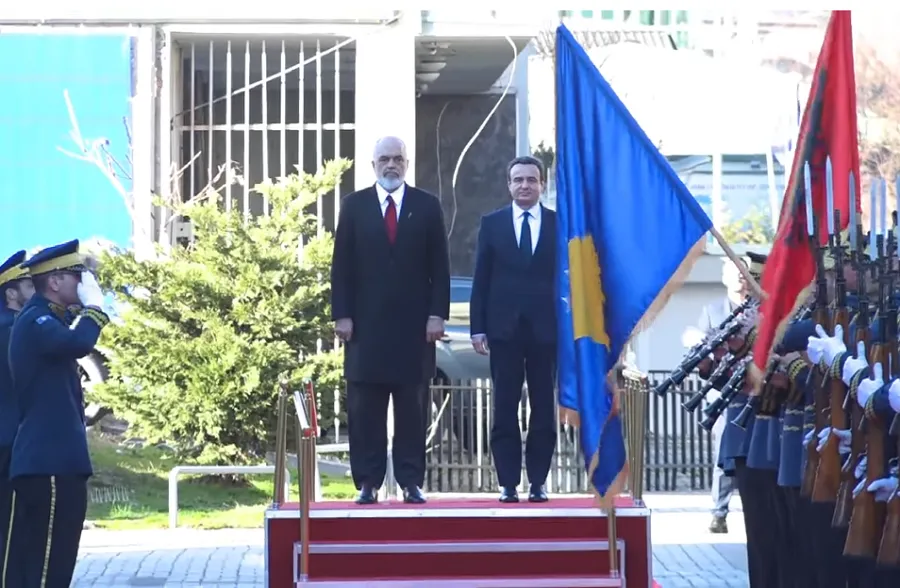
This year the signals have come from both men. In February Edi Rama came to Pristina for the launch of a book by a friend, Ahmet Shala. He had come for a book. Albin Kurti rolled out the red carpet and received him with an official ceremony. In March Rama told the newspaper Türkiye Today: “If Kosovo is touched, Albania is touched. If Kosovo is under existential threat, Albania is under existential threat.”
Then came 14 July. Rama was on a Serbian television channel and they tried to push him into speaking against Kurti. He could have done it. He did not. “Do not ask me,” he said, “to say in a foreign language things about Albin Kurti and about my brothers and sisters in Kosovo.” There are things you do not say to the common adversary, however angry you are with your own.
In September, when Kurti’s opponents were calling his Assembly illegitimate, and with it the Government, Rama congratulated him. Four signals, from February to September.
Now the signals have to be turned into work. In February, before the Assembly, Kurti promised one billion euros for defence, and he was right to. For more than a year Kosovo did not have full institutions, and that was a reason to wait. Today it has an Assembly, a Government and a President. That reason is gone. We have far more than we had in 1998, and we have still not done enough with it. We have no time to get lost in ideological details or in grudges from the past.
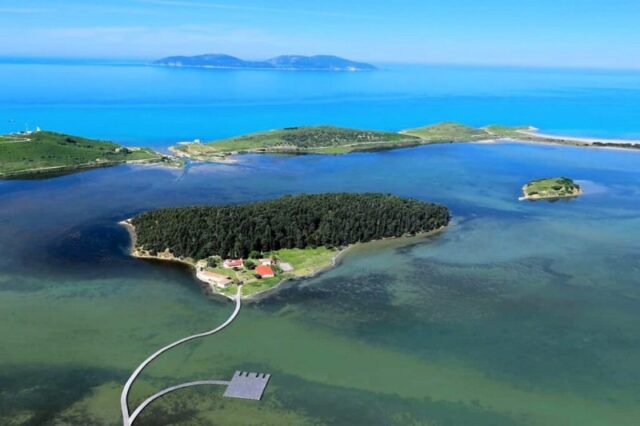
On 28 November, bring the two governments together in Vlora. We have talked about the flag all our lives. That day, talk about the people who live under it.
Talk about defence and the money it requires, because we have invested too little. We need a military industry of our own, so that we at least make our own ammunition, and the modern systems we lack. We need young people who love this land without having to lose it first, and our diaspora in Europe and America, with the knowledge, the money and the open doors it has.
And call in the opposition, in Tirana and in Pristina. Not everything has to be quarrel and tension. On some things we must all stand together, and defence is the first. It is not the property of those in power and it does not change every time the government changes. The Armenians were busy with each other until the last day.
Think of the night something starts in the north of Kosovo. If that night Tirana and Pristina have no joint plan, nobody will remember our Albanian quarrels. They will ask only where the two of you were when there was still time.
The men who gathered in Vlora in 1912 did not think alike and did not all like each other. Nobody is asking you to become friends. You simply have no right to leave the security of Albanians hostage to your relationship.
I am no longer fourteen. I no longer believe that hatred passes just because reasonable people want it to pass. I know what it is to be left outside the door while those who could speak stay silent. I do not want an Albanian child to learn this ever again.
Dačić, who was born in my city, has said where he wants Serbia’s flag. 28 November is Flag Day. Where will you be?
Albatros Rexhaj is an author, playwright, and analyst with a background in national security studies and nearly three decades of experience in political and security affairs.
This article was originally published in Albanian on 11 October 2026 under the title “Ku do të jeni më 28 Nëntor?”