Albatros Rexhaj
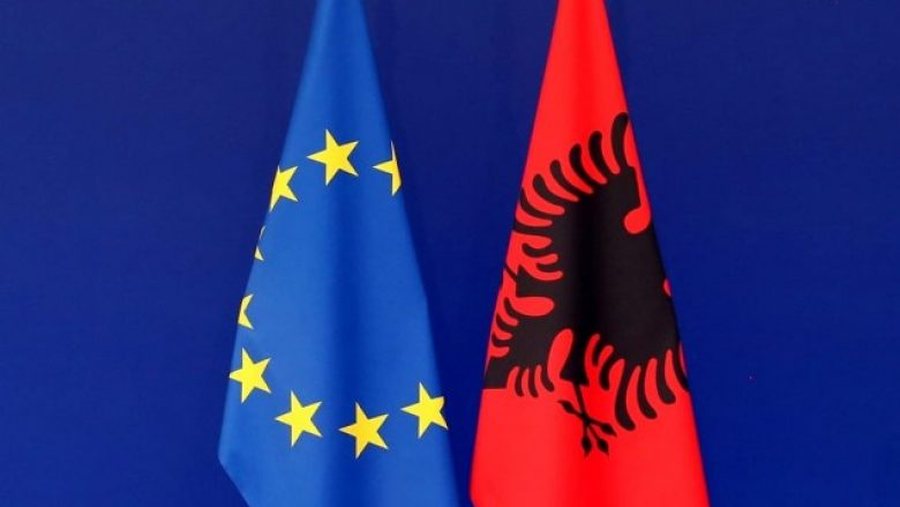
A technical finding is being treated as a political choice. The Interim Benchmark Assessment Report for Albania has received a positive assessment from the European Commission. The draft common position is on the table. Member states are deliberating. What is producing the delay is not the evidence. It is the weight being placed on a decision the EU’s own methodology does not authorize member states to make on political grounds.
The IBAR is not a membership decision. It is not a political endorsement. It is a technical finding on whether a candidate country has met the rule of law benchmarks set by the Council itself as the condition for beginning to close negotiating chapters. The question before member states is a bounded one: does the record meet the threshold? What follows is an attempt to answer that question precisely and honestly.
What the IBAR measures
The IBAR evaluates progress on Chapters 23 and 24 against interim benchmarks agreed at the opening of negotiations. It does not assess whether Albania has completed its accession reforms. It assesses whether the foundations are in place to begin the closing phase. Montenegro received a positive IBAR in June 2024 and began closing chapters. Applying a different threshold to Albania at the same stage would not be caution. It would be a deviation from the EU’s own merit-based method.
The benchmark record, honestly assessed
Albania undertook judicial reform at a scale and speed that has no precedent among current candidate countries. The vetting process subjected 804 judges and prosecutors to comprehensive integrity scrutiny. It is approaching constitutional completion within the June 2026 deadline. The process was costly domestically and politically. It was implemented in full.
SPAK is operational and has demonstrated institutional reach that extends to the highest levels of political life. It has investigated and indicted serving and former senior officials. Its mandate, budget, and jurisdiction have not been legislatively touched. The Criminal Assets Recovery Office, developed in cooperation with France, has begun producing measurable results. Joint investigation teams with Italy, Greece, and Spain are active and documented.
On Chapter 24, the law enforcement cooperation record is substantive. Albania has aligned its border management framework with Schengen standards, expanded operational cooperation with Europol and Frontex, and demonstrated consistent implementation across successive EU agency assessments.
The gaps are real and should be named. Judicial vacancies remain a structural challenge following the scale of the vetting process. Case backlog reduction is progressing but unevenly. The post-vetting transition presents an administrative challenge that Albania has documented in roadmaps shared with the Commission but has not yet resolved in practice. IPARD administrative capacity remains under development, with entrustment not yet achieved.
These gaps do not constitute grounds for withholding a positive IBAR finding. They constitute precisely the areas where a rigorous common position should attach forward conditions. The distinction matters. An IBAR is not a certificate of completion. It is a finding that the foundations warrant moving to the next phase, with specific accountability measures attached to continued progress.
What a rigorous common position should include
A positive common position that serves both Albanian accountability and European credibility should attach four specific forward conditions.
First, demonstrated maintenance of SPAK’s operational independence through the post-vetting transition period, measured against continued case progression and institutional budget integrity.
Second, delivery against the judicial vacancy reduction roadmap Albania has shared with the Commission, with specific targets at six and twelve months.
Third, measurable progress toward IPARD entrustment, as the clearest available test of Albania’s administrative capacity to manage EU funds under its own authority.
Fourth, sustained full alignment with EU Common Foreign and Security Policy, which Albania has maintained without exception and which distinguishes its strategic posture from every other Western Balkans candidate currently in negotiations.
These conditions are not concessions to political pressure. They are the architecture of a credible positive finding: one that advances the process while maintaining the criteria the process is built on.
The cost of inconsistency
There is a window. The geopolitical case for enlargement has not been stronger since Thessaloniki, and the political conditions that produced that momentum are not permanent. The Commission has assessed Albania’s benchmark record positively. Montenegro is closing chapters.
Continued deliberation beyond what the evidence supports is not the exercise of political judgment within the method. It is the substitution of political preference for the method itself. That substitution carries specific costs that deserve to be named. It erodes the credibility of merit-based enlargement as a method, creating precedent for conditionality drift that will complicate every subsequent IBAR decision in the queue. It signals to other candidates that benchmark delivery is not the operative variable, that political timing and relational calculus determine outcomes regardless of the record. And it diminishes the standing of member states whose enlargement credibility rests specifically on the consistent application of method over politics.
Albania has opened all 33 negotiating chapters at a speed Commissioner Kos described as unprecedented. It has aligned with EU foreign and security policy on Russia, Ukraine, and sanctions with a consistency no other Western Balkans candidate has matched. It has restructured its judiciary from its foundations using a framework the EU itself designed. It has done this without geopolitical leverage, without oscillation, and without the strategic patience extended to candidates whose cooperation on other files was deemed indispensable regardless of their democratic record.
The Commission’s assessment is clear. The benchmarks are met. What remains is not a question of evidence. It is a question of whether member states will apply the rules the Council itself set, or substitute political preference for the method they are bound by.
Albatros Rexhaj is a contributing analyst at the Tirana Examiner, where he covers Western Balkans security, EU enlargement, and institutional affairs.