Branch elections, diplomatic meetings, and an internal critic combine to expose the gap between the DP’s European posture and its domestic reality.
by the Tirana Examiner (Albania)
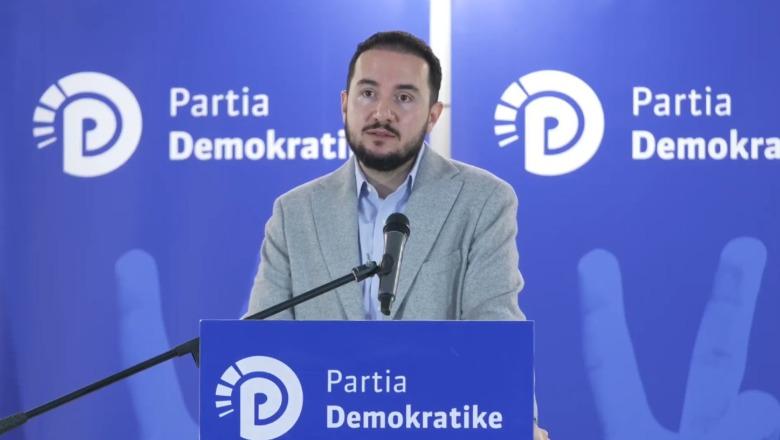
Democratic Party parliamentary group chairman Gazment Bardhi met Spain’s Ambassador to Albania, Gabriel Cremades, on Sunday to discuss bilateral relations and Tirana’s EU path — using the occasion to signal that the opposition, not the government, is the reliable guarantor of rule-of-law standards. Bardhi thanked Madrid for its support of Albania’s accession process but stressed that integration must be grounded in judicial reform and democratic governance. He reiterated backing for European Parliament Foreign Affairs Committee chair David McAllister’s recent characterization of the “Balluku affair” as a critical test of Albania’s seriousness about fighting corruption.
The diplomatic activity, however, unfolded on a day when the party Bardhi represents in parliament was doing something more uncomfortable: holding branch leadership elections whose legitimacy one of its own former deputies was publicly contesting.
Across several cities, the DP held branch votes as part of a post-electoral reorganization following its heavy defeat on May 11. In Durrës, Adrian Gashi, a former judicial police officer turned university lecturer, won with 586 votes against Erion Luka’s 268, replacing Ardian Muka. Votes also took place in Berat, Skrapar, and Dimal.
Ervin Salianji, a former DP deputy currently touring party branches to press the case for genuine renewal, was having none of it. Speaking in Vlorë, he accused party leader Sali Berisha’s inner circle of pre-selecting branch chairs rather than allowing open competition — citing Durrës as an example where someone with no prior party membership was installed as head. “The rules, it seems, are who has a connection or a relative in the DP leadership,” he said.
His broader indictment was harsher still. The DP, Salianji argued, is “fortifying itself, inventing imaginary enemies, making apocalyptic promises” — a mode of politics he described as medieval in an age of artificial intelligence. He called the May 11 defeat a leadership failure, not a popular one, and asked directly who bears responsibility for its scale.
Bardhi can speak for the DP in European chancelleries. What Sunday’s events made harder to answer is who, if anyone, is accountable for what the party is becoming at home — and whether Berisha’s reorganization is renewal or consolidation by another name.