the Newsroom (Tirana)
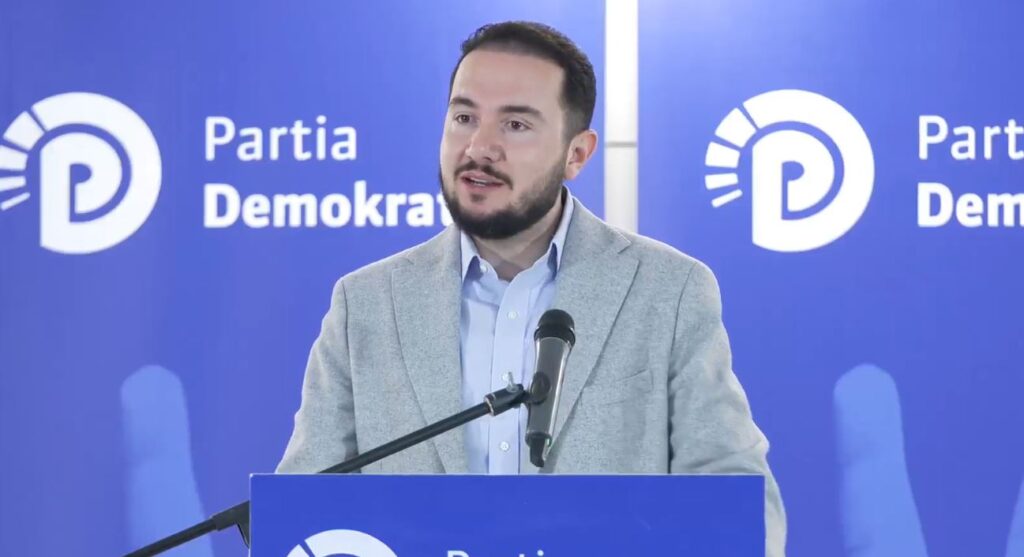
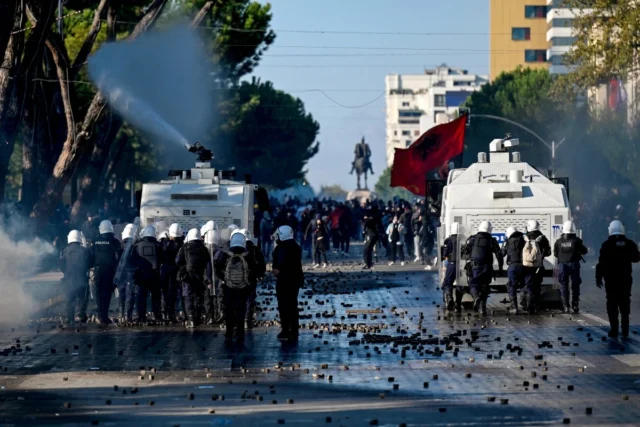
Ervin Salianji, a Democratic Party member who has confirmed he will challenge Sali Berisha for the party chairmanship in May, used Saturday’s opposition protest in Tirana to deliver his sharpest broadside yet against the party hierarchy — arguing that the demonstration accomplished nothing beyond a boulevard stroll and in effect propped up rather than threatened Prime Minister Edi Rama.
“As always, the leadership promised Rama’s overthrow, but produced only a lap around the boulevard,” he wrote on X. “This way, not only is Edi Rama not toppled — he is in fact being kept on his feet.”
The statement requires context to be read correctly. Salianji is not a disaffected bystander offering observations from the sideline. He is a declared candidate for party leader, running on the argument that Berisha has squandered four years of promises — that he would win local elections, defeat Rama at the general level, and ensure that candidates were chosen by the membership rather than imposed by the leadership. His critique of Saturday’s protest is a campaign argument wearing the clothes of political commentary.
He was careful to separate protesters from the apparatus that organized them. Demonstrators, he wrote, are “heroes” who have continued to resist after thirteen years of what he described as deeply corrupt and degraded governance. The fault for that corruption lies with Rama — not with citizens, businesses, or the streets of Tirana. The leaders who called the march, by contrast, operate without strategy or vision, issue promises disconnected from what he called the real expectations of Albanian society, and are driven primarily by fear of losing their own positions rather than any genuine drive to remove the prime minister.
Salianji also invoked the symbolism of March 22 — the anniversary of Albania’s pluralist breakthrough after 45 years of communist rule — to argue that the date belongs to the party’s founding ideals, not to the personality cult of any individual. “The Democratic Party was not created to hold chairs, but to topple regimes,” he wrote. “Whoever has forgotten this has become part of the problem, not the solution.” The conclusion was unambiguous: competition, votes, and elections are the only legitimate path forward.
The relationship between Salianji and Berisha has been deteriorating for months. In December, Berisha stripped him of his role as political leader of Unit 6 in Tirana — days before a protest — after accusing his grassroots meetings with party members of being organized by criminal gangs. Berisha subsequently declared that Salianji had “crossed the red line” and self-excluded from the party. Salianji flatly rejects both charges: he argues that as a member of the party presidency, no individual can bar him from the race, and that the membership’s vote, not the leader’s declaration, determines who belongs.
Whether Berisha’s apparatus will permit Salianji to appear on the May 23 ballot remains unresolved. The party is expected to issue candidacy rules within days, and the ongoing membership refresh — which Berisha’s camp controls — could be used to question his standing before he reaches the starting line. Salianji’s calculation is that none of it matters if his public argument lands: that every protest which ends without result, every broken promise left unacknowledged by the leadership, makes his case for him. Saturday gave him fresh material.