When a German official who once refused to meet Berisha changes his mind, the question isn’t what was said — it’s what shifted.
by the Newsroom (Tirana)
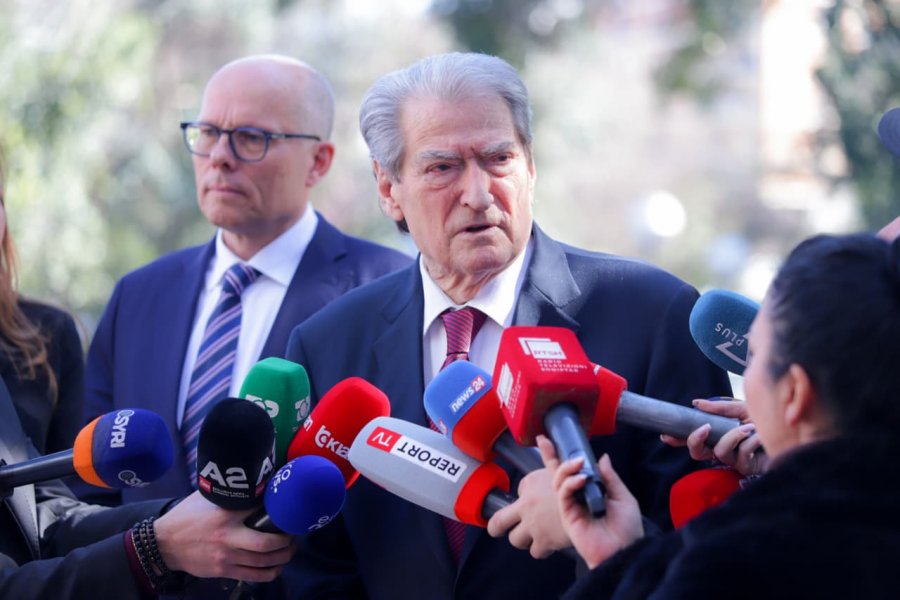
Peter Beyer, the Bundestag rapporteur for the Western Balkans, met opposition leader Sali Berisha in Tirana on Monday — a meeting that is notable less for what was said than for the fact that it happened at all.
At a previous press conference in Tirana, Beyer had closed the door on exactly this kind of engagement, saying he found it “difficult to imagine a future collaboration with a person who is declared non-grata” and citing alignment with Germany’s allies on the matter. On Monday, he sat across from Berisha and praised the Democratic Party as essential to Albanian democracy. No explanation for the reversal was offered.
The meeting produced the expected diplomatic language. Beyer called the discussion “fruitful and constructive,” praised PD for upholding Copenhagen Criteria values, and emphasized the need for transparency in Albania’s justice system — pointed language that implicitly targets the government without naming it. He also announced he would host several Albanian MPs in Berlin next week, with PD deputy chair Jorida Tabaku confirmed among the invitees.
Berisha, for his part, used the occasion to raise what he called “very serious obstacles” including “complete blockage of the justice system” and drug cartel influence — his standard critique of the current government repackaged for a European interlocutor.
The shift in Beyer’s posture reflects a broader realignment. With CDU back in government in Berlin and the transatlantic relationship under strain, European centre-right figures have shown less appetite for deferring to Washington’s Albania calculus — particularly designations issued under the Biden State Department. Beyer himself noted he was accompanying Foreign Minister Baerbock on her November visit to Albania, during which they visited SPAK — a signal that Berlin is conducting its own independent assessment of the institutional landscape, not simply adopting either the government’s or the opposition’s narrative.
Republican Party leader Fatmir Mediu also met Beyer separately, raising concerns about crime, corruption, and electoral manipulation — underscoring that this was a coordinated opposition outreach rather than a Berisha solo performance.
What Monday’s meeting does not constitute is a shift in German foreign policy toward Albania. Beyer’s role is as a parliamentary interlocutor and regional specialist — an important channel, but distinct from executive foreign policy. His engagement signals CDU’s continued interest in Albanian democratic development; it does not indicate Berlin is reconsidering its institutional positions on the justice reform process or SPAK.
The more durable question Beyer left unanswered is the one he himself posed four years ago: what changed?