Judge Engjëllushe Tahiri denied requests to broadcast the trial live, to digitise the investigative file, and to remove the mayor from the glass enclosure. SPAK prosecutor Altin Dumani told the court the defence had spent two months on artificial filings; attorney Plarent Ndreca said the only person in custody was his client, who had every interest in a swift trial.
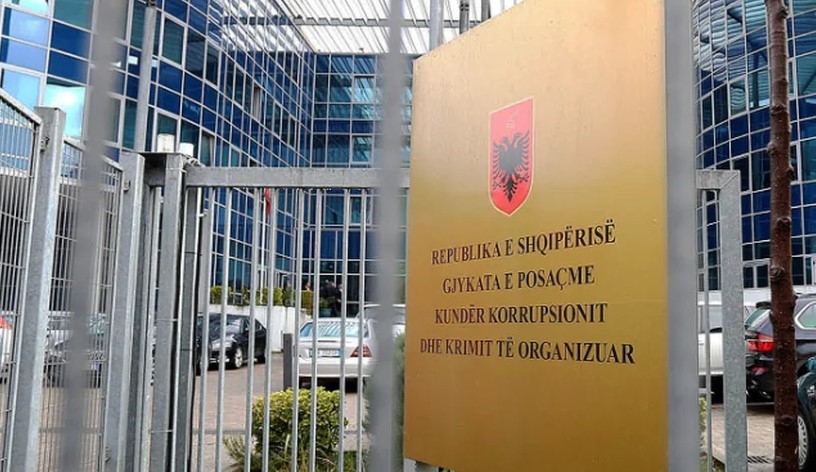
The Special Court Against Corruption and Organised Crime (GJKKO) on Monday rejected three procedural motions filed on behalf of Tirana Mayor Erion Veliaj, denying requests to broadcast the trial live, to release the entire investigative file in digital form, and to permit the mayor to sit outside the glass enclosure during proceedings. Veliaj himself did not attend; attorney Plarent Ndreca appeared in his place and clashed repeatedly with SPAK prosecutors Altin Dumani and Ols Dado, who told the court that the defence had spent the past two months filing what they characterised as artificial motions intended to delay the case.
The question of live broadcast
Ndreca opened by pressing for cameras in the courtroom, citing his client’s elected status. “I insist that, given my client’s special status, it is essential for the citizens of Tirana to hear what the prosecution has to say about their mayor. My client was elected by 160,000 citizens of Tirana and is the head of the municipality, so everything that happens in this session must be heard. It is the right of all to know what is happening in this judicial process,” he told the court.
Dumani’s response drew a distinction the defence had not engaged with. The prosecution did not oppose live broadcast in principle, he said, but witness exposure ruled it out in practice. “We as the prosecuting body have no problem with it, but live broadcasting could disturb the process. In criminal cases involving witnesses, particularly justice collaborators, live broadcasting is not permitted. This does not happen in the region, in Europe, or in US federal courts. Cameras may be allowed for some footage, but witnesses and collaborators cannot be exposed.”
Judge Tahiri rejected the request on narrower procedural ground: two of the co-defendants, Elman Abule and Adela Kondakçiu, had refused consent. The ruling places Veliaj alongside former president Ilir Meta and former deputy prime minister Arben Ahmetaj, both of whom have filed similar requests in their own proceedings and whose motions have been similarly denied.
The 35-folder claim
Ndreca’s second motion concerned the integrity of the investigative record. According to the defence, at least 35 folders in the case file contain digital evidence (CDs and USB drives) that were never opened at the preliminary hearing stage, leaving the material unreviewed by the preliminary judge and unavailable to the defence in usable form. “There are 35 folders containing digital evidence, CDs and USBs, which appear unopened and therefore unanalysed and unevaluated by the preliminary hearing court. At the same time, because these materials have not been opened, none of them were made available to the defence during that procedural phase,” Ndreca said.
He asked the court to digitise the full investigative file and make it available to the defence in that form, arguing that the existing record contained only SPAK’s interpretive transcripts of intercepted communications, not the underlying audio. “There are intercepts in the file, but we have not heard them and we do not have the CDs; we only have certain transcripts which, in our view, are interpretations. We want to understand the context ourselves. We request that the entire investigative file be made available to us in digitised form.”
The defence also pressed SPAK on the chain of custody for two specific complaints in the file, asking how denunciations submitted by Nesti Angoni and Nasta Pellumbi had been administered procedurally, whether by post or by email. The question goes to the formal admissibility of how the prosecution received and registered those filings, not their substance.
Tahiri rejected the digitisation motion. The court reasoned that the defence had been given the opportunity to familiarise itself with the evidence, which had been made available to Veliaj physically. The ruling reframed the dispute from one of access to one of format, declining to treat digitisation as a procedural entitlement.
The glass enclosure, and a reprimand from the bench
Ndreca’s third motion asked that Veliaj be permitted to sit outside the glass enclosure during sessions, citing the precedent of Constitutional Court hearings in which his client had appeared without restraint. “Veliaj should be taken out of the cage, as in the Constitutional Court of Albania, where there was no problem. Otherwise, equality of arms in the process is compromised. Take measures on this,” he told the bench.
Prosecutor Ols Dado’s response prompted immediate intervention from the court. Dado told the bench that the enclosure posed no genuine difficulty, describing it not as a cage but as “a glass structure” with an opening through which communication was possible, and adding that conditions at GJKKO were “very good, like a five-star hotel.” The judge cut him off and warned him on the record. The motion was rejected.
The delay accusation
Beneath the procedural exchanges ran a more pointed accusation. The session also produced a brief procedural exchange between Dado and Ndreca over the order of speaking, with Dado interrupting the defence to claim the floor for the prosecutor before Dumani made his case on the substantive question.
Dumani told the court that the defence had used the past two months to keep the case stalled. “We have been two months in the substantive phase and we are continuing with preliminary sessions. Veliaj’s lawyers, repeatedly, file artificial requests, in our assessment, with the aim of prolonging the judicial review.”
Ndreca’s reply inverted the framing. “We have no intention of delaying the process. The only one being held in prison is Erion Veliaj, and he has an interest in this process moving as quickly as possible. We do not accept proceeding without a guaranteed regular legal process.”
The procedural footing
Veliaj has been in pretrial detention since 10 February 2025. SPAK transferred the case file for trial only five months ago, a timeline the prosecution has cited in its broader argument that the proceeding is moving at an appropriate pace. The mayor faces 13 charges, with nine counts of passive corruption forming the largest single cluster. SPAK alleges he received undue benefits, in monetary form and in real estate, from companies that secured construction permits and public funds from the Tirana Municipality. The remaining charges include money laundering, non-declaration of assets, abuse of office, and introduction of prohibited items into a prison.
His wife, Ajola Xoxa, faces nine counts of passive corruption involving commercial entities and non-profit organisations, alongside charges of money laundering, non-declaration of assets, and concealment of income. The co-defendant businessmen face charges of active corruption of senior state functionaries and elected local officials, concealment of income, and money laundering. Former MP Klotilda Bushka is charged with obstruction of justice. Fatjon Baci, a guard at Durrës prison, is charged with introduction of prohibited items into a custodial institution after providing Veliaj with a mobile phone on two occasions during transfer from his cell to court.
The proceedings continue.