No shipment, no payment, no state order. A broker’s boast, the word “Israeli”, and a defence minister who was never in the room. Three weeks later a NATO member’s arms industry stands convicted by all three.
Drizan Shala, Security Desk
On 19 September, day 112 of the protest in Tirana, an activist told the crowd that Ron Yeffet had been heard on tape admitting to his partners that Edi Rama had hired him for the dirty work. By then two party leaders, a television station, thirty-nine MPs and several hundred accounts on X had repeated the sentence for twelve days. Yeffet never said it. What he said, in English, to three foreign business contacts in a Tirana office in January, was: “the government took us over because all the bad thing we could do”. A broker’s boast, in a broker’s grammar, about a deal that did not happen. Around it, in three weeks, the country built an international arms-trafficking scandal at a NATO member state.
There is no arms-trafficking operation on this tape. There is a broker talking, politicians amplifying, media converting conjecture into fact, and a defence industry two years old being branded criminal before anyone had produced a shipment, a licence, a buyer, a seller, a payment or a state order. In intelligence work every step from information to assessment has to survive one question: what changed in the evidence? Here nothing changed in the evidence. Only the verbs changed.
The recording aired on 7 September on Syri TV, played from Switzerland by Arben Ahmetaj, a former deputy prime minister charged by SPAK with corruption and money laundering in the incinerator affair and internationally wanted since 2023. He played seven cut segments with subtitles, in an order he described on air as “prepared direction”. The full recording runs about three hours; the public has heard perhaps twelve minutes. The company in whose office it was made, DEL-CNG, later confirmed through its lawyer that the meeting took place on its premises and that the recording was unauthorised. The tape is authentic. Authenticity was never the question.
What Yeffet says is the question, and it is thin. A new company will be “80 or 90 per cent” his contacts’ and the government’s “10 or 20”, on “the same concept, but not KAYO”. His point of contact in government is a deputy secretary general of the prime minister’s office, whose name reaches him with a delay. Ermal Nufi was not in the room, and nothing on the tape shows he knew the meeting was taking place. A broker naming an official to three strangers puts the official on the broker’s list, not in the broker’s deal; that is what the name is for, and every intermediary in this trade uses one. His contacts’ shares should sit in “an American corporation” so that “we close them up, the American embassy”. In Africa there is “a very, very good business, hundreds of millions” in ammunition; he has “three in Nigeria and in Sudan”; asked where packaging would be, “I thought Albania”; asked whether Africa is “with KAYO, of course”, he answers “we don’t know that”. After an opposition television programme “I became minister”, and “they said I received 3 million euro, show me the money”. To one of the men: “I know you don’t care about money, but you are a very rich man”, and then, “but I want to be rich”. And when the woman translating proposes an official letter to the Ministry of Energy about a gas field, he stops her: “no official letter”, “rely on me”, “you go to Vlora and do what you want, then I’ll deal with them”.
Nobody in Tirana quoted that last exchange, and it is the tape’s centre. A man with a ministry in his pocket makes one call. A man without one tells his partners to go and look for themselves and to leave his name out of it. The Ministry of Energy never answered Yeffet. Two months after the meeting the field he was talking about, Delvina, went 75 per cent to a Dutch buyer; the tax office blocked further transfers the next day, and the American chargé d’affaires visited the site that week. Whatever he was selling in January, the state did not buy it.
On the tape: “we don’t know that”. In the country: “with KAYO”. On the tape: “I thought Albania”. In the country: an established Africa-to-Albania route. On the tape: three people addressed by first name. In the country, from 8 September, two named Ukrainian defence figures with corruption files at home, supplied by one journalist in a social-media post and copied by every portal without a check, until “Ukrainian-speaking and Russian-speaking”, Ahmetaj’s own description, became “a Ukrainian and a Russian”. On the tape: a broker with a minority stake in one of six joint ventures. In the country: the criminal capture of an industry, into which the Elbit contract, a government-to-government matter with its own real problem, was folded so that “the Israelis” could be plural. “Could” became “did”. “Thought” became “arranged”. “I don’t know” became “KAYO”. A conversation became a route, the route became trafficking, and trafficking became state policy. That sequence is narrative manufacture, and it can be dated to the hour: Ahmetaj’s narration on the 7th, Bardhi’s “national security” and Këlliçi’s “Ermal Rraketa” on the 8th, the thirty-nine MPs on the 8th conceding in their own request that the material “is not considered proven fact”, the names on the 8th, “partner services stand behind it” on the 11th, Berisha’s “a NATO member state is involved in arms trafficking” the following week, the crowd on the 19th, and on the 23rd the same names moved onto the intelligence chief’s arrest so that Yeffet, Ergys Agasi and Vlora Hyseni could be presented as one job description. Not one of those steps required a document. The majority rejected the inquiry; SPAK asked Syri TV for the raw audio, the single correct institutional act in the affair, and that request is open.
One more thing changed as the verbs changed. On the tape Yeffet is a man with three passports, one of them Albanian since 2018. In the country he was “the Israeli” from the first night: “sekseri izraelit” (“the Israeli fixer”), “izraeliti i Ramës” (“Rama’s Israeli”), “mashtruesi izraelit” (“the Israeli fraudster”), and on one outlet “miku hebre i Edi Ramës” (“Edi Rama’s Jewish friend”). Ahmetaj, on air, introduced a second, unnamed partner in the health sector as “tjetër izraelit” (“another Israeli”), and the KAYO model as something to be done “me izraelitin” (“with the Israeli”). One journalist, identifying the foreign voices, added of one man’s wife that she is “me origjinë hebreje” (“of Jewish origin”), a detail with no bearing on anything except the pattern. The Elbit contract, a listed company with no documented link to Yeffet, was welded to him by that word alone, so that “the Israelis” could be plural and the industry theirs. Not once in three weeks did anyone call him what his passport says, an Albanian broker, because that phrase carries no hidden hand. This is the oldest conspiratorial grammar in Europe: a Jew behind the ruler, his power inferred from his origin because it cannot be shown by any act. Tirana’s political class borrowed it without noticing, in a country that sheltered Jews when its neighbours handed them over, and used it for three weeks as a substitute for evidence. The origin was doing the work the evidence could not, and the word for that is antisemitism, whatever the intent of the people who found it convenient.
In the defence trade, “Israeli” is not a warning label; it is a catalogue entry. Israeli systems are combat-tested year on year and revised on the result, which is why NATO members buy them openly and at scale: Germany’s Arrow 3, Finland’s David’s Sling, Britain’s Watchkeeper, Greece’s Herons and Spikes. A small member with Cold War factories, no design base and a ten-year commitment to co-produce ammunition with Ukraine has every reason to want an Israeli technology partner, and a broker who says he knows people in Tel Aviv is offering exactly what such a buyer is looking for. Listening to that pitch is procurement. The construct turned the same word into the proof of a hidden hand.
If the discovery that defence companies use brokers is the scandal, close Farnborough, Eurosatory and half the offices around the Pentagon. Defence commerce runs through representatives, consultants, agents, former officials and men who exaggerate whom they know. The compliance question is what they are authorised to do. The criminal question is what transaction they carried out. Tirana has spent three weeks treating the first as proof of the second.
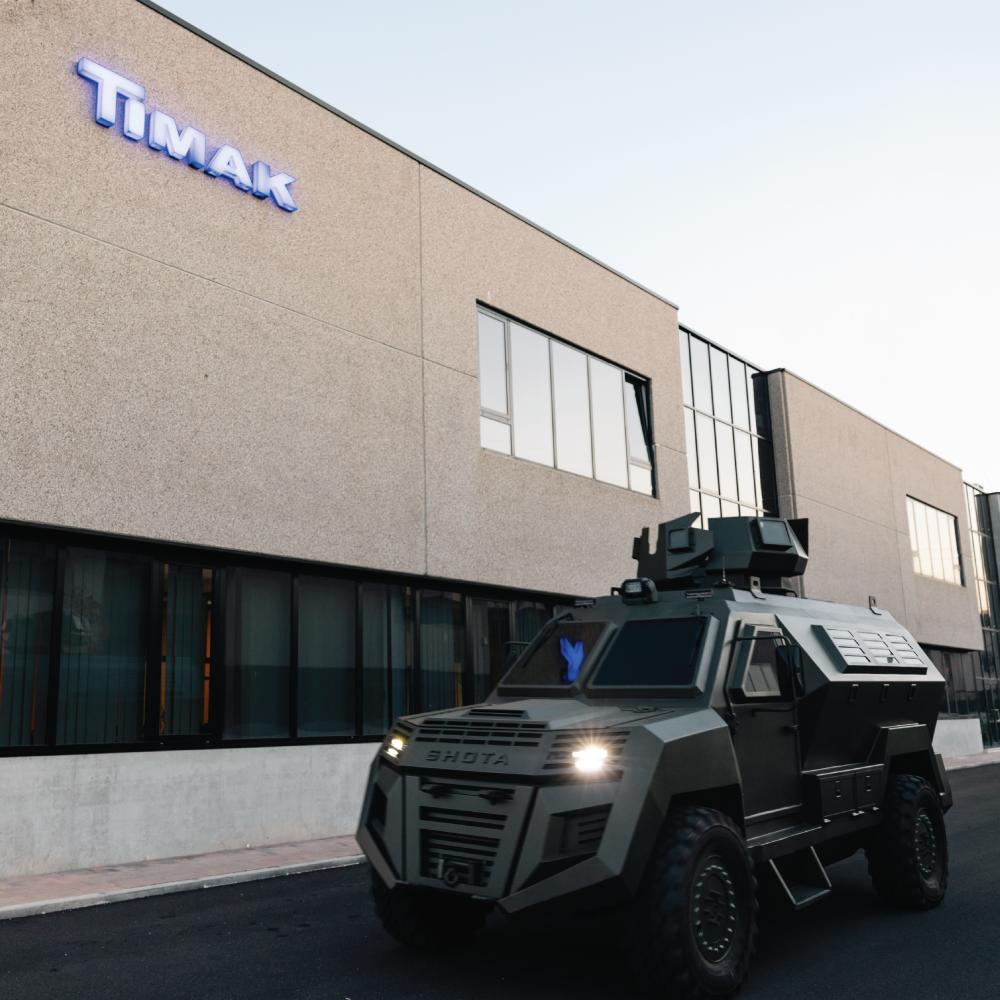
Brokers are how this trade moves. Governments do not sell mortars to governments over a counter; between a ministry and a factory there are agents, representatives, retired officers, consultants and men whose whole business is knowing who will take the call. They sell a story about what they can arrange, and the client decides whether to buy it. That is the craft, and it is legal in every jurisdiction that has a defence industry. Yeffet is one of these. He holds American, Israeli and Albanian citizenship, has done business in New York, Dakar and Tirana, and on 17 June 2025 took 49 per cent of TIMAK, a vehicle-body company, seven weeks before TIMAK and the state company KAYO formed Timak Defence. In January he was in a Tirana office pitching three foreign contacts on what he could arrange in Albania. The pitch is the whole of what the tape contains. Whether anyone bought it is a different question, and the answer on the record is that the Ministry of Energy did not.
KAYO is two years old, wholly owned by the Ministry of Defence, and built to revive Poliçan, Gramsh and Mjekës through joint ventures in which the state holds a minority and the partner brings capital and know-how. Six such ventures exist. One of them is where Yeffet entered, and nobody appears to have defined what he was allowed to say in KAYO’s name once he was in. A young state company in a hurry, with a thin vetting culture and a habit of treating disclosure as an inconvenience, left one broker to describe the state’s company in his own words and gave the public too little information to test them. A management failure, then, and one on file in the business registry long before 7 September. The tape added no fact to it.
It added a sentence, and the sentence did the damage. A partner nobody briefed is an administrative failure. A Sudanese weapons route is a crime. The distance between the two is the distance between a broker talking as if he owns the building and the building belonging to him, and in the public telling that distance disappeared.
The government’s answers were as thin as the charge. The defence minister, Ermal Nufi, entering a party meeting: “Çfarë trafiku armësh? A jeni në terezi?” (“What arms trafficking? Are you in your right mind?”), and, on whether he had listened: “Përgjimet e dynjasë do dëgjoj unë?” (“Am I supposed to listen to the whole world’s wiretaps?”). The minister for parliamentary relations said she was “disgusted” to answer a fugitive. KAYO’s head explained on television that the plants have zero production and therefore zero capacity to package anything. Nobody explained what a partner in a state defence venture is and is not authorised to say on its behalf, which was the only thing a serious partner wanted explained.
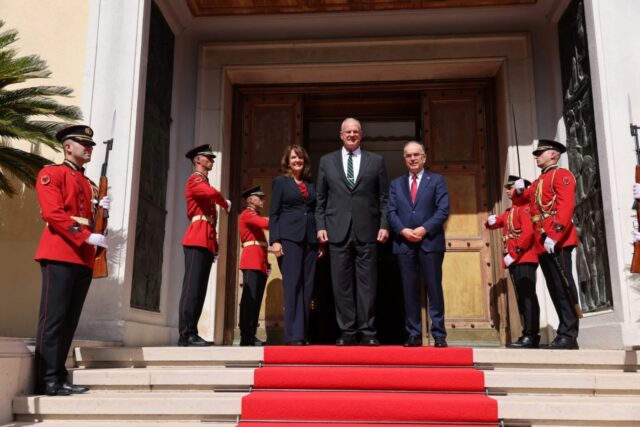
The minister deserves a plainer sentence than the doorstep gave him. Nufi is on this tape once, as a name a broker drops to three strangers as the person who “will be in touch” once something passes cabinet. He was not present. No message from him, no meeting with him, no act by him appears anywhere in three hours; the joint venture Yeffet sits in was formed in August 2025, under Nufi’s predecessor, six months before Nufi took the ministry; the deal the tape is actually about, a gas field, belonged to another ministry that never answered Yeffet at all. The nickname the country has enjoyed for three weeks, “Ermal Rraketa”, rests on a single anonymous anecdote relayed from Switzerland by a man with a warrant, about a conversation nobody else claims to have heard. SPAK, which has the tapes, has named no official. On the evidence, Nufi’s part in this affair is to have been mentioned by a salesman and to have inherited the file. If a broker’s name-dropping is proof of a minister’s involvement, no minister in the alliance is clean, because every broker drops names; that is the product.
Abroad the story did not exist. Reuters, AFP and AP did not carry it. BIRN, which had run Ahmetaj’s own SPAK file in detail and covers Israeli arms in the region closely, did not run it; its September digests on Albania led with the intelligence chief’s house arrest and the word NATO in the headline. Haaretz, which broke the Elbit contract in November, did not touch it. On X the story peaked on its second day at 31,000 views for one post and contracted into a loop of four accounts linking each other, with the party posts in single-digit likes. The only foreign institution to write about it was a Balkan disinformation monitor, which on 25 September listed the KAYO affair as a case “likely to fuel competing narratives”, one side presenting allegations as fact, the other dismissing the questions as fabricated. No major international outlet reported the material as evidence that Albania was operating an arms-trafficking network.
The tape was not born as evidence of an Albanian arms operation. According to the provenance reconstructed by Tirana Examiner, it was made on a phone by one of the participants, whose voice sits closer to the microphone than the others throughout, in the hope that Yeffet would say the government stood behind his approach on Delvina Gas, which is what the meeting was about; and it was commissioned on the side of the field’s then owner, Sokol Meqemeja, a longstanding friend of Ahmetaj whose circle appears in SPAK’s file on him for a 140,000-euro loan that became a Selitë apartment. Three hours of a broker talking produced no minister, no instruction, no money and one deputy secretary general’s name. According to the same findings, the material was offered through an intermediary to a German service and declined for want of anything usable in it. Only then did it reach a television station, through the friend. The sting missed its target. What it caught, incidentally, was a broker talking big about arms to people in the arms trade, and that footage found a market on day 100 of a protest. A recording made to prove the state was behind one man’s deal was published to prove the state was running a racket.
I do not need to know who ordered the fire to say what is burning. The target now is not Ron Yeffet. The target is the proposition that Albania can build a defence industry at all.
Who benefits is a ladder, and every rung is visible. At the bottom, the parties to a gas field and a fugitive who needed to be a witness rather than a defendant. Above them, an opposition that took the file it was handed on the hundredth day of its protest. Beyond Albania sits the mature regional competitor: Serbia, which exports ammunition at scale, assembles Israeli drones at home, fields Chinese air defence and is expanding defence-industrial cooperation and technology transfer with Beijing. An Albanian ammunition line does not enter an empty market; every contract Tirana loses is one somebody else can fill. None of that shows Belgrade commissioned a tape in Tirana, and it does not have to. Strategic effect does not require central direction. This desk knows more than it prints about the foreign interests that would prefer an Albanian defence industry not to exist, and about the people in Tirana who have made themselves useful to them. It is holding that material to the standard it has just applied to the tape.
Albania spent years persuading allies it could be more than a consumer of security: that it could manufacture, repair, supply and in time export. That requires technology partners, insurers, banks, licences and governments willing to put their names beside Albanian factories. Then came twelve minutes of edited audio and a political-media machine that turned one broker’s boast into the allegation that a NATO country’s defence industry was an international trafficking enterprise. A senior defence official has confirmed to Tirana Examiner that foreign partners have since asked for additional compliance review and that at least one signing has slipped. Compliance departments abroad do not watch Syri TV, but they read that a prosecutor has asked a television station for tapes about a company they are about to sign with, and they ask their questions with a date attached.
No shipment has been shown. No payment has been shown. No end-user document has been shown. No government order has been shown. No Sudan-to-Albania route has been shown. The words arms trafficking have been shown everywhere. That is how you damage a defence industry without firing at a factory.
If Albania finds that foreign partners no longer want their names on the door, the people who manufactured certainty from this tape should not ask who destroyed the industry. They should play the recording again. This time they should listen for themselves.
Drizan Shala is a security researcher and doctoral candidate at the University of Sarajevo. He writes on defense, private security, and the security architecture of the Western Balkans.