An opposition leader asked for prison for two journalists and a commentator. A journalist was stoned in the street and two commentators were named from a stage as next, with death in the comments underneath. The watchdogs and the Commission said nothing, and the silence reads as permission.
By Ardit Rada (Tirana)
The apparatus for protecting journalists in Albania worked well in October. The Association of Journalists of Albania (AGSH) published a dated list: fifty incidents between 13 and 24 October, forty attributed to the State Police, each with a name, an outlet and a description. Reporters Without Borders published its own count on 21 October, twenty-eight reports and twelve people physically attacked, and called on the Prime Minister by name to stop intimidating the media. BIRN carried the Association’s figures on 3 November with four interviews. The European Commission’s Albania report, published on 4 November, recorded intimidation “including by high-ranking state officials and police officers” and recommended “zero tolerance for intimidation, threats and smear campaigns”.
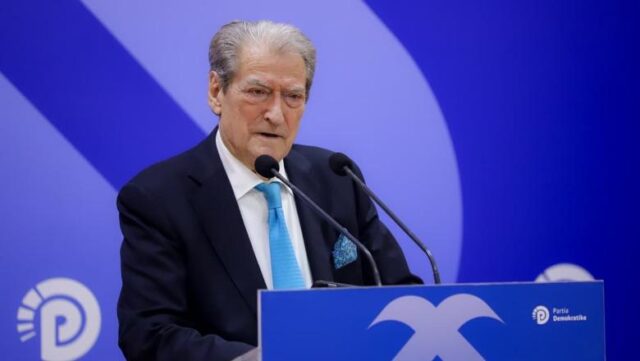
On the morning of 24 September the Association condemned “in the strongest terms” the statements of Vlora Hyseni, the intelligence chief placed under house arrest by SPAK two days earlier, against the News24 journalist Klodiana Lala, and demanded that she withdraw them. That afternoon, in the courtyard of the Assembly, Sali Berisha named three men. “The three journalists Baton Haxhiu, Berat Buzhala and Albatros Rexhaj, who met Vlora Hyseni, have broken the law and are punishable.” He invoked the law of Kosovo, put a sentence on the meeting, “each of them has exactly five years of prison”, and told the profession’s own bodies to deliver it: “I invite the journalists’ associations to get the file ready”, and, on Rexhaj, “I invite the journalists’ associations to take the files to the court in Prishtina and have them investigated.” Rexhaj is not a journalist. He is a writer who publishes opinion, and he has never met Hyseni. Berisha’s own words placed him in the group by proximity, “Albatros too, in the same waters”, with no meeting claimed and five years attached all the same. The meeting would not have mattered for the other two either. Meeting an official, a suspect or a source is not an offence under any code in Tirana or Prishtina; it is the work. The leader of the opposition invented the crime, fixed the sentence and assigned the prosecution to the journalists’ associations. The Association that had spoken for one journalist in the morning said nothing for three men in the afternoon. Not to accept, not to decline.
On 5 October, at about four in the afternoon, the journalist Bledi Mane was walking along Rruga Abdi Toptani when a group of around thirty, minors among them, closed around him. “Rama’s lackey”, then eggs, then a small stone to the back of the head. His account: “Amid the insults and threats they were instructing me on how to do journalism, what to write and how to speak on television.” The State Police opened an investigation and stated that the right to protest cannot be used to attack citizens for their opinions or beliefs. The Union of Albanian Journalists condemned the attack. The Association did not.
That evening, at the rally, the activist Gent Progni took the microphone. “I want to apologise to Bledi Mane, because it was not his turn first. Manjani was first on the list, then Albatros, then you. You jumped the queue a little, but don’t worry, there will be more eggs for you.” Ylli Manjani is a former justice minister. Albatros Rexhaj is the main political commentator of this publication. Neither holds a press card; both are private citizens who argue in public, which is the whole of their offence. Under the posts that carried the words, the comment threads supplied what the stage had left out: the calls there were for the three to be killed. That is the anatomy of a lynching call. The stage gives the name, the crowd under the post gives the sentence, and the man at the microphone says he only mentioned eggs. He said it on the day the first man on his list was hit in the head.
None of this is a blind spot, and the Association’s own list proves it. The list logs protesters: the masked men who smashed a Report TV camera on 14 October, Doriana Bezat the next day, the stone that hit Elira Kadriu on the 18th, Fatjon Nurçellari’s crew on the 20th, a Greek reporter on the 22nd, Freard Rista on the 24th. It logs politicians’ words as incidents: the Prime Minister twice, the Democratic deputy Eno Bozdo once, and on 21 October Sali Berisha, for his language about Top Channel and Report TV. So the Association counts stones from protesters, and it counts Berisha. It counted neither when the stone hit Mane and when Berisha asked for prison for Haxhiu and Buzhala, who are journalists by any definition the Association uses. Its window opens on 13 October, eight days after the list was read from the stage. Reporters Without Borders, with one entry under intimidation, chose the Prime Minister’s words about the owner of News24. BIRN’s text does not contain the names Berisha, Mane or Progni.
The Commission went a step further. Its reporting period closed on 1 September. The authors broke that window once, to add October: “allegations of excessive violence by the police against protestors and journalists”, and then: “All sides should make genuine attempts to engage in constructive dialogue.” They did not break it for 24 September, when the leader of the opposition asked for prison for three men, or for 5 October. The report names no official. The chapter that carries its words is titled “Freedom of expression and media freedom”. A commentator named from a stage for the next stone is inside that title with or without a press card.
Protesters are in the Association’s list, so the rule is not who throws. Berisha is in it, so the rule is not party. What remains is what the target says. A reporter hit at the cordon is a case. A journalist who argues against the protest, hit on Abdi Toptani, is “Rama’s lackey”, and the stone is an opinion. Two commentators named from the stage that night for the next one are private citizens, and private citizens are nobody’s mandate. Two journalists and a writer the opposition leader wants in prison for doing their work are not a press-freedom matter if they are the wrong men.
Read from outside, the silence says one thing, and it says it to everyone in Tirana who writes or speaks. If you do not agree with the protest, or with the leader of the opposition, you can be named, you can be stoned, and your death can be called for under the post, and no body whose mandate is your safety or your freedom of expression will write your name down. That is the permission. The Commission read the room and asked all sides for dialogue.