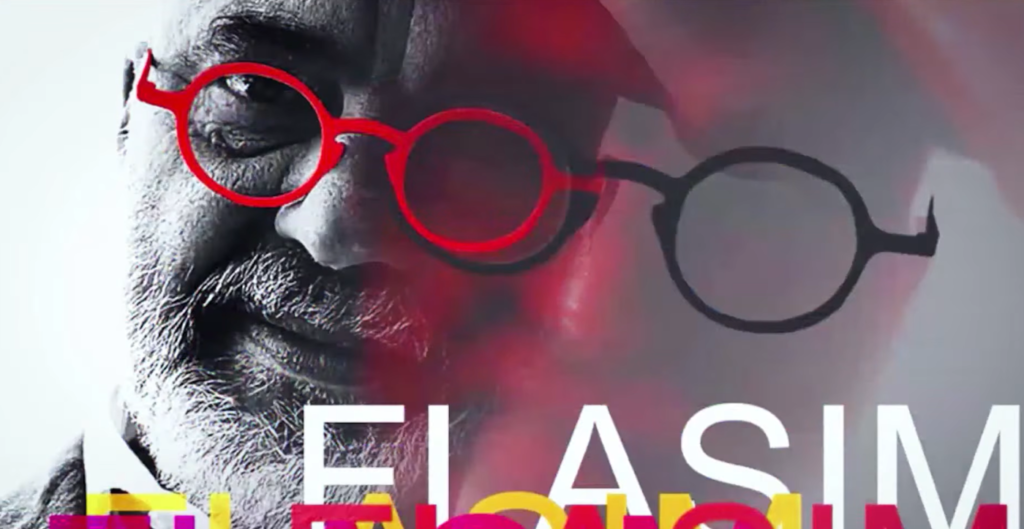
Prime Minister Edi Rama used the fifteenth episode of the sixth season of his weekly podcast, Flasim, to address several policy and governance matters: his two-stop visit to Rome and Barcelona, the retrospective on the fourth diaspora summit and Albania’s economic transformation, a building fire in Tirana and the government’s response to affected residents, and the Porta e Alpeve infrastructure and tourism investment project in northern Albania. Below is a full transcript of the weekly address.
This week I made a journey with two stops, in Rome and in Barcelona.
In Rome, where I met with the Prime Minister of Italy, Giorgia Meloni, it was a moment to take stock of the progress of our joint projects, and on the other hand to confirm, through that progress, the new phase in the relations between our two countries. Italy has always been close to Albania. All Italian governments, without distinction, have been willing and consistently attentive to supporting Albania and helping Albania. But with the current government of the Republic of Italy, things have reached another level. The cooperation is not simply a cooperation based on mutual commitment. The most important element in this regard is of course the Italian government’s willingness to work together, to be continuously on a shared path. It also rests on a series of concrete projects. The signing of the strategic agreement between the two governments at the previous Rome meeting is in fact the most meaningful reflection of the reality that a relationship which has always been described as strategic has taken on a new dimension through projects of strategic cooperation: a structured cooperation, a cooperation linked both to development and to security.
After Rome, I made a visit to Barcelona, where at the invitation of Prime Minister Pedro Sanchez I took part in the joint roundtable of the summit called In Defence of Democracy. Before the summit, together with the delegation, we were received with particular honour by the Chamber of Commerce of Catalonia, where it was clearly evident that there is a completely new level of respect and interest in Albania, including from the business community of that country. A country whose name, not many years ago in Spain, was associated with prejudice. Today Albania has become one of the preferred destinations of Spanish citizens, particularly of Spanish youth, as a tourist destination, while state-to-state relations have never been better than they are today.
Participation in the summit In Defence of Democracy and the reception by Prime Minister Pedro Sanchez were also part of what I described a moment ago: the dimension in which Albania is no longer simply present, but is trusted, respected, and valued as one of the actors at the table.
And to close on this note, these two stops bring into sharp relief once again that as a serious and now internationally confirmed partner, for our commitments and our will, and above all thanks to our progress and transformation, of which everyone speaks, we find ourselves at a point where we have only one road, and only one road: to move with speed, forward only.
The fourth diaspora summit confirmed a clear shift in Albania’s relationship with the diaspora, and in the diaspora’s own view of Albania. Why did it confirm this? Because this was something we experienced first-hand in the recent elections, where the diaspora participated in a number not small relative to expectations, since it was the first time it had taken part in elections, and where, in my view, it confirmed massive support because of the changes and the great transformation that Albania has undergone in recent years. But what is more important is that the Albanian diaspora today is no longer simply a story of departure. It is an added force for the development of the country, expressed not only through what the diaspora has always done, which is the financial support of families here in Albania, but also through truly notable elements of its new reality: those who have distinguished themselves in professional fields, and those who have distinguished themselves in the field of entrepreneurship. What until yesterday was a gap or a distance has today become a bridge of very concrete connections in the economy, in knowledge, and in the broader growth of Albania’s influence through its Albanians wherever they may be.
This is a reality directly connected, as I said, to Albania’s own transformation: from an economy with less than ten billion euros in gross domestic product, as it was when we began this governing journey, to an economy with around twenty-seven billion euros in gross domestic product, with the objective of reaching thirty-five billion euros by the end of this decade; from a country with less than three thousand euros in income per capita to a country with more than eleven thousand euros in income per capita, with the aim of surpassing fifteen thousand euros by the end of this decade; from two million tourists, at a time when even those who went abroad and returned were counted among those two million and some, to an Albania that receives twelve million visitors a year, as happened not long ago when the year 2025 closed; from three to four hundred million euros in foreign investment per year to more than 1.6 billion euros per year. These are not simply figures. They are only a few indicators of an Albania that has grown, an Albania that has strengthened, an Albania that above all has changed the way it functions, and for this reason has also changed the way it is perceived, and above all that change is reflected in the relationship between Albania and the diaspora, and the diaspora with Albania.
During this week there was a moment that, to be honest, was initially harrowing, because flames engulfing an apartment building in Tirana seemed likely to pose a serious threat to the lives of residents. But fortunately, and thanks to the truly professional and above all heroic effort of the firefighting forces, everything passed without a single life lost and without serious injuries. What remained after the fire was the gutting of that building, for which things were set in motion immediately. The first and most important matter, in my view, is that the building will be rebuilt entirely from scratch, one hundred percent by its own developer. On the other hand, there is a commitment to help the residents who, until the moment when they are able to return to their homes, which I believe will not take very long since the structural shell is still standing, will be able to receive a rental bonus and of course support from the municipality to ease the burden created by damage that goes well beyond ordinary repair in their apartments.
Now, in these cases there always appear immediately, like mushrooms after rain, all manner of know-it-alls and all manner of self-appointed public experts, but without the licenses and without the knowledge necessary to take on such a role. But in any case, whether out of emotion or out of the need to seize prominence, everyone comes forward and says what they will.
The truth is that this was a disaster caused by a spark, by a fire that started, if you will, which, in itself, was not related to the construction process. But on the other hand this is a reason to look at and to understand properly what relates to the quality and materials of construction, even though the initial inspection showed that the building had all certified materials, imported. So I do not wish to dwell further on this point. The most important thing is that none of those residents who went through that dramatic moment, which fortunately, and I repeat, thanks above all to the firefighting forces and the law enforcement forces present there, did not turn into a tragic one, will be left alone, and will not be left to their own fate in facing the need to return and to live normally in a home entirely rebuilt as they deserve.
One note which I believe is worth making, because in these weeks and months there has been much discussion of the mountain package. Naturally when I say much discussion, I have in mind not only what we say to inform the public, and above all to inform those who look toward Albania and wish to invest their savings in the land of their ancestors or in rebuilding an old family house in the mountains, but also what is said by many who, as always and about everything, distort, divert, and so on. But that is not the substance of this note. The substance is what is being added to the mountain package as a project called Porta e Alpeve, the Alpine Gateway, which constitutes a direct intervention with a massive investment of one hundred million euros, co-financed with the European Investment Bank, for the further development of tourism with a focus on mountain tourism.
This is a project we have worked on for a long time, which aims to better connect the northern areas with one another and with the rest of the country, unquestionably by creating reliable and year-round access. It includes improvement of road infrastructure and transport. It includes investment in water supply and wastewater management, as well as interventions in urban development and the restoration of that precious historical heritage found also in the northern region, while of course the project could not exclude care to ensure and guarantee all those magnificent parts of nature that must remain untouched. This is the integrated approach of a project that does not address only one segment, one aspect, but has a territorial scope across the whole area and aims, and I believe has every potential, to give an extra push to the development of tourism and the economy in the north of the country.
I believe that with this note I can also send a particular greeting to all those who, every time the north is mentioned, immediately begin speaking about the government not having done enough for the north. A very friendly greeting, to say that what this government has done and will do for the north of the country exceeds what all previous governments taken together have done, because for those who come after I do not wish to speak, but all governments taken together since Albania entered the road of freedom and democracy, which we all know how it began, how it continued, and which everyone can see how it is being transformed in the service of all Albanians and in the service of all of Albania.