The prime minister’s conversation with Eleni Giokos ran from a profession of love for the European Union to a defence of the four billion euro coastal resort, and turned combative over the project and the network asking about it.
The Newsroom
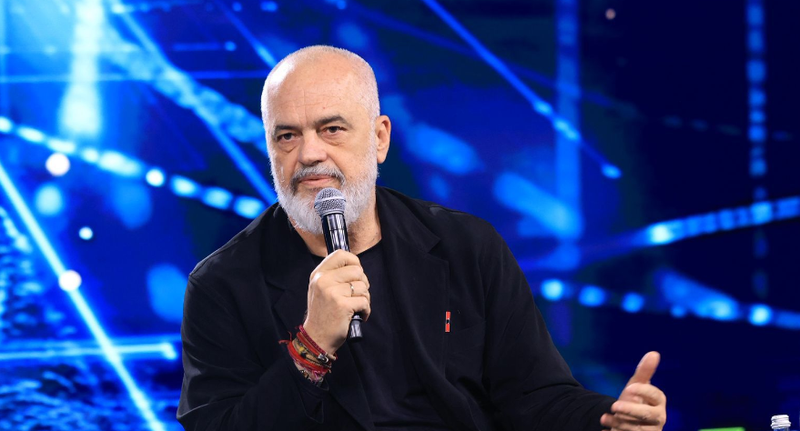
At the Future Investment Initiative forum in Rome on Thursday, Prime Minister Edi Rama sat for a conversation with CNN anchor and correspondent Eleni Giokos that began on geopolitics and ended on a contested coastal resort, traveling from a profession of love for the European Union to an attack on the network interviewing him.
Asked first whether European and NATO powers should have acted to reopen the Strait of Hormuz, Rama declined to take the question on directly, saying he had come as a champion of tourism and preferred the brighter side of things. Albania, he said, is on good terms with the whole Middle East “except the criminal regime of Tehran.” From there he turned the moment into his central argument about Europe. Holding up a bottle of water served without a glass, he said the continent was coasting on inertia, behaving as if “we have everything, we don’t miss anything, we are going to be always the great, no matter what,” while others catch up. Europe’s number one problem, he argued, is politics: the capacity to form a common vision, take common decisions, and carry them out in time. He applied the same charge to Ukraine, calling support for Kyiv the right thing to do but Europe’s long refusal to talk to Moscow a sign of the same failure.
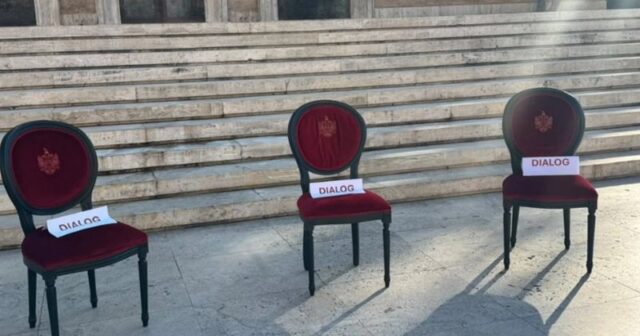
Pressed on whether that critique sat awkwardly with Albania’s bid to join, Rama said he spoke as a convinced European and called the Union “the most beautiful and the most amazing and brave imagination of the humans when it comes to politics.” Albania, he said, is in love with Europe and wants the marriage despite every warning that comes with it. When Giokos observed that Albania had been engaged for a long time, he corrected her: not engaged, in love, “like Romeo under the closed window of Julia,” with Juliet’s parents promising only that one day they would begin to talk.
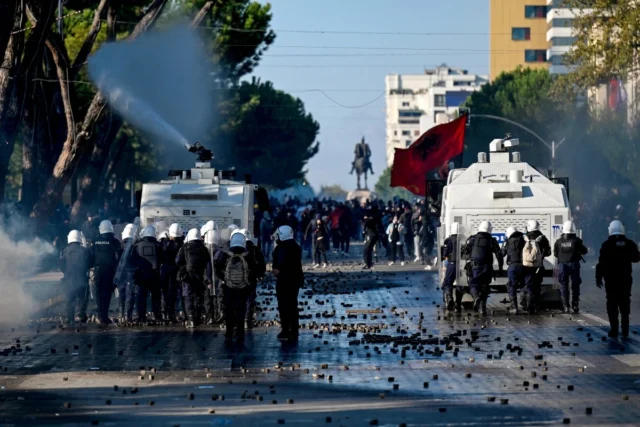
Giokos then turned to the project she described as having ignited debate over politics, influence and capital, noting the protests in the capital and the European Commission’s warning that Albania must keep to environmental rules. Rama answered with a history. When he took office, he said, Albania had under 10 billion euros in GDP and about two million tourists; last year it reached more than 27 billion and over twelve million visitors, with foreign direct investment rising from around 300 million to 1.6 billion. He credited a Middle Eastern investor he named as Mohamed Alabbar with raising the country’s ambitions, and presented the four billion euro resort as potentially the largest tourism investment in Europe, conceived from the first day to show that nature and people can coexist.
To Rama, the protests were not what they appeared. He called it “amazing” that Albanians now demonstrate in the name of birds and nature, in a country that a decade ago drew hunters with rifles and rang with the noise of machines cutting trees, before his government imposed ten-year moratoriums on hunting and logging and tripled the bird population. The “digital outrage,” he said, had been provoked because the names Kushner and Trump are enough to bring people into the fight, but was then carried by falsehoods: fake videos, footage from protests in other countries passed off as Albanian, and a flood of bots he attributed to Albania’s “one enemy,” the “Khomeinist Republic of Iran,” which he said has waged a three-year cyber campaign against the country. Democracies, he argued, must stop treating “freedom of reach” as an extension of freedom of speech, the mechanism by which “every regime, through every propaganda” plants its lies.
Asked for a straight yes or no on whether the investors had bought the land, Rama listed the government’s position. The land is bought. It is private. An environmental impact assessment is under way. No project has been approved. No building permit has been issued. Nothing in that, he said, should trouble “any environmentalist that thinks right,” and Albania would go forward. He returned to social media as the larger danger, warning that if it were given a free ride, “Europe will collapse from within,” leaving its shields against missiles and rockets guarding nothing.
The exchange sharpened over that same question. Before answering it, Rama told Giokos she had reminded him she was from CNN, a network he said he had learned “the hard way” was “not an objective source,” and added that her being Greek made him feel obliged not to engage. Asked how he would change his message to reach the protesters and reassure the Commission, he replied that “the majority of the Albanian people want the project,” that the host community supports it, and that “what you see is not exactly what is going on.” When the outrage faded, he said, he would send CNN a special invitation to the opening, a chance for the network “to redeem.”
Giokos questioned the word. Her job, she said, was to ask questions. Rama pressed it: CNN owed “redemption” to Albania, to its people and “even the birds,” promising the project would leave the lagoon’s waters clean and the site a quarter greener than today. “Clean again,” he said, “not great again.” Told she was thanking him for the clarification, he said he had assumed she was thanking him for the invitation. The problem, he concluded, was not the questions but the spin. He recalled an earlier appearance on CNN in which, he said, the anchor who had invited him later posted a statement about him that was offensive rather than critical. That, he said, was why Albania owed “this lost soul” the chance to come, “kiss the birds and redeem.”