Serbia announced a consulate exchange fourteen weeks after the talks and two months into Albania’s streets. The timing was not careless. The timing was the policy.
Tirana Examiner
On Thursday morning, Serbia’s foreign minister Marko Djurić went on Radio Belgrade and announced a result. He had held very good talks, he said, with Albania’s new foreign minister, Ferit Hoxha, and the two had reached an agreement in principle: Serbia would open a consular office in Shkodër, Albania one in Bujanoc (Bujanovac). What the radio audience was not told, and what we consider the single most important fact in this file, is that those talks were not news. They took place in April, on the margins of the Antalya Diplomacy Forum, more than three months before the microphone went live. By mid afternoon, Tirana was explaining. There is no final agreement, the Foreign Ministry clarified. Albania has requested a Consulate General in the Preshevo Valley; Serbia has requested one in Shkodër; if and when the parties agree on every aspect and detail, the appropriate steps will follow. The distance between the two statements is small in law and large in everything else, but the distance that concerns us is the one Djurić chose not to mention: the fourteen weeks between the conversation and its announcement, across which, by Tirana’s own account, nothing was concluded. What happened on 30 July was not diplomacy. It was scheduling. Why Belgrade scheduled it for this week, of all the weeks available since April, is the question this entire affair turns on, and we intend to answer it.
The immediate effect, at least, is not in dispute. For a full news cycle, the capitals that follow this region learned of a done deal from a Serbian radio interview, and then learned from Tirana only that the deal was not quite done. Whoever announces first writes the story, and whoever holds an announcement for a season decides not only the story but the weather it lands in.
We have read Minister Hoxha’s response carefully, and we find it more candid than his critics have allowed. Reciprocity, he wrote, is a foundational principle of relations between states, and it does not necessarily mean equality in content, in objectives, or in the interests of each party. Strip the diplomatic finish from that paragraph and what remains is an admission: the exchange is not equal, the ministry knows it is not equal, and the ministry considers the inequality normal. On the narrow question of whether unequal exchanges occur in consolidated diplomatic practice, the minister is correct. The question he did not address, and the one we take up here, is what each side is actually acquiring.
What Albania acquires is real, and we say so plainly. A permanent consular presence in the Preshevo Valley is overdue by decades. A substantial Albanian community lives there under a state that has spent years administratively thinning it, deregistering residents from the civil rolls through the practice known as passivization of addresses, so that people born in Bujanoc and living in Bujanoc cease, on paper, to reside anywhere. A Consulate General that documents, assists, and stands beside that community answers a genuine need, and Tirana is right that it asked first. Nothing in this editorial disputes the value of the thing Albania is buying. Our concern is the price, and then the match that was put to the whole transaction on Thursday.
The 2023 census registered fifty-four residents of Serbian ethnicity in Shkodër, thirty-two men and twenty-two women. There is no consular caseload in fifty-four people: no visa demand, no document volume, no diaspora administration that requires premises, accredited staff, and the apparatus of a Consulate General rather than, say, an honorary consul with a filing cabinet. Pandeli Majko, who was Albania’s prime minister when this country received hundreds of thousands of Albanians driven out of Kosovo by the Serbian state, put it in one sentence: in Shkodër, the Serbian consulate will matter more than the minority itself.
So set aside whom it serves and ask what it is. A Consulate General is sovereign presence in miniature: premises the host state may enter only by permission, a consular bag it may challenge only by asking, staff it can answer only with the blunt, retrospective tools of refusal or expulsion, a flag on a building and a legal perimeter around everything behind the flag. States request such presences where they have work to do, and so the question is what work the Serbian state has to do in northern Albania.
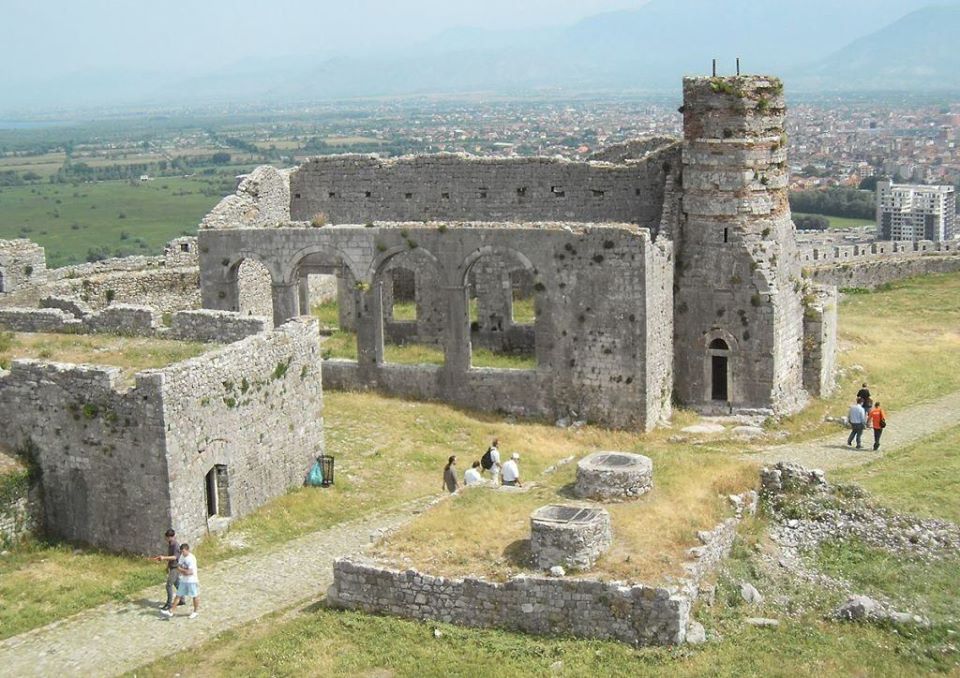
Between Serbia and Shkodër lies Montenegro. Majko noted the point everyone else talked past: Shkodër sits half an hour from the Montenegrin border, on the one flank of the Albanian speaking world where Belgrade currently runs active campaigns on both sides of the frontier, against Montenegro’s sovereign identity through the church it mobilizes, the media it finances, and the parties it cultivates, and against Kosovo’s existence outright. We do not allege what would be conducted from such premises. We observe what they structurally permit, and we note that Belgrade has requested them in the Albanian city its cartography coveted longest, the city Montenegrin and Serbian armies besieged in 1913 before the powers assigned it to the new Albanian state. Shkodër is not a random pin. In Belgrade nothing about maps is random.
The objection writes itself: Serbia’s leverage inside Montenegro is already enormous, a church with mobilizing power, a media ecosystem, allied parties in government, a large share of the electorate, so what can a handful of consular staff across the border add? But the argument was never about manpower. States that pursue cartographic projects invest in addresses because addresses are cheap, permanent, and self-justifying; a Consulate General is a claim entered in treaty form that this city is a place where the sending state has standing business. The project such claims serve has contracted with every decade since 1991, which is exactly why the map matters more, not less. When the substance shrinks, the addresses are what remain, and Belgrade has never stopped tending the addresses.
Serbia already has an embassy in Tirana, a hundred kilometers away. Its request is therefore not for representation, which it possesses, but for a second sovereign perimeter, in the north, thirty kilometers from a neighboring country it destabilizes, and the burden of explaining that choice lies with the requesting state. No Albanian official has yet asked Belgrade to carry it in public. The ministry’s statement instead chided domestic critics for dwelling on the supposed interests of the other party rather than on Albania’s gains. We reject that framing outright. The other party’s interests are the second column of the ledger, and a foreign ministry that declines to read the second column is not practicing reciprocity. It is practicing bookkeeping with one eye.
And there is a column that appears on neither side of the ledger, which is Kosovo. The consulate Albania would receive in the Preshevo Valley avoids Kosovo; Majko caught this too. That is true in the literal, cartographic sense, and Belgrade would never have entertained an arrangement of which it were not true. But the avoidance runs deeper than routing. Serbia refuses Kosovo any presence in sovereign form, the very form it seeks in Shkodër, while maintaining its own parallel structures inside northern Kosovo and treating any Kosovo institutional presence there as provocation. What this exchange sketches, quietly, is a consular map on which the Albanian national question becomes a bilateral file between Belgrade and Tirana, with Prishtina routed around, and that has been Belgrade’s preference since before Kosovo existed as a state. Every instrument that lets Serbia transact the Albanian question without touching Kosovo’s statehood is worth more to Belgrade than its face value.
Now the calendar, because the calendar is where this file stops being about a consulate at all.
Ask first what the announcement did to the thing it announced. Belgrade has no evident enthusiasm for a permanent Albanian consular presence in the Preshevo Valley, in the one territory where its own administrative practice has been quietly erasing Albanian residents from the rolls. Yet refusing the request outright would carry a cost in Brussels, where Serbia’s file depends on appearing constructive. Consider, then, what a minister does who wishes to bury a request without ever refusing it. He does not say no. He says yes, loudly, prematurely, unilaterally, and he chains the yes to the one image guaranteed to make the exchange unsurvivable on the other side: a Serbian flag in Shkodër. Then he lets the other country’s political class do the refusing for him. That is precisely the sequence Thursday produced. Within two hours of the announcement, the exchange was being denounced across the Albanian spectrum, and by evening it was harder to complete than it had been in April. If Djurić wanted this deal, Thursday was inexplicable, because every conventional option available to a minister who wants a deal, beginning with the silence he had already kept for three months, remained open to him. If he wanted the deal dead with Albanian fingerprints on it, Thursday was flawless.
Ask next what the announcement did to the country it landed in, because we believe the second purpose is larger than the first. Albania is in the third month of the gravest street confrontation of its recent political life. Protests demanding the prime minister’s resignation have run for sixty days; on the very Thursday of Djurić’s interview, Edi Rama stood before his own party answering the chants. Into that combustion, Belgrade lobbed the one accusation that fuses the crowd’s anger with the oldest grievance in the national repertoire: that the government serves Vučić. It did not have to be argued into the discourse. It arrived pre-assembled, and within the afternoon a Democratic Party deputy from Shkodër was calling the consulate the latest service rendered to Belgrade by a deeply anti-Albanian government. We make nothing of that charge, and we note who manufactured the occasion for it. A Serbian minister, choosing the timing alone, handed Albania’s opposition a Serbian flag to plant in the middle of an anti-government summer, and handed Albania’s government the task of defending, mid crisis, an arrangement it had not announced, had not finished, and had not chosen to defend that day. Every week Tirana spends fighting itself over Shkodër is a week it does not spend on Kosovo, on the trilateral with Zagreb and Prishtina, on accession. Belgrade did not create Albania’s summer. It recognized a fire when it saw one, and it has never in its modern history walked past a neighbor’s fire carrying oil it did not pour.
The fire was also lit in front of the right audience. The announcement landed in the same week Albania’s own Foreign Ministry, hosting the Croatian foreign minister, declared that normalization cannot be built on historical revisionism and the glorification of war criminals, days after Minister Hoxha publicly told Belgrade not to fan the fires of war, and, as former foreign minister Ditmir Bushati observed with precision, at the very peak of Serbian officials’ rhetoric toward Kosovo. For the European chancelleries perpetually searching for evidence that Serbia is a workable partner, the picture of routine bilateral business arrived free of charge, with an Albanian signature pending, whether or not one ever comes.
One further fact requires no access to anyone’s intentions. Of all the political actors in Albania, the one Thursday’s announcement damaged most is the one Belgrade ostentatiously calls a friend. A Serbia that valued its relationship with this Albanian government would have protected that government’s flank: coordinated the announcement, sequenced it after the protests, let Tirana speak first. Instead it detonated the file at the moment of maximum harm to its supposed partner. States do not injure their friends by accident in matters they alone control, and Djurić controlled everything about Thursday: the fact of the announcement, the venue, the framing, and above all the date. On the record as it stands, one reading explains every fact. The announcement was built to kill the consulate it announced and to feed the fire it landed in. Destabilization is not a side effect of the method. Destabilization is the method, and the endgame it serves is the one constant of Belgrade’s regional policy: neighbors too consumed by their own crises to act on anything else.
That is our conclusion, argued from the record, and we attach the test that could refute it. A Belgrade that genuinely wants this exchange will now move to complete it: working groups, agreed texts, a date. A Belgrade that got what it came for on Thursday will let the file go quiet and keep the news cycle. The coming weeks will run the experiment, and we invite our readers to watch which Belgrade shows up.
None of this requires the conclusion that Tirana is serving anyone, and we do not draw it. Albania’s interest in the Preshevo Valley is legitimate, longstanding, and finally being acted upon, and there is a version of this exchange, hedged, sequenced, and priced, that a serious foreign policy could defend. But notice what Thursday actually displayed. On Sunday, this ministry spoke to Zagreb in the voice of principle. On Thursday, it spoke in the voice of procedure, because a Belgrade radio interview had set the terms before Tirana said a word. That is a ministry whose second voice was written for it, on a schedule it did not choose, in a grammar it then had to adopt. Belgrade controlled the telling twice over, first the fact of it, then the date of it, and a deal whose telling you do not control, down to the week it becomes a deal, is a deal you do not control.
So we will say what we believe should happen now. Three things. First, the Foreign Ministry should put to Belgrade, in public, the question it has so far asked only of its domestic critics: why a Consulate General, and why Shkodër. The burden of explanation belongs to the requesting state, and making Belgrade carry it in daylight costs Albania nothing. Second, the ministry should decouple what Thursday fused: the Preshevo consulate is a standing Albanian request on its own decades-old merits, and Tirana should state that it will pursue it on those merits, at its own pace, hostage to no exchange and no announcement. If Belgrade then refuses it, let Belgrade refuse it in its own name, in front of Brussels, without an Albanian crowd to hide behind. Third, the ministry should decline, from this day, the grammar of Thursday: no Albanian confirmation, denial, or timetable extracted again by a Belgrade broadcast schedule. A state that answers on its own clock is a state; a state that answers on its neighbor’s clock is an audience.
Fifty-four people do not need a Consulate General, and it may be that no one ever intended them to have one. Serbia in Shkodër, as Majko wrote before the day was out, has taken more than a consulate. Read the design and it took everything it wanted by Thursday lunchtime: the Preshevo request wounded by the backlash, the Albanian street handed a new grievance in its third month, the tableau of partnership banked in Brussels, and not one Serbian signature spent. The address in Shkodër may never open its doors. It was never the point. The match was the point, and the match has been thrown. What remains in Albania’s hands is the only thing that ever was: whether it burns.