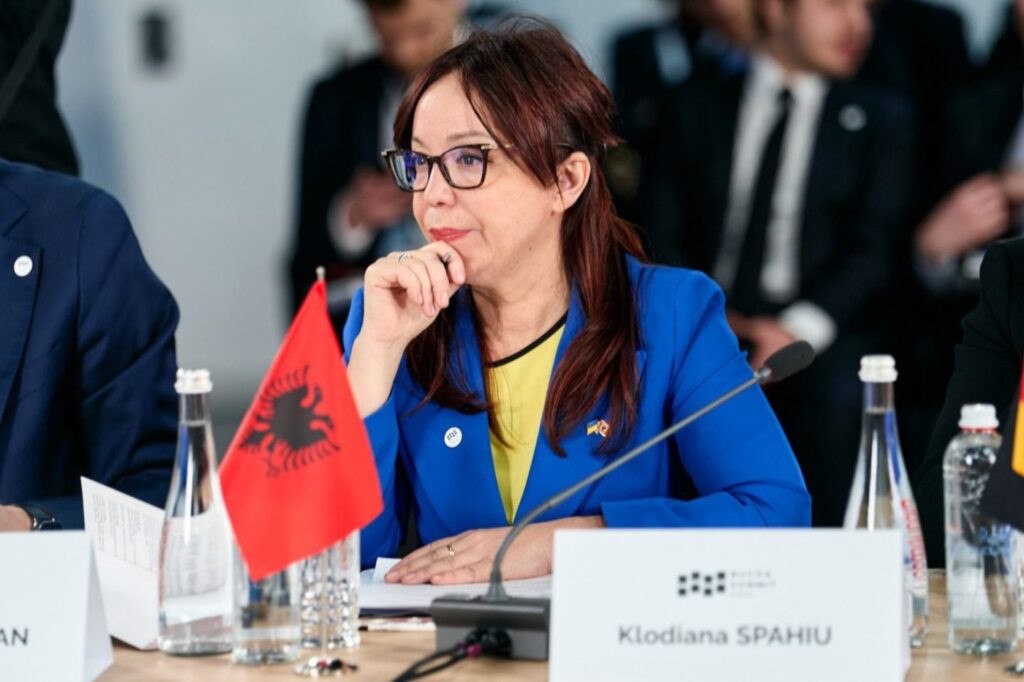
Klodiana Spahiu is the first Rama health minister who is a physician and has run a hospital outside Tirana. That is the combination the ministry has been missing.
Tirana Examiner
Asked on Thursday what recommended his choice for the Health Ministry, Prime Minister Edi Rama gave Tirana Examiner three words: “Humble, loyal, professional.” We had put a longer question to him the day before, when Evis Sala’s resignation was a few hours old. Health is the sector where the Albanian state spends most visibly and where citizens can least easily say what the money bought. It leaves the treasury; too often the service it was meant to purchase never reaches the patient. The next minister, we said, would have to be someone humble enough to start from the cost sheets and stubborn enough to finish them, from the hygiene and sterilisation contracts to the price of equipment and specialist services. His answer was that Klodiana Spahiu ticks every box.
We are inclined to think he is right, and not because he said so.
The corridor
Spahiu was born in Durrës in 1973 and qualified in general medicine at the University of Tirana in 1997. She specialised in cardiology at the Mother Teresa University Hospital Centre between 1998 and 2002, then trained in non-invasive cardiology at the Gemelli in Rome and, in the autumn of 2005, in catheterisation and coronarography at Santa Chiara in Pisa. From 2003 to 2009 she was a cardiologist and physician on the internal-medicine ward at Durrës regional hospital, and was then elected its director, briefly, before entering the Assembly in 2009.
A regional hospital in Albania is where the system’s money actually goes: procurement, maintenance, the consumables budget, the hygiene contract, the queue at the imaging suite, the specialist who is in Tirana three days a week. Six years on the wards of Durrës and a spell on the other side of the desk as its director mean Spahiu has seen both ends of the invoice, what a hospital orders and what eventually reaches the ward. Between 2012 and 2014, already an MP, she took a professional master’s in health management. It is the degree a hospital physician takes once she has discovered that clinical training never explains why the sterilisation bill doubled.
Consider who came before her. Ilir Beqaj came from public management, not medicine. Albana Koçiu, now Deputy Prime Minister, had run the Department of Public Administration for a decade; a capable administrator, but one who had never treated a patient or run a ward. Evis Sala came from a laboratory in Rome and, as we wrote on Wednesday, never found the corridor. The nearest precedent is Ogerta Manastirliu, and she deserves the credit: before her six years at the ministry she directed the Mother Teresa University Hospital Centre from September 2013 to March 2017, and she is the only one of the five besides Spahiu to have run a hospital at all. But Manastirliu is a chemist by training, holding a doctorate in analytical chemistry, and the hospital she ran is the country’s only tertiary centre, the summit of the referral chain, where the hardest cases arrive after every other level has passed them upward.
Spahiu supersedes that precedent on both counts. She is a physician, which means she can read a clinical justification for an expensive procurement and know whether it is a justification or a cover. And she comes from the regions, from the hospital in Durrës that serves the country’s second city and its hinterland, the level at which most Albanians actually meet the health system, where the distance between what the state spends and what the patient receives is widest and where the failures are felt first. The summit has had its representative at the ministry. The regional tier, the place where ordinary referrals become hospital care and where equipment, consumables, cleaning, diagnostics and specialist time have to become an actual service, has not, until now.
The files
There is a second qualification, and it is the one her critics will hold against her first. In 2024 Spahiu sat as a Socialist member of the parliamentary inquiry into the sterilisation and check-up concessions, the same public-private partnerships that are now the subject of prosecutions at the Special Prosecution. She defended the government’s record there. She read the Constitution to the chair to argue that Ilir Beqaj was entitled to present his evidence with slides. She told the opposition the committee had degenerated into speech-making, and refused to withdraw the word when asked.
We read that record as inventory rather than disqualification. For most of a year Spahiu sat inside the parliamentary examination of those concessions. She heard the testimony, confronted the allegations and repeatedly chose to defend the government’s position. Whatever else can be said about that record, she cannot now claim unfamiliarity with the files. The minister asked to examine sterilisation costs across the hospital network therefore arrives with something unusual: prior knowledge of the very system she is being asked to scrutinise. Whether that knowledge becomes an instrument of reform or an instrument of defence is the test of her tenure. That she has it is the reason the test is worth setting.
The three days
Albanian health policy has a rhythm that everyone in the system recognises. A minister arrives, a reform is announced, the cameras attend, and the people who run the wards say to each other: this will last three days, and then we carry on as before. They have usually been right. Announcements have never been in short supply. Endurance has, and endurance is a question of who the minister is and what she is willing to spend her standing on.
This is where Rama’s second word matters, and we take it in its plain meaning. A minister who audits a ministry’s contracts is auditing her own government. She needs the Prime Minister’s confidence to survive the first month of it, when the numbers come back and the names on them belong to people who are still in the building. Sala came to the ministry from outside the party and left it within the year, and her defence of the laboratory concession two months after the prosecutors searched it showed what a minister does when she is managing the file rather than owning it. Spahiu has been in the Assembly since 2009, five mandates, Deputy Speaker since last September. She does not need the ministry. That is precisely what makes her free to run it.
Loyalty cuts the other way too, and we would be writing a press release if we pretended otherwise. It can buy her the political protection required to open the files. It can equally become the reason she closes them. We will know quickly which meaning Rama intended.
The first word matters as well. What the public record shows of Spahiu’s seventeen years is procedural and local: water supply and the port in the Durrës campaign of 2023, points of order and the Constitution in committee. The health ministry has had ministers who could give a speech. It has not recently had one content to sit in a district hospital for a day and ask why the tender for cleaning services costs what it costs.
Proximity
Rama presented his Besa governance document at Pogradec last month as a contract between the citizen and the state, and on Thursday, at the same meeting where he named Spahiu, he told his MPs that the state’s three wounds are the labyrinth, the absence of memory, and the invisible door of connections. We said on Wednesday that Sala’s year was the counter-example to that document: a minister at a distance from the problems she was asked to solve. The appointment made a day later is the correction, and it is a coherent one. If Besa means anything in health, it means a ministry that knows what a regional hospital costs and what it delivers, and that can tell the difference between the two.
Spahiu brings to the ministry what none of her four predecessors brought at once. She is a doctor who has run the kind of hospital where public money is meant to become care and too often does not. She has sat through the examination of the contracts through which some of the system’s most contested spending was organised. And she has spent seventeen years earning the standing inside her own party that a minister needs on the morning the audit comes back with names on it. We will hold her to that audit, beginning with the hygiene and sterilisation costs, and we will report what she finds. The first number we want is what a regional hospital pays to have its instruments sterilised, and what it paid before the concession. If the ministry does not find where the money goes, it will not be because its minister did not know where to look.