By Drizan Shala (Security Desk)
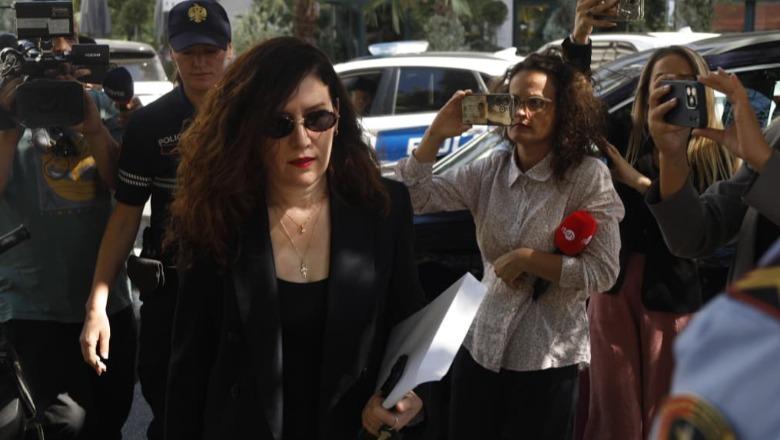
On the morning of 22 September, Albania learned that the director of its State Intelligence Service, SHISH, had been placed under house arrest and suspended from duty. The measure had been signed the day before by the Special Court for Corruption and Organised Crime, at the request of the Special Prosecution Office, SPAK. Vlora Hyseni was not in the country. She was in Baku, at a conference reported to include the heads of some eighty intelligence services.
Start with the map. Azerbaijan borders Iran to the south and Russia to the north. Tehran and Moscow are a short flight from Baku. Both run services that would pay almost any price for what the head of a NATO member’s intelligence service carries: sources, operations, the identities of allied officers, what partners have shared with Tirana and on what terms. A defecting intelligence chief brings more than a stolen document. She brings the archive, available for debriefing for months.
For several hours, the woman SPAK suspected of being compromised knew that her own state had moved against her. She was within easy reach of both capitals. Nothing on the public record shows that anyone was in place to stop her. As far as anyone outside the government can tell, the only barrier between Albania and the worst intelligence loss in its modern history was her own decision.
She did not defect. She flew to Prishtina and surrendered at the Morinë border crossing that evening. She came back. What system was supposed to protect Albania if she had not?
The measure was not improvised. SPAK had been building the case for weeks, within an investigation that had already put the businessman Ergys Agasi in detention. According to passages of the file now published in the Albanian press, prosecutors questioned Hyseni four days before the arrest. Koha Jonë reported, citing sources, that the request had been with the court for about ten days. SPAK knew she was a suspect. After the interview, so did she. SPAK knew, or could have known with a single phone call, that she would be in Baku. The court signed the measure on 21 September. SPAK sent it to the police for execution while she was still abroad, where it could not be executed, and by the next morning it was public. It could have waited a day.
The head of government was also out of the country. Prime Minister Edi Rama announced her dismissal from abroad and said a new director would be chosen once he was back. For those hours Albania had an intelligence chief under a court order outside its borders, a prime minister outside its borders, and a service whose director had just been removed. A hostile service watching Tirana that morning saw an intelligence apparatus without its head and a government out of the room.
Did the prosecutors want her to defect, or to become a fugitive from justice, which would have confirmed their case better than any intercept? Did anyone in the chain assess what an Albanian intelligence chief in Tehran or Moscow would cost Albania and its allies? These questions are legitimate. A NATO government would put them to its own officials after a morning like this one.
The damage to SHISH does not depend on her return. The service’s officers watched their director learn of her arrest in public, abroad, in front of foreign counterparts. The next morning they read her file in the newspapers: her calls, her meetings, her explanations. An officer who has to meet a dangerous source this week will reach the obvious conclusion. If this is how the state handles the head of the service, it will not protect him. He will take fewer risks and write reports that cover himself rather than inform the government.
Sources will reach the same conclusion faster. Anyone passing information to SHISH from inside a criminal network, or from inside a foreign service, has just seen what happens to a relationship that SPAK decides it does not believe in. Some will go silent. Fewer will come forward. Partner services, whose chiefs were in Baku that morning, will adjust without announcing it. They will share less, and later, until they are satisfied that Tirana can keep a secret. A service that has lost the confidence of its own people and its partners cannot do its job. Its next director will spend the first year rebuilding trust instead of collecting intelligence.
Tirana’s standard reply will be that SPAK is independent. Independence protects a prosecutor from instructions, not from responsibility for what his decisions do to the state, and that responsibility binds every public official, from a municipal clerk to a minister, a judge or a prosecutor. No Albanian law codifies it. Neither do the laws of most European states. An official who exercises a share of state power exercises it on the state’s behalf. In any allied capital, the suspected compromise of an intelligence chief would be handled with the head of state and the security apparatus informed first: access cut, movement controlled, and only then a court. Not while the suspect was abroad and the head of government away.
None of this depends on Vlora Hyseni being innocent. SPAK may have an exceptionally strong case against her. If it does, the questions raised here become more serious. The more convinced prosecutors were that the director of the intelligence service had been compromised, the less defensible it was to leave her abroad, with everything she knew and every relationship she carried, while the state moved openly against her. A strong case makes the failure to secure the state first harder to explain, not easier. The merits of the prosecution and the security consequences of how it was handled are two different questions.
Taken together, the timing, the location, the absence of the prime minister and the leak that followed carry the elements of a surgical strike on the stability of the state. Either the prosecutors have been compromised by a hostile foreign element, or they acted in arrogant disregard of their responsibility towards the state. There is no evidence of the first, though in a case of this kind the state should look for it regardless. The second fits the record, and its motive is familiar: victory at any cost. An intelligence director under arrest is the largest trophy available to a prosecutor in Albania, and each step reads as though it was taken to secure that trophy and to display it. The measure became public while she was abroad and the file reached the press the next morning, with SPAK’s account of her relationship with Agasi served before any judge had tested it. What the state stood to lose does not appear to have entered the calculation.
Prosecutors who knew, or could easily have known, where the director was and what she carried, and who sent the measure for execution at that moment regardless, chose their case over the state’s interest. Albanian criminal law has a term for this: shpërdorim detyre, abuse of office. It covers what an official fails to do as well as what he does, when he performs his duties improperly and the state is harmed. The prosecution is the custodian of the investigative file, and the law requires it to remain secret. Within a day it was in the newspapers, and who handed it over is still to be established. Moving against the head of the intelligence service with a measure that could be enforced only if she chose to come home is not a duty properly performed. Neglect of that kind, done knowingly, is an abuse of office.
Investigating it falls to SPAK. Its chief, Klodian Braho, can begin with the prosecutors who handled the request, and with the calendar that showed where Albania’s intelligence chief would be that week.
Drizan Shala is a security researcher and doctoral candidate at the University of Sarajevo. He writes on defense, private security, and the security architecture of the Western Balkans.
Read also: What Would You Have Done?