The United States kept its chair in Tirana empty for three years. The town talked to the chair as if it were a throne. A letter to the man who sat down in it on Saturday.
by Albatros Rexhaj (Tirana)
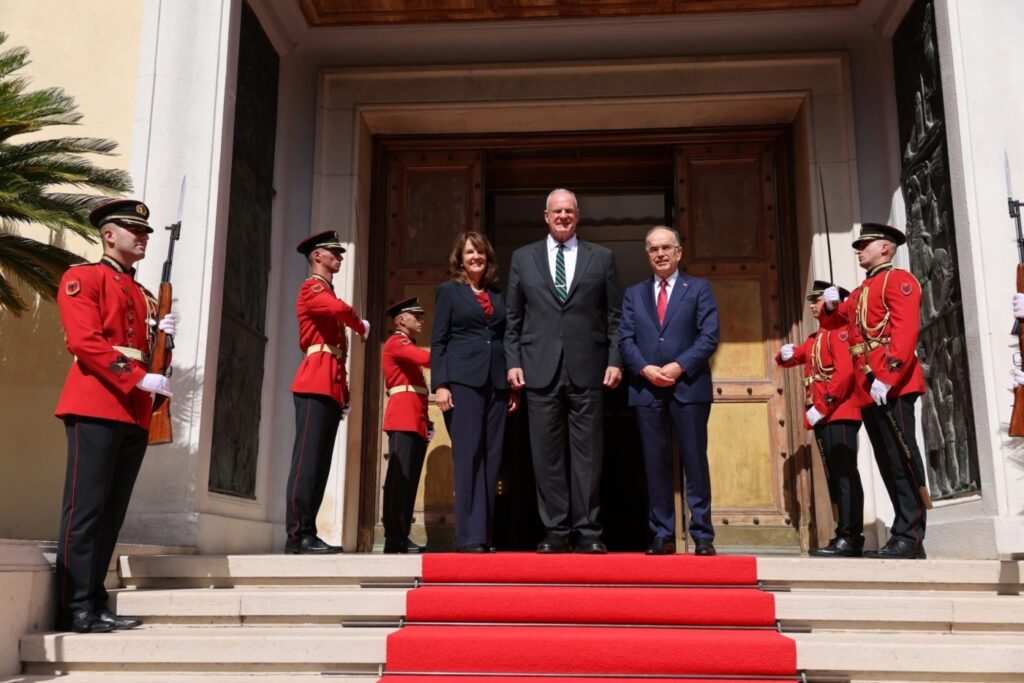
Welcome to Tirana. On Saturday you presented your credentials to the president. For three years before that the American embassy had no ambassador, and the town did not mind. It spoke to the empty chair the way it speaks to a full one, as the last court of appeal for every Albanian quarrel. I assume you were briefed in detail on where you are posted. A few things still need pointing out.
You come with an instruction your predecessors did not have. The administration you serve does not want its embassies to be the referee in other people’s domestic fights. It is a reasonable instruction and it will never reach this town. Tirana does not want a partner. It wants a regent. People here have always preferred that foreigners do their work for them, and they will arrive in your office with complaints drafted for a regent, not for an ally. The first case they bring will be Edi Rama.
So let me put the file in order before they do.
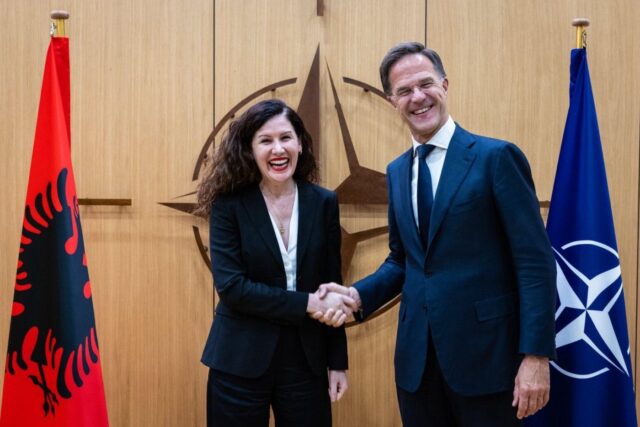
Albania is an ally with a record, and none of it began with your arrival. In NATO since 2009, with troops where they were asked for. On transnational crime, the third item in your embassy’s own readout on Saturday, it extradites, it cooperates, it does not haggle. In 2022, after Iranian hackers attacked its state systems, Albania broke diplomatic relations with Tehran and expelled the embassy, the first country to do that over a cyberattack. In 2021 it signed the 5G security memorandum with Washington and has kept Chinese vendors out of its networks since.
What you are watching in Albania now is something this country has never tried before: a divorce between politics and the informal power of organised money. That marriage has been the chronic condition of Albanian public life since 1991, under every government. Everyone in this town knows the couples. Nobody filed for divorce until now.
The tools for the divorce came from a judicial and law enforcement reform that Washington and Brussels co-sponsored and that parliament passed unanimously in 2016. This governing majority has held power through the ten years in which the machinery was built and set loose. Vetting, a special prosecution, a special court, an investigative bureau: every instrument the Western partners said they wanted to see in a transformed Albania was put in place on its watch. Then it kept the instruments running when they turned on the builders. On Friday, from New York, the prime minister said Albania now had an institutional system capable of self-cleaning, called that a great achievement of the mission he and his party had undertaken, and defended it. No Albanian leader has said that before. The price so far: one former deputy prime minister, one deputy prime minister while still in office, the mayor of the capital, the head of the intelligence service.
And they could have stopped it. Not with a coup, and not even with a constitutional amendment. There are cheaper ways to cripple an institution: budgets, implementing laws, appointments, years of quiet non-cooperation. The legend here says the Western partners are so terrifying that the government has no choice but to go on. That is an insult to a sovereign country with a solid majority that can be reconfirmed at any election, regular or early. The duller truth is that the majority could have starved the process at any point in ten years and has not.
Here is the problem you inherit. The fruits of the reform are being used against the majority that sustains it. A legend is growing on them, and it is growing fast: that the embassies are running a regime change against the government, and the arrests are the instrument. You will hear the detailed version soon. Prosecutors from the special prosecution walk into your embassy and walk out with instructions. A move against a powerful man is made only after the Americans have given their word that they stand behind it. In the latest edition of the legend the address has changed. Since your administration stopped issuing a statement on every silly Tirana matter, the story has moved house to the German embassy, where a mysterious number two is said to pump the hearts of the prosecutors with courage each time they go after a big name. Next year it will be another embassy and another number two. The story works because nobody in this country ever attempted the divorce before, so nobody here can imagine an Albanian prosecutor being brave without a foreign guarantor behind him. The prosecution’s success is offered as proof that the prosecution cannot be Albanian. It has become an insult, to the prosecutors and to the country. The majority pays the price of the reform and receives, in return, the story that the reform is being done to it by foreigners. The legend needs your silence to grow, and your silence is the one thing this town can count on. What you can say is short. The arrests are Albanian, the courts are Albanian, the bill is Albanian.
You will be told, warmly and often, that Edi Rama is the enemy. Before you decide, ask the person telling you what this reform has cost him, and who else in this town would have paid it.
Mirë se erdhët. Nobody here will tell you this, so I did.
Albatros Rexhaj is an author, playwright, and analyst with a background in national security studies and nearly three decades of experience in political and security affairs.