The people who set Tirana alight on Tuesday did not challenge Edi Rama’s authority. They supplied him with the one argument he did not have to invent.
Editorial Board | Tirana Examiner
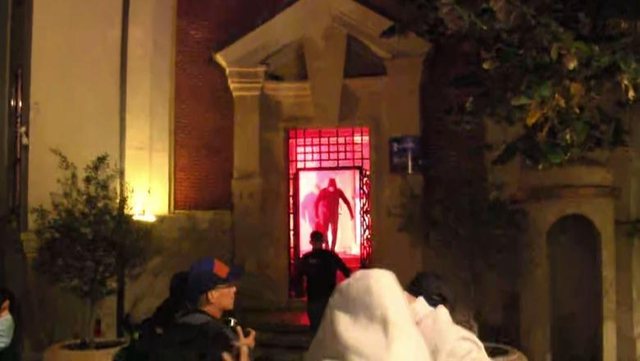
By the time the Ministry of Health published its evening count, 26 people had been treated in Tirana’s hospitals: six police officers, two journalists, one of them hit on the head with a brick, a foreign diplomat, bystanders, and protesters, one with a broken femur awaiting surgery. The afternoon had begun at the Ministry of Education with paving slabs and molotovs. It moved down Rruga e Durrësit, where the Iute Credit branch beside the Vatican embassy was gutted and a masked man dug through its broken ATM. It reached the Municipality of Tirana, where flares were lit on the ground floor. It ended at Pazari i Ri, where residents were leaning from their balconies pouring water onto burning wooden stalls. The Ombudsman opened an inquiry into police conduct under Articles 2, 3 and 11 of the European Convention before midnight.
The protest was called against the government of Edi Rama. It handed him the best day of his four-month siege.
Erion Braçe, a Socialist MP, went on Vizion Plus that evening and said what the government had to answer for: since 1991 the state has shed its basic social duties, housing first among them, and left prices in the capital to the private sector. He said the protest had raised legitimate interests. That is the opposition’s case, conceded by a member of the governing party on air, in the week the government most needed to avoid conceding it.
The admission survived the evening. Its force did not. While Braçe spoke, every screen in the country was showing the Iute Credit furniture being carried out and thrown onto a fire in the middle of the road. Nobody was going to ask the government about the price of a flat on Wednesday. They were going to ask about the ATM.
Violence changes the question. A government can be made to defend its housing record, its universities, the institutions that feel remote from the people they serve. It can lose that argument, and it can lose an election on it. A government cannot lose an argument about whether market stalls should be set on fire. Once the subject is order, the incumbent is the answer by definition, and the Interior Minister gets to say, as Ervin Demo did on Tuesday, that striking a police officer is not an exercise of the right to protest. He was right. The protest let him be right.
Braçe’s interviewer put Paris to him, and Braçe agreed: Paris burns often, after football matches, and French police answer violence with violence. “I did not see that here today” (“Unë nuk e pashë këtë sot”), he said. A governing MP has now told the police, on television, where the Western standard sits. The peaceful crowd that returns to the ministry next week will be met at that standard, and Tuesday’s footage will be the justification. The masked men did not only lose the argument. They wrote the rules of engagement for everyone who comes after them.
Riots in France have not made France more democratic, and they did not stop the pension law or shorten a presidency. The Fifth Republic was never the question in those streets, so the fires cost it nothing. In Tirana the question is the government itself. Arlind Qori said on Tuesday night that Rama’s resignation is non-negotiable. That is a legitimate demand. It is also one that only a majority of citizens can deliver, and the majority was watching the marble bench at Skanderbeg Square being broken in two and thrown into traffic.
Those citizens are the whole game. A shopkeeper at Pazari i Ri is not responsible for housing policy. A police officer outside the Ministry of Education did not set the rent. A family that cannot afford a flat does not see the burning of someone else’s property as a promising start to political change. Every movement that has ever replaced a government did it with people who were angry but not yet convinced, and those were the people on the balconies with buckets.
Shqiptarja photographed opposition deputies in the crowd: Gjin Gjoni, Ilirjana Kuçana, Erald Kapri, and Sali Berisha’s son-in-law filming for Facebook. Whether the party organised the evening is a question for the prosecutor and the evidence. That its elected members stood inside it while the stalls burned is already on the record, and anyone who wants to be taken for an alternative government should understand what the record shows: a movement that cannot tell resistance from vandalism cannot ask the country to trust it with the police.
Rama did not need to invent an enemy of public order on Tuesday. His opponents supplied one.