Behgjet Pacolli gives interviews. The ministry he is suing says almost nothing. In arbitration, only one of those becomes evidence.
By Ardit Rada (Tirana)
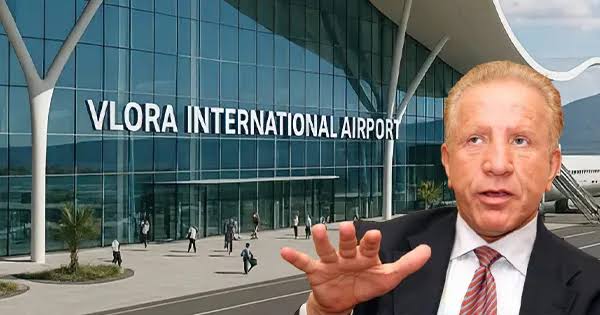
On 5 August a letter from the Ministry of Infrastructure and Energy reached MABCO Constructions SA. It informed the company that the Albanian state had opened the procedure to terminate the concession contract for Vlora International Airport. Behgjet Pacolli answered the same day, in public and at length. The letter, he said, was an act designed to strip the investor of the rights flowing from its contract, and the road now led to international arbitration. “This is not a conflict that MABCO sought,” his statement read. “It is the direct consequence of the actions and inactions of those institutions whose legal obligation was to protect the rule of law and the contract.” Since then he has kept talking. Statements, interviews, warnings about what the Albanian taxpayer will eventually be made to pay.
From the ministry that sent the letter has come almost nothing. No press conference, no reply to the accusations, no minister explaining the state’s position on the evening news. One dispute, two behaviors. The louder party is heading to a forum where volume counts for nothing. The silent party is the one that will eventually have to answer there, in writing. That asymmetry deserves a closer look, because it is not obvious that either side is behaving irrationally.
The dispute, coldly
The facts can be stated in one paragraph, and this piece will not adjudicate them. The Vlora concession is held by Vlora International Airport shpk, in which MABCO holds roughly 98 percent of the shares and 2A Group, the company of Valon Ademi, roughly 2 percent. The two partners have been at war over the ownership and administration of the concessionaire since last year, a war fought through the commercial registry and the courts. On 14 May the contested administration of VIA notified MABCO that their construction relationship was terminated; MABCO rejected the notice two days later; from 18 May its engineers, specialists, employees and subcontractors were physically barred from the site. By the ministry’s account, carried across the Albanian press, the works were due under the contract to finish in February 2026 and did not, even within the additional thirty days the ministry allowed, and on that basis it opened the termination procedure. MABCO’s answer is that a company locked out of its own construction site completes nothing, that it has sent more than fifty letters to Albanian institutions since September 2025, that it has requested an independent international audit of the works since August 2025 and filed criminal complaints that it says have gone nowhere, and that its investment, which it values at more than 320 million euros, is being taken from it. Who is right about any of this is a question for the tribunal and for no one else.
What is beyond dispute is the choreography around it. MABCO litigates in public. The ministry does not. And before reading Tirana’s silence as weakness, it is worth revisiting the last investor dispute of this size the Albanian state fought.
Albania has paid for this lesson once already, in full, with interest.
The Becchetti file
On 24 April 2019 a tribunal of the International Centre for Settlement of Investment Disputes issued its award in case ARB/15/28, brought by Hydro S.r.l., Costruzioni S.r.l., Francesco Becchetti and three other Italian claimants against the Republic of Albania under the investment treaty between Italy and Albania. The claim covered a hydropower concession, a wind farm and the Agonset television venture. The claimants went beyond the contracts. They argued, in the award’s own summary of their case, that everything Albania had done to them formed part of a campaign by the government, and by Prime Minister Rama in particular, against Becchetti, his companies and his associates.
“It is not a good idea to oppose the State.” The tribunal recorded those words at paragraph 712 of the award, spoken to Becchetti by the secretary general of the prime minister’s own cabinet when he asked why the investigations against him were being pursued. They became one of four grounds, collected at paragraph 724, on which the tribunal concluded that the criminal seizures that destroyed the broadcaster were the product of a politically driven campaign rather than a bona fide exercise of police powers. The others: a money laundering investigation pursued by a government close to the claimants’ commercial rivals, against a channel critical of that government; factual inconsistencies in the allegations that Albania never managed to justify to INTERPOL; and the prime minister’s own public declarations after the seizures, in which he pronounced the campaign against investors of the claimants’ kind a success and aimed a warning at the judiciary for its supposed part in their wrongdoing. Sentences spoken for a domestic audience, entered at paragraphs 714 and 715, collected with the rest. In that forum a press statement carries an exhibit number and sits in the annexes beside the contract, translated into English for arbitrators who will never watch Albanian television.
The arithmetic of the case rewards attention. Albania won the claims that were fought over documents: Kalivaç, the hydropower project, was found abandoned by the claimants themselves before the alleged campaign even began, and the wind farm claims fell for lack of jurisdiction. The claim Albania lost was the one its officials had narrated in public. For Agonset the tribunal found an improper exercise of police powers and a breach of the treaty, and ordered compensation of 99,487,000 euros, with interest compounding at three points above LIBOR since March 2018. The annulment application, the only recourse the ICSID system allows, was rejected on all three grounds on 2 April 2021, at a further cost of roughly three million dollars. Seven years after the award the state is still contesting enforcement while Becchetti pursues Albanian assets through European courts. Paragraph 724 is what spoken sentences cost once a tribunal decides to collect.
Strategy or paralysis
Is the ministry’s silence a strategy? We cannot say, and it would be dishonest to report inference as fact. No official has described a communications policy, and the same behavior is equally consistent with a government that has simply decided this file is radioactive and wants no minister’s name near it. But the question matters less than it looks, because the silence functions identically either way. A government that says nothing hands the claimant nothing. Becchetti’s lawyers built a persecution case partly out of a prime minister who could not resist the microphone, and a tribunal wrote his sentences into the reasons Albania owes a hundred million euros. Whoever eventually argues MABCO’s case will find, at least so far, a record in which the Albanian state has confined itself to procedure: a letter, a deadline and the clause the letter invoked. That record is harder to dress as a campaign. The cheap option and the correct option have converged, for once, and the state appears to be taking it.
The microphone question
Which returns us to the louder side. Pacolli’s public campaign is sustained, organized and, on its face, redundant. If MABCO’s file is as strong as the company says, if the lockout is documented in fifty letters and the investment in audited accounts, then the venue already suits it perfectly, and nothing said on Albanian television between now and the hearing adds a euro to the award. The persistence of the campaign is therefore itself information. It suggests the file, however strong, is thought to need something the site diaries and share registers do not contain: a reaction. An irritated minister. An accusation from the government’s front bench. A sentence from the prime minister of the kind paragraph 724 was built on. The story of the state against the investor cannot be written by the investor alone; the state must contribute a line. The microphone is an application for a second author.
So far the position is vacant. Every day the ministry declines to answer, the story available to MABCO’s lawyers remains a story about a construction deadline and a shareholders’ war, which is to say, a story about a contract. The tribunal will decide who breached it, and the decision may yet cost Albania dearly; silence has never won an arbitration, and the documents will have to hold on their own. But no state has yet been billed for what it declined to say. The talking is all on one side, and it keeps circling the question the other side has so far been wise enough to leave alone. If the file is that strong, what is the microphone for?