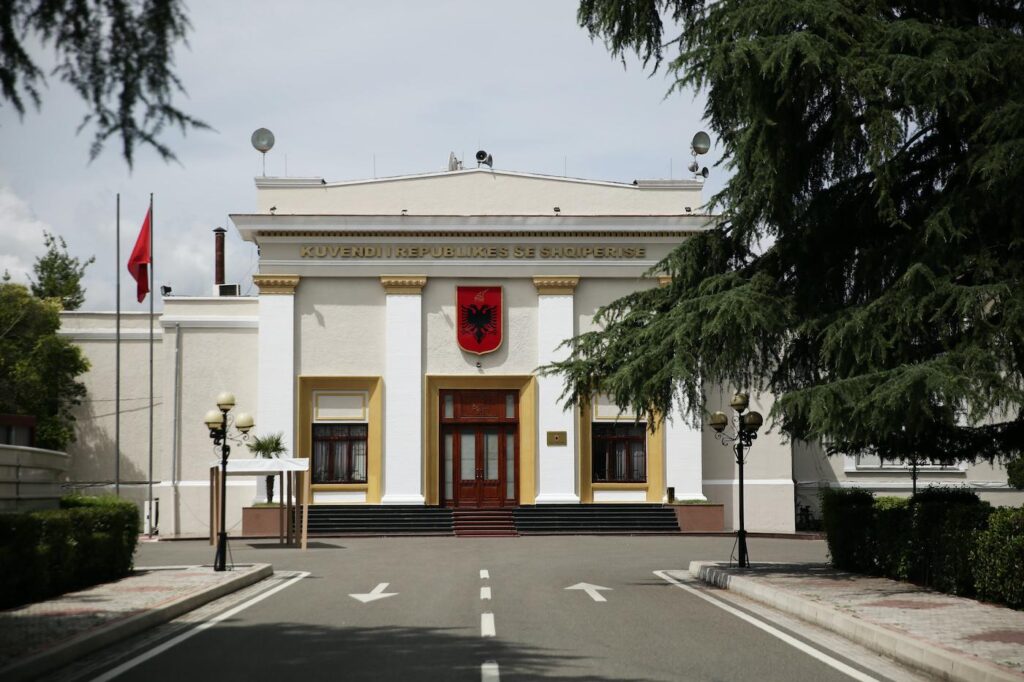
Whatever Albania’s parliament decides on 12 March on SPAK’s arrest request, the investigation into Belinda Balluku will continue.
by Alban Bici (Tirana)
When the Albanian Assembly convenes to vote on whether to authorize the arrest of Deputy Belinda Balluku, it will be deciding exactly one thing: whether the existing travel ban should be replaced by detention — either in prison or under house arrest.
Nothing more.
It will not decide the fate of SPAK’s investigation. It will not decide whether Balluku is guilty or innocent. It will not decide whether the case goes to court.
None of those questions are on the agenda. None will be settled by the 12 March vote.
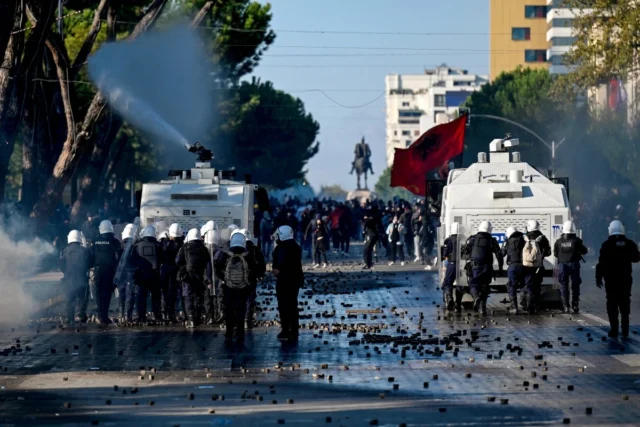
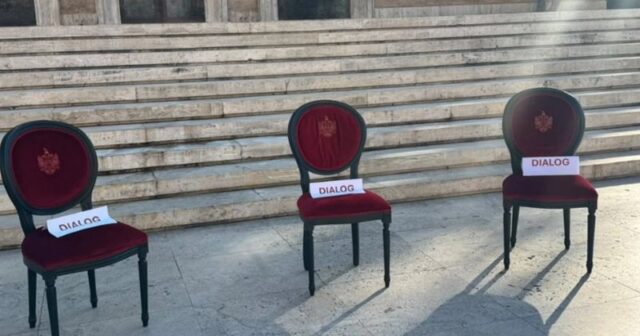
Yet the political atmosphere surrounding the vote suggests something far larger — a decisive confrontation over Albania’s justice reform.
It is not.
What parliament faces is a procedural decision with a narrow legal scope. The future of the Balluku case will not be determined in the plenary chamber but elsewhere: in the offices of SPAK’s prosecutors, in the courtrooms of the Special Court Against Corruption and Organized Crime, and ultimately — if the investigation produces sufficient evidence — in a criminal trial.
No parliamentary vote can stop that process.
What Parliament Was Actually Asked to Decide
SPAK submitted its request to parliament on 16 December 2025.
The request was specific: replace the current security measure — a ban on leaving the country, imposed by the Special Court on 19 November 2025 — with a stricter one: detention in prison or house arrest.
Prosecutors argued that the investigative situation had deteriorated. They cited risks of evidence destruction, flight, and further criminal activity.
The Assembly’s Committee on Rules, Mandates and Immunity, dominated by the Socialist majority, recommended rejecting the request.
Its report concluded that SPAK had failed to meet the legal threshold set by Article 260(3) of Albania’s Code of Criminal Procedure for upgrading a security measure.
The committee’s reasoning was clear:
- Expanding an investigation does not constitute a new procedural circumstance.
- The alleged witness intimidation amounted only to a transcript of a conversation between two defendants, not evidence of interference.
- Balluku had complied with all investigative obligations since being notified.
- The risk of repeating the alleged offenses disappeared when she left the cabinet.
Parliament now votes on that recommendation.
But the legal significance of the vote is often misunderstood.
Article 289 of the Code of Criminal Procedure — a provision rarely mentioned in the political debate — states that parliament’s refusal to authorize arrest does not prevent prosecutors from continuing their investigation or requesting other security measures.
The investigation continues either way. The travel ban remains either way. The path to indictment remains open either way.
What SPAK Can Still Do
Parliamentary authorization is required for one category of action only: measures that deprive a sitting deputy of liberty.
Everything else remains fully available to prosecutors.
SPAK can expand the investigation. It can gather new evidence. It can question witnesses, conduct searches, and carry out surveillance. It can add charges.
Most importantly, it can indict.
Once prosecutors conclude that the evidence is sufficient, they may send the case directly to the Special Court Against Corruption and Organized Crime for trial.
That step requires no parliamentary approval.
Under Article 73 of Albania’s Constitution, parliamentary immunity protects deputies from arrest without authorization. It does not protect them from prosecution.
If SPAK files an indictment, Balluku could face trial while remaining a member of parliament.
The Assembly would have no role in that decision.
This is not a legal loophole. It is the design of Albania’s post-2012 constitutional order, which deliberately limited parliamentary immunity to the deprivation of liberty while removing it entirely from investigation and prosecution.
The architects of the reform understood the distinction.
Today’s political debate largely ignores it.
The Framing War
For the Democratic Party, the 12 March vote is being presented as a test of whether the ruling majority will shield one of its own from justice.
Gazmend Bardhi — whose criminal complaint in September 2024 helped trigger the investigation — has argued that rejecting SPAK’s request would prove that Prime Minister Edi Rama is protecting corruption.
The implication is simple: rejecting the arrest request means blocking justice.
The Socialist majority frames the matter differently.
For them, the vote represents constitutional oversight — a proportionality check on prosecutorial power and a defense of the presumption of innocence.
Both narratives serve political interests.
Neither accurately describes the legal consequences of the vote.
The opposition exaggerates its significance. A parliament rejecting an arrest request does not block prosecution.
The majority minimizes its political meaning. A governing party has nevertheless voted to prevent the detention of a former senior minister.
The legal arguments in the committee report — referencing European Court of Human Rights standards on pre-trial detention and the ultima ratio principle — may be defensible.
But the political context cannot be ignored.
For the opposition, a dramatic clash with the government is politically useful. For the majority, a principled constitutional stand is preferable to the appearance of protecting an ally.
What the Vote Cannot Do
The 12 March vote cannot close the Balluku case.
It cannot end SPAK’s investigation. It cannot prevent prosecutors from filing an indictment. It cannot stop a trial if prosecutors decide to pursue one.
It also cannot remove the existing travel ban, which remains in force regardless of parliament’s decision.
More broadly, the vote does not resolve the deeper institutional question that the case has raised: how Albania’s parliament should interact with the country’s specialized anti-corruption architecture.
That debate will continue long after this vote.
What the vote can do, however, is produce a surge of political noise that obscures a simpler reality.
SPAK’s work does not depend on parliamentary approval.
The prosecutors who opened the investigation in 2024 and expanded it through 2025 have not been stopped. At most, they have been denied one instrument.
The case moves forward.
Albania’s justice reform was designed to be resilient precisely in moments like this. Whether the system appears to function as intended depends entirely on whether that distinction survives the next few days of political noise.
The door was never parliament’s to close.
About the Author
Alban Bici is a Tirana-based entrepreneur and the publisher of the Tirana Examiner, which he founded to bring rigorous analysis and international perspective to Albanian public affairs. This article reflects his editorial position on the legal stakes of the 12 March parliamentary vote.