Tirana Examiner Newsroom
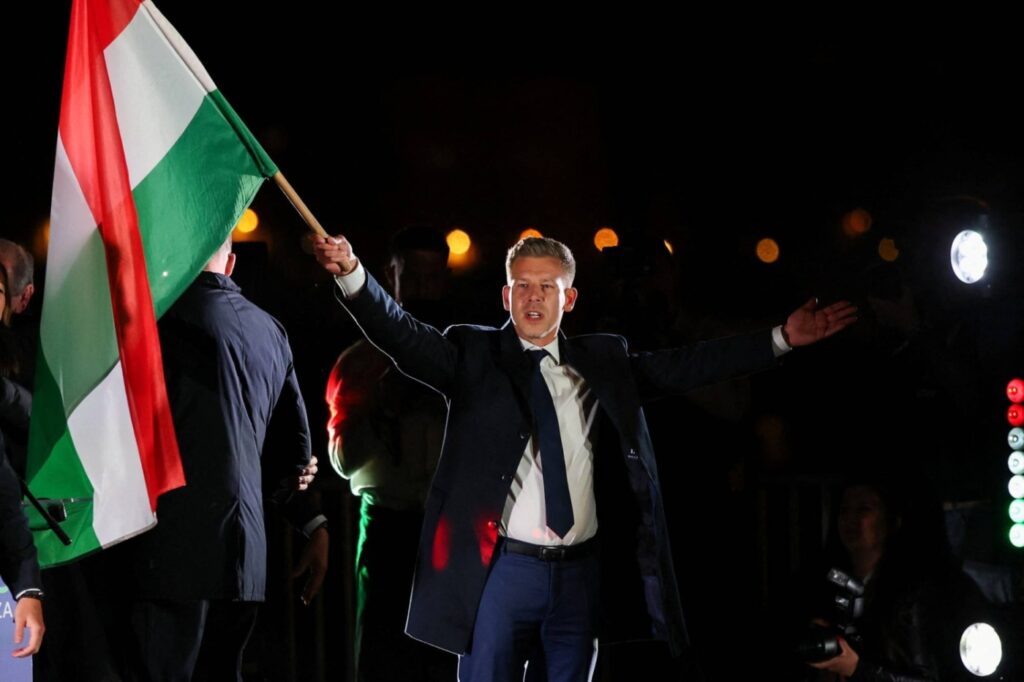
The results from Hungary arrived with unusual clarity. Péter Magyar’s Tisza party won a landslide two-thirds supermajority, ending sixteen years of Viktor Orbán’s rule and, in the process, handed Albanian political actors a mirror they were not expecting to receive on a Sunday evening.
Tirana’s official response came in layers, and the layers told different stories.
Prime Minister Edi Rama moved first, with the speed that social media now demands of heads of government. His post on X offered warm congratulations to Magyar while simultaneously expressing what he called the pleasure of having worked with Orbán and describing the outgoing prime minister as “my friend Viktor.” The formulation was diplomatically coherent and personally honest in its way: Orbán had been a consistent backer of Albania’s EU accession path, and Rama is not a leader who pretends otherwise for the sake of a news cycle. The Ministry for Europe and Foreign Affairs followed later in the day with its formal statement, noting Hungary’s role as an unwavering supporter of Albanian membership and signaling readiness to deepen the bilateral dialogue with the incoming government.
The message from Tirana’s institutional actors was, in essence: we valued what Orbán delivered for us; we are prepared to work with whoever comes next. That is not cynicism. It is the diplomatic arithmetic of a country mid-accession, one that cannot afford to lose a vote in the Council of the European Union over the sentimentality of prior alignments.
The more revealing reactions came from the Albanian opposition, which found in Budapest’s Sunday result both a lesson and a weapon.
Ervin Salianji, positioning himself for a leadership contest within the Democratic Party, drew the sharpest analytical line. Magyar won, he argued, not because the system fell but because the opposition chose to change itself. It reorganized. It chose a new leader. It returned energy to voters who had stopped believing that ballots could move things. The implicit target was not Orbán but Berisha: an opposition that, in Salianji’s framing, has substituted grievance for strategy and alibi for accountability.
Sali Berisha, for his part, offered a characteristically composite reading. He credited Orbán himself for allowing free elections, and then pivoted to the practical takeaway he wanted his base to absorb: dominate social media, use artificial intelligence tools, do not let the networks go quiet. The mention of Claude and ChatGPT as instruments of political counter-messaging was striking less for its technological content than for its acknowledgment that the information battlefield has moved in a direction Berisha’s party has not yet fully occupied.
Elisa Spiropali, writing from the Socialist bench, took the widest frame. For her, Magyar’s victory was a signal to Europe itself: proof that even entrenched systems retain the capacity for self-correction, and that Russian-backed information operations designed to erode confidence in democratic institutions had not, this time, succeeded.
Each reading was selective. Each also contained something true.
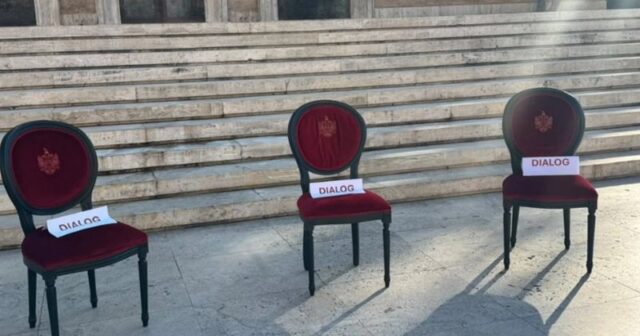
What the Hungarian result genuinely offers Albania is not a template but a question: whether the institutional preconditions for a competitive election, an opposition capable of presenting a governing alternative rather than a permanent protest, an electorate willing to reward renewal over loyalty, are being built here or merely discussed. The answer to that question will not be found in Budapest. It will be found at home.