The Newsroom
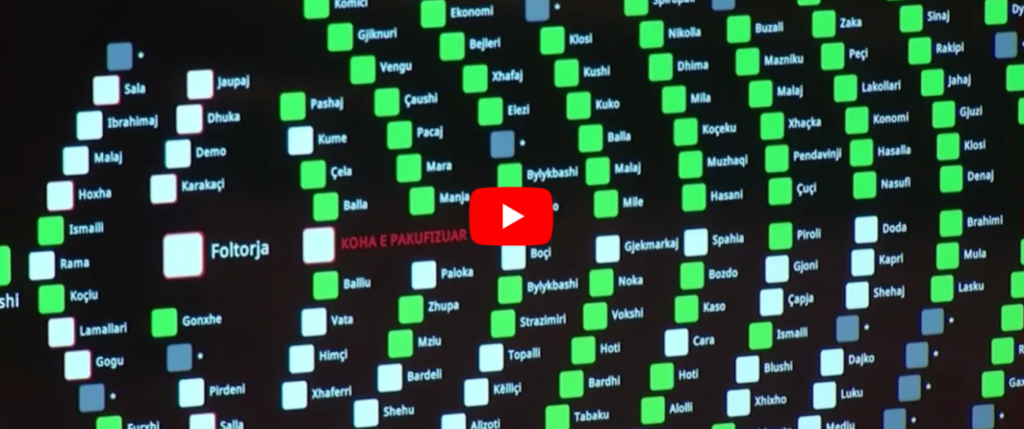
The Albanian Assembly adopted amendments to its Rules of Procedure on Thursday by 100 votes in favour and a single vote against, closing a procedural dispute that had run since the autumn session of 2025 and had drawn an adverse ruling from the Constitutional Court. The vote restored the parliamentary convention that the chamber’s operating rules require cross-party agreement, a convention the governing Socialist Party had broken at the start of the current session when it pushed through changes unilaterally. That convention is not decorative. It is the practical limit on majoritarian control of the institution itself, and its abandonment last autumn was the single act that escalated parliamentary conflict to the point of judicial intervention.
The opposition Democratic Party had challenged the autumn amendments before the Constitutional Court, which found that the majority had violated the procedure governing the adoption of the Rules. With the reasoned decision still pending publication, the Socialists reopened the text, first through Parliamentary Group Chair Taulant Balla and then through Assembly Speaker Niko Peleshi. The negotiations that followed produced concessions on most of the contested provisions and a joint text that passed with only Democratic Party deputy Redi Muçi voting against. The political reading inside the chamber was straightforward: the majority returned to the table because it had been compelled to, and the opposition collected on terms it could not have secured by negotiation alone.
The OSCE Presence in Tirana welcomed the outcome, describing the consensus adoption as a positive step for political dialogue and for the functioning of parliamentary democracy. Its statement noted that the amendments reflect the Constitutional Court’s decision, strengthen reciprocity between majority and opposition, and broaden the space for active participation by all parliamentary forces. Proper implementation, the OSCE added, will be essential for inclusive and effective parliamentary practice and for sustaining momentum on Albania’s reform priorities.
On the most substantial point of disagreement, the reporting obligations of independent institutions before the plenary, the parties met in the middle. The Socialist proposal had sought to remove plenary reporting altogether, restricting it to committee work. The opposition objected that any institution carrying a constitutional reporting duty must answer to the full chamber. The agreed text limits plenary reporting to those bodies for which the Constitution itself prescribes it: the People’s Advocate, the Prosecutor General, the heads of the High Prosecutorial Council and the High Judicial Council, the High Justice Inspector, and the Chair of the High State Control. Other independent bodies, including the Special Anti-Corruption Structure under its new director Klodian Braho, will report to the responsible standing committee rather than the plenary, with the committee drafting a resolution that then passes to the Committee on Legal Affairs for further consideration.
Several Democratic Party proposals were accepted in full. The Assembly Speaker is now obliged, when an institution fails to respond to a deputy’s request for information within the prescribed period, to demand a response within five days and, failing that, to seek disciplinary measures against the institutional head up to dismissal. Committee chairs must convene a session or hearing within two days when the parliamentary minority so requests. At the request of any group leader, plenary sessions will adjourn at 22:00 and resume the following day. Disciplinary measures imposed on deputies are automatically suspended pending appeal to the Assembly Bureau, and the suspension period is now counted in calendar rather than working days. The Ethics Secretariat will be composed in equal numbers between majority and opposition, with the Secretary’s vote decisive in the event of a tie.
The Socialists withdrew from three of their original proposals: the accelerated one-week procedure for any EU-related draft law, the halving of plenary speaking time, and the removal of constitutional institutions from plenary reporting. On the EU dossier, Speaker Peleshi proposed the compromise that prevailed: accession legislation will follow ordinary procedure except where the government submits a reasoned request for expedited treatment. The Democratic Party’s call to split the Foreign Affairs Committee from a dedicated European Integration Committee did not succeed; the single committee structure remains, and the total of eleven standing committees is unchanged. Speaking time per deputy stays at ten minutes. Political adviser allocations were equalised at eleven for each of the two largest groups.
Speaking after the vote, Democratic Party deputy Ivi Kaso said the Constitutional Court had caught the majority in a constitutional foul, and expressed the hope that consensus adoption would produce a corresponding shift in the majority’s conduct toward the opposition. Balla, in a separate exchange with Democratic deputy Gazment Bardhi, argued that the agreement should be read as a victory for parliamentarism rather than for either side, and signalled the majority’s openness to continued dialogue on the integration legislative agenda.