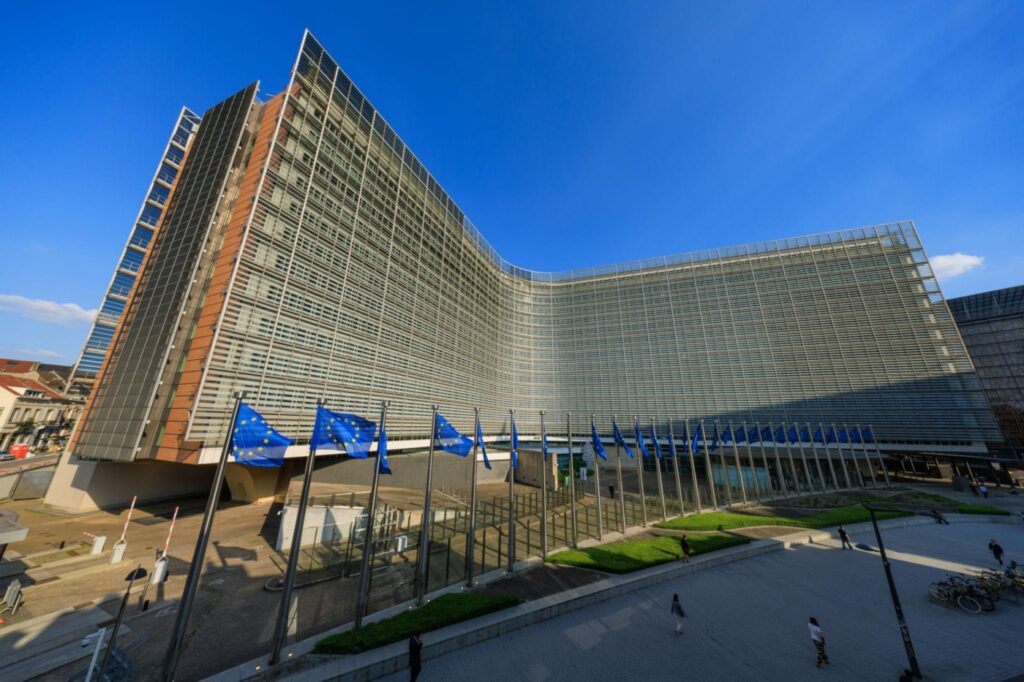
Albania is preparing to repeal and replace its Law on Strategic Investments, a step Brussels has asked for over four years of progress reports. As a matter of law, the new statute will speak to the future. It will not, on its own, reach back into what the old one already granted.
by Renada Bici (Legal Desk)
The government has decided to stop extending the Law on Strategic Investments and to write a new one in its place. Prime Minister Edi Rama said as much this month, to journalists from EU countries, in language meant to keep the decision at arm’s length from the street. The law “has fulfilled its mission,” he said, and the good thing is that they will set it aside; this is not an admission that the European assessment was right, and it has “nothing to do with what happens in the street.” A month earlier, on May 11, he had put the timing in plainer legal terms. The existing law had been kept alive, he said, “only to avoid a vacuum” between the old text and its successor, which is being drafted in consultation with the European Union.
The replacement is close. The Minister of Economy, Delinda Ibrahimi, told the Tirana Examiner that the text is ready and that the public will see it shortly. “The draft is ready, and within June I will release it for public consultation,” she said, after which it would go to parliament. The current statute, Law 55/2015, expires on December 31, 2026, having been extended six times since it was first passed for a three-year life.
Strip away the framing of a mission accomplished and the shape of a concession is visible underneath. Brussels has pressed for this law’s revision for four years running, in one progress report after another, and the 2024 report named the strategic investment legislation for the biodiversity risk it carries, noting that it may open protected areas to large tourism and industrial projects. The deeper objection is older and structural. A regime that confers strategic status by special procedure, with access to public land and the help of the state, outside any open and competitive process, is a matter of competition and state aid before it is anything else. That is the reading the Economy Ministry itself offers: public land allocated without a tender, distorting the market. It belongs to the chapters Albania must close to advance, public procurement and competition among them, and the successor text is being written with the Union in the room. Whatever the public language of sovereign choice, this is alignment delivered under the conditions of accession.
And the demand does not come from Brussels alone. Among the protest movement’s published conditions are the repeal of the strategic investor framework and the reversal of the 2024 changes to the Law on Protected Areas. Those are, almost to the word, the two things the Commission has asked for. The institution that reads the acquis and the crowd in Skanderbeg Square have arrived, in the same week, at a single position. Whether the Commission reached it by reading the treaties or by reading the street, the demand it now presses is the street’s demand. Their reasons differ, the square wanting a project stopped and the Commission reasoning from the acquis, but the demand is a single demand, and a single demand is answered once.
That is the politics. The statute has a separate logic, and it is the one that concerns this desk.
A law speaks from the day it enters force. The Albanian legal order, like the European order it is approximating, treats legislation as looking forward and not back. Retroactive effect is the exception, permitted narrowly and never lightly, and where it would reach rights already acquired it meets the protections a state under the rule of law owes to legal certainty and to legitimate expectation. Lex prospicit, non respicit. The law looks ahead, not behind. A repeal of the Strategic Investments law, and a new law in its place, therefore governs what comes after it. It does not, by the simple fact of replacement, annul a status the old law has already conferred.
This is the point that matters for the project that set the protests in motion. The strategic investor status attached to the Sazan project [confirm grantee entity and whether the grant covers Sazan island, the Zvërnec mainland parcels, or the combined venture] was conferred by decision of the Strategic Investment Committee [cite the decision and the article of Law 55/2015 under which status is granted] while that law was in force. Repealing the law for the future does not erase that grant. The remedy now demanded from the square and from the Berlaymont alike, repeal, is not the instrument that reaches the thing either of them wants reached.
What can reach it is narrower, and it runs through other doors. The new law may carry transitional provisions that address statuses already granted, but such provisions are themselves constrained by the protection of acquired rights, and a vested status cannot simply be stripped without proportionality and, often, consequences the state would then have to answer for. A grant can also be undone if it was unlawful when it was made, through administrative revocation or before the courts.
There is an irony in this, and the unison sharpens it. The end of the regime, demanded from the square and from Brussels alike, is lawful, and it is already underway; that is what a repeal does, going forward. The misconception is to expect that ending to undo what the old law has already granted. To demand that a new statute cancel a vested status retroactively is to ask Albania to set aside legal certainty, and legal certainty is not a local evasion invented for this case. It is a European principle, enforced by the Union against its own institutions. From protesters who want a project stopped, the demand is the understandable shorthand of the street. From the guardian of the acquis, an insistence that Albania move “without delay” against what was lawfully conferred would sit oddly next to the very principle the guardian exists to defend. Albania can make the concession Brussels asked for and still honor the principle Brussels prizes. The contradiction, where there is one, belongs to those demanding it choose.
So the new law is real, and the concession it represents is real. The next progress report will record it, and the negotiation will move a step. But a statute is not a remedy for the past, and neither a communiqué from Brussels nor a chant in the square can make it one. What this law changes, it changes going forward. The reckoning for what was already granted will be settled in other rooms: by the assessment that has not yet been run, and by the courts.
Renada Bici is a contributor to the Tirana Examiner Legal Desk.