SPAK’s proposal is not dangerous because its intentions are suspect. It is dangerous because democratic institutions are designed to restrain even the most virtuous among them.
Drizan Shala
Should we be worried by what Klodian Braho proposed? That is the question under every conversation about SPAK this month, asked in kitchens and in chancelleries in roughly those words, and it deserves a straight answer rather than a careful one. The answer is yes. Not for the reason the loudest critics will give, and not with the word they will reach for, but yes, and the reason has less to do with what the chief prosecutor said than with what his institution has come to believe about itself.
SPAK stands on a moral altitude no Albanian institution has held in living memory but altitude has a documented side effect, in institutions as in pilots. An organization that comes to understand itself as the last clean room in the state can begin, sincerely and by degrees, to treat the rules that bind everyone else as friction, obstacles standing between the mandate and the mission rather than the terms on which the mandate was granted. The mandate is pure, therefore the means are negotiable. That is the syllogism altitude writes, and no institution ever says it aloud, which is why SPAK’s unfailingly careful words prove nothing either way, cooperation praised, partnership affirmed, replacement disavowed. Institutions do not announce their self-conception. They enact it, and this month Albania was shown the enactment in four acts.
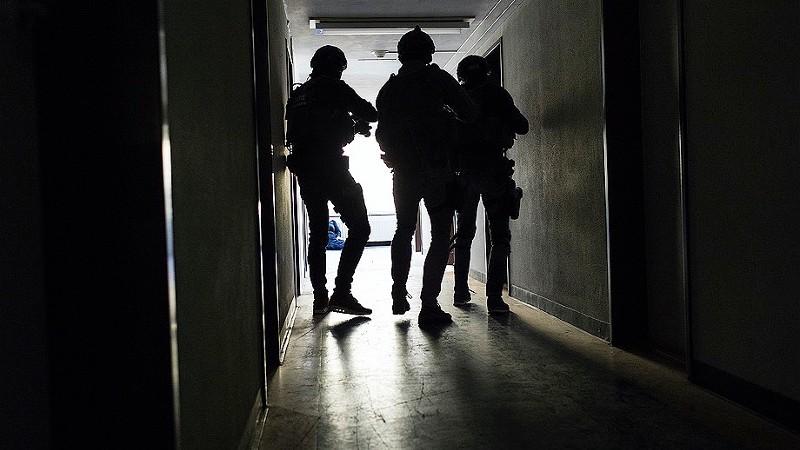
On the first of July, before the Electoral Reform Commission, the hint: no operational capacity exists today to arrest wanted persons, too early to make a strategy public, but SPAK is considering a different institutional reaction capable of carrying out these special operational actions itself. Within a day, the demonstration: Bureau agents arrested a fugitive of the Ura file in Shkozet, working with Italian partners and, for the first time in the institution’s existence, without the State Police, who were not notified. At month’s end, the plan, delivered informally to journalists: a special group for operational actions, full independence in its activity. And the following day, before the Law Committee, the reassurance: cooperation is good and functional, the police are an irreplaceable partner, the highest regard for the overwhelming majority of their people, and, restated inside the warmth, the demand for the full investigative cycle, unchanged. Hint, demonstration, plan, reassurance, inside a single month. This is not the cadence of an institution floating an idea to see what survives contact. It is the cadence of an institution that has decided, and is now managing the acoustics of the decision. The words are careful. The choreography is not.
Now, the word waiting at the top of this debate’s staircase, because the press has already climbed the first steps, separation, declining trust, and someone will soon say coup. Take the word away from them early: it is wrong. A coup d’état is the seizure of the state’s decision-making power by force, outside constitutional procedure, usually in an afternoon, and nobody in SPAK is seizing anything. But the people laughing at the word should stop laughing, because the framework that explains why is older than any institution in this story and worth stating once. A state, to be one, holds a monopoly on legitimate force, and holds it as a single, constitutionally supervised whole. Every doctrine of civilian control, every chain-of-command rule, every oversight committee ever built is bookkeeping on that monopoly, and when the bookkeeping fragments, the monopoly follows. The literature that studies how states lose control of their coercive instruments would therefore recognize this month’s proposal instantly, not as a coup, but as the construction of a precondition. No armed formation in history has ever seized anything on the day it was created. What matters, and what the study of civil-military relations, from Huntington onward, has spent seventy years demonstrating, is a single design question asked at birth: to whom does the formation’s loyalty run? If the answer is the constitutional order, through an unbroken chain from the man holding the rifle to an official the public can remove, the formation is an instrument of the state. If the answer is an institution, any institution, however virtuous its mission, the formation is a risk that has not yet matured. And an institution that already believes its mandate licenses what the statute does not mention has answered the design question before drawing the unit’s first organogram. Full independence in its activity. Loyalty to the structure. The risk is on the books, maturing.
What the region already taught us
Security analysis in the Balkans has one advantage over security analysis anywhere else, which is that nothing needs to be modeled. Everything has already happened here at least once.
Consider the career of the Jedinica za specijalne operacije, because it is the exact experiment Albania is now proposing to run with better intentions. Serbia’s Unit for Special Operations did not begin as a praetorian guard. It began as a solution to an operational problem, formalized in the mid-nineties inside the State Security service, outside the army’s chain and outside the police’s chain, staffed by selected men, answerable in practice to the institution that created it. Every step had a reason. The service needed capabilities the regular structures could not be trusted to provide. The unit was elite, vetted, loyal. And its loyalty ran exactly where its design pointed, to its parent institution and to itself, which is why in 2001 it could mutiny in uniform on a public highway to extract political concessions, and why in March 2003 its deputy commander put a bullet in a sitting prime minister from a window in Belgrade. The unit was disbanded that spring, seven years and one murdered head of government after somebody solved an operational problem by formalizing an armed unit with full independence in its activity.
The objection writes itself, and it deserves an answer. SPAK is not the Milošević state security. Its people are vetted to a standard the JSO’s handlers never imagined, its mission is the law, and its record is the most credible of any Albanian institution of the past decade. All true, and all beside the point, because the JSO lesson is not about villains. It is about architecture. The unit did not go feral because its members were evil men, though some were. It went feral because its design contained no chain that ran outside its parent institution, so when the parent institution’s interests diverged from the state’s, there was no mechanism through which the state could win. Design is destiny in coercive institutions. The literature calls the selection of armed men for loyalty to an institution rather than to the constitutional order praetorian recruitment, and it produces praetorian outcomes on a delay of years, indifferent to the founders’ virtue.
And if the Serbian example feels foreign, there is a domestic one, cruder and closer. Albania in 1997 learned in the space of weeks what happens when weapons detach from a single accountable chain of command. The state did not fall to a rival army. It dissolved the moment the instruments of force stopped answering to anyone. A country with that memory in living generations should be the last in Europe to experiment with armed structures outside the ordinary chains, and it is proposing to be the first.
What the trade does instead
Here is what the proposal’s defenders will not tell you, and what its author apparently will not either. A partner institution suspected of leaking is not an exotic problem. It is one of the oldest problems in the profession, and the profession long ago developed a repertoire for it. The repertoire has four standard entries, all of them tested, several of them tested next door. Secession, building your own armed force, is not on it.
The first entry is counterintelligence, and in Albania’s case it carries an irony that should be unbearable. When a service concludes it is penetrated, the professional response is to hunt the penetration, identify the officers who leak, build the cases, prosecute them. And the institution with jurisdiction over crimes by Albanian police officials, designed, vetted, and funded for precisely that work, is SPAK itself. The organization proposing to route around a penetrated police force is the only organization in the country whose founding purpose is to clean one. Across the years of failed operations now cited as justification, we are aware of no officer charged with betraying an operation, and if such charges exist they have not been announced. A security service that responds to moles by building a separate army rather than by catching moles has not solved its problem. It has abandoned its mandate and called the abandonment reform. The answer to penetration is counterintelligence, not secession.
The second entry is the vetted cell, standard practice on every continent. When American drug enforcement operates in countries whose police it does not trust, which is most of them, it does not import an army. It builds sensitive units inside the host police, officers seconded, polygraphed, compartmented, planning on need-to-know, with the wider force notified at execution and not a minute before. Albania could run the same model tomorrow with the legal instruments it already has: a cell of State Police officers seconded to SPAK operations, subjected to the Bureau’s own vetting regime, inside the police chain for accountability and inside SPAK’s compartment for security. The three-day surveillance that preceded the Shkozet arrest proves the compartment already holds. And the model cleans as it operates, because every officer who passes through the cell returns to the force as a vetted officer.
The third entry is the regional one, running today two borders away. Croatia’s special anti-corruption prosecution owns no tactical unit. It works through a dedicated national police office built for it inside the Interior Ministry, prosecutor-led in its casework, ministerially chained in its accountability, and that architecture has taken down ministers, generals, and a former prime minister without anyone needing a prosecutorial army. North Macedonia teaches the same lesson from the failure side: when Skopje discovered its security service had turned interception into a private political weapon, the answer was not to hand the capability to a trusted clique. It was a statute, a new technical agency created by parliament with external oversight wired in. The region has already run both experiments, the cleaned chain and the legislated fix, and both worked.
The fourth entry is Italy, and the date matters. The Direzione Investigativa Antimafia was built in the early nineties, at the height of the state’s war with Cosa Nostra, when the mafia was killing prosecutors in their cars and Italian institutions had every reason to trust nothing. At maximum distrust, with the strongest justification any state has ever had for giving its anti-mafia prosecutors their own armed force, Italy still placed the new body inside the Interior Ministry, chained it to a government parliament could dismiss, and made it work for the prosecutors without belonging to them. That was not naivety. It was the judgment of a state under fire, keeping the brain and the hand in separate institutions. And Albania has already met this institution. The one partner the Bureau trusted for the Shkozet arrest was the DIA’s own operations center in Bari. The Bureau borrowed a correctly chained instrument for its best operation to date, and now proposes to build itself the version Italy refused to build.
Four entries, all available, all tested, all cheaper than the alternative. Braho’s proposal skips the entire repertoire and reaches directly for the last resort, and that skip tells you more than the proposal does. Cleaning a police force is slow, unglamorous, and reversible. A new armed formation is fast, impressive, and permanent. Institutions under pressure reach for permanent, and it is precisely the job of the constitutional order to hand them slow instead.
The loyalty filter
Now look closely at how the special group would actually be staffed, because this is where the proposal’s defenders point to its greatest strength and a security analyst sees its greatest hazard.
The Bureau’s personnel regime is the most severe in the Albanian state, polygraphs at selection and every two years thereafter, financial monitoring extending to families, security clearances, appointments that lapse unless renewed against fresh testing. As a filter for detectives it is admirable. But apply the same filter to an armed tactical formation and observe what it selects for. Every man in the unit would owe his position, his clearance, his continued employment, and his protection from the institutions he investigates to one structure, the structure that vetted him, polygraphs him, and commands him. His career cannot survive outside it. His loyalty has one plausible address. The vetting that makes a Bureau analyst incorruptible makes a Bureau rifleman something else, a member of a small armed brotherhood selected and retained by a single institution, insulated by design from every other authority in the Republic. That is not a corruption risk. It is the opposite of a corruption risk, and that is precisely the problem. Formations like that do not sell out. They close ranks.
Add the operational culture such a unit would inherit on its first day. It would be born out of the belief that the State Police cannot be fully trusted, a belief its founding institution expresses in its most careful public register, praise for the overwhelming majority of police officers joined to the acknowledgment that, as in any institution, some of them may have problems with the law. Note that even at its most generous, the premise stands, and the premise is the unit’s founding myth, the last clean room, betrayed by the rest of the state. Units built on that myth have developed, in case after case, the same doctrine, tell no one, coordinate with no one, treat every outside institution as a leak until proven otherwise. In the trade this is called compartmentalization, and it is a virtue in an intelligence cell and a pathology in an armed formation, because an armed formation that treats the rest of the state as hostile terrain has already answered the loyalty question, quietly, in the negative.
What an ally is allowed to notice
There is an external dimension, and it is not decorative. Albania’s security identity rests on NATO membership, and the alliance’s foundational expectation of every member is democratic civilian control of the instruments of force, a single constitutional chain over everything in the state that carries a weapon. This is not alliance poetry. It is the criterion every aspirant from Tallinn to Podgorica had to satisfy institution by institution, and Albania satisfied it, painfully, over two decades of security-sector reform paid for and inspected by its partners. The doctrine through which the alliance and its reform bodies evaluate a member’s security sector asks structural questions. Who authorizes force. Who commands it. Who reviews its use. Which minister answers for it, and which committee can summon that minister. A standing armed unit answerable to a prosecution office, created by internal order, sitting outside the defense chain, the interior chain, and the parliamentary chain, fails those questions on paper, before a single operation is run. Nothing about allied reactions needs to be predicted here, and this analysis predicts none. It is enough to observe what is documented practice: operational and intelligence cooperation between allies runs on legible accountability, on knowing where shared material lands and who answers if it is misused, and a hybrid armed actor with no ministerial address is a structure for which that paperwork does not yet have a page. The country would be spending its most valuable security asset, the legibility of its chain of command, to solve a problem whose statutory solution it has already used, once, successfully, in Shkozet.
The cold summary
None of this requires believing a single bad word about the men and women of SPAK, and this analysis asserts none. The institution’s intentions are almost certainly exactly what its chief describes, arrests that stop leaking, warrants that get executed, fugitives that stop evaporating an hour before the knock. Intentions are not the unit of analysis. Architecture is. And the architecture proposed this month is, feature for feature, the one the region’s recent history has already stress-tested to destruction, an armed formation created inside a trusted institution to solve a real operational problem, selected for loyalty, insulated from external chains, justified by the untrustworthiness of everyone else, and proposed by an institution that skipped the entire professional repertoire for penetrated partners, including the entry that is its own constitutional mandate, to reach the last resort first, which is what the altitude does, it makes the last resort feel like the reasonable next step. That architecture has a failure mode, the failure mode has a body count in this region, and no one who built such a formation ever believed, on the day they built it, that the failure mode applied to them.
So, should we be worried? Yes, and we can now say precisely about what. A coup, no. What this month produced is smaller and should be named exactly, because precision is the only advantage analysis has over polemic. Albania was shown the first architectural drawing of an armed formation outside its constitutional chain of command, drawn by an institution that has come to believe its mandate is its authorization. Drawings can be corrected, and the correction is cheap at this stage, a statute, a chain, a vetted cell, a mole hunt the prosecutor already owns, everything this piece has listed and everything the legal argument for this unit already implies. The last moment a state can redesign an armed formation at no cost is before it exists. Every price after that goes up, and the region keeps the receipts.
Drizan Shala writes on security, institutions, and political violence for Kosovo Dispatch and Tirana Examiner. He is a doctoral candidate at the University of Sarajevo.