by Renada Bici (The Legal Desk)
On Monday, SPAK told BIRN that it had opened an investigation connected to the works at Zvërnec. In the same answer, through its coordinator for the right to information, it added that in the investigative phase no further detail could be released. The two statements should be read together, because the second explains the strangeness of the first. The office invoked the confidentiality of the investigative phase to justify what it would not disclose, and in the very same act it disclosed the one thing it was under no obligation to disclose at all, namely that the investigation exists.
That sequence deserves attention before anyone draws a conclusion about the coast, because the conclusion about the coast is precisely what has not been established and may never be.
It is worth restating a principle that Albanian public debate forgets with remarkable regularity. An investigation is not a charge. A charge is not a conviction. The opening of an inquiry establishes nothing about guilt, and in this country the distance between an opened file and a proven wrong is wide and littered with files that closed quietly, having found nothing, long after the noise that birthed them had moved on. The presumption that attaches to the works at Zvërnec today is the presumption of nothing, because nothing has been demonstrated. Anyone writing as though the volume of coverage were itself evidence has mistaken a rumour cycle for a finding, and Albania produces rumour cycles the way other countries produce weather.
So set the coast aside, on its proper presumption of innocence, and look instead at the institution.
A prosecution is never required to confirm that it is investigating. Offices decline to confirm or deny as a matter of routine, and the refusal is not evasion; it is the ordinary protection that the investigative phase is supposed to provide to everyone, including those who turn out to have done nothing. SPAK knows this. Its own coordinator cited that very principle on Monday to explain the silence on detail. Which makes the confirmation a deliberate exception to a rule the office was invoking in the same sentence. It chose to be on the record that a file is open. That choice, and not the contents of the file, is the documented fact available for analysis.
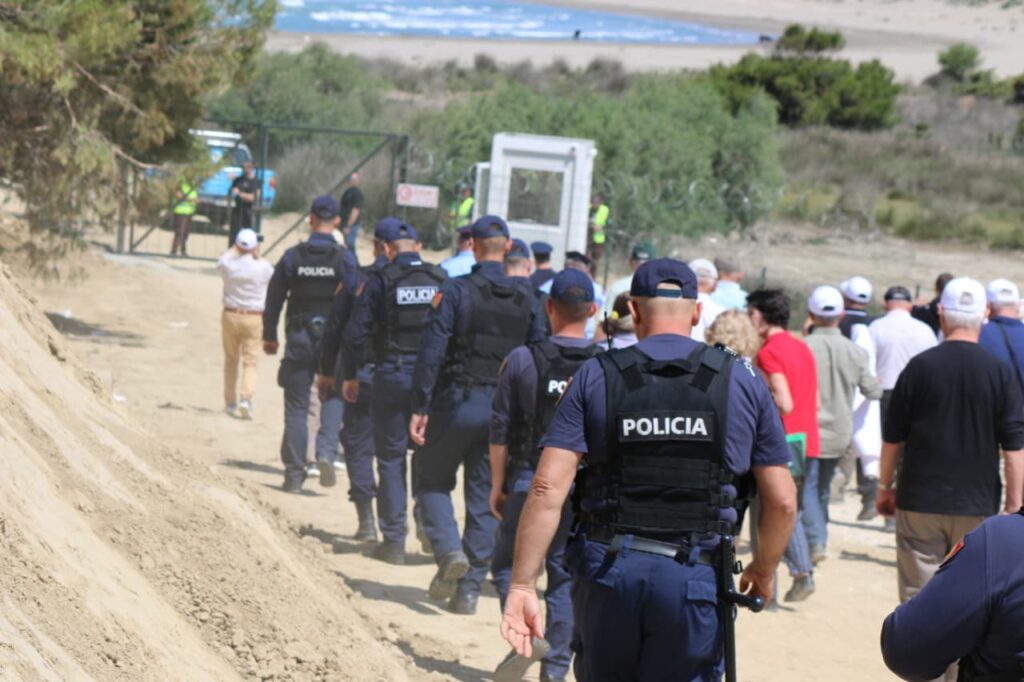
Consider when the choice was made. It was made while the footage from Saturday was still circulating, while the charges against seventeen people and the suspension of the Vlora police director were fresh, while the street and the cameras were both still warm. A prosecution that wished to work without interference had every instrument available to say nothing. This one stepped forward at the precise moment its confirmation would land hardest. Whatever the intention, the effect is not in doubt. To a public already primed by images of unmarked men and a dragged protester, the sentence “SPAK is investigating” does not read as a neutral procedural notice. It reads as the state’s most credible institution lending its weight to the premise that there is something here to find. The confirmation transfers a presumption it has no evidence yet to support.
The motive behind the timing is not knowable from the outside, and this desk will not pretend it is. Perhaps the office judged that public confidence required a signal that it was not asleep. Perhaps it wished to demonstrate independence, or relevance, or responsiveness to a protest that had become a national story overnight. Perhaps it was simply answering a reporter’s question and the significance is being read into an ordinary exchange. Each reading is plausible and each is, in the institutional sense of the word, political. A prosecutor that calibrates its visibility to the temperature of the street is making a political calculation even when no wrong has been done by anyone, because visibility itself is a form of pressure, and the office controls the tap.
None of this excuses the lazier inference in the other direction, and the record should be kept honest. The identity of the developer, the status of necessary permits are not in dispute. The rumour problem does not touch them. It touches only the leap from that backdrop to the assumption of a crime, and it is that leap, not the backdrop, that an investigation has been opened to test rather than to confirm.
Which returns us to the only conduct in this affair that is both established and complete. The works on the coast may amount to a violation or to nothing at all, and the lawful answer is to wait for the file to close. But the prosecutor’s decision to announce the file while pleading the confidentiality of the same file is finished business, observable now, requiring no further evidence to assess. SPAK placed itself inside the frame on Monday. It was not pushed there. It walked in, on a day it chose, into a picture it knew was being photographed.
The office spends much of its authority demanding that the powerful account for the timing and the motive of their actions. It is entitled to that demand. It is not entitled to an exemption from it. If the standard is that public actors should be read by what they choose to do and when they choose to do it, then the confirmation of Monday is fair game by SPAK’s own rule, and the question it leaves on the table is the one the office would ask of anyone else. Not what was found, because nothing has been. Why the announcement, and why now.
There is a final dimension that an Albanian institution does not have the luxury of forgetting, and it has nothing to do with shielding anyone from scrutiny. SPAK does not speak into a neutral room. What it says crosses the border, and there are outlets and capitals that wait for any Albanian institution to appear careless, so that the carelessness can be offered as proof of the thing they have always wished to say: that the country is lawless, that its reforms are scenery, that its progress is a story Albanians tell themselves. A confirmation dropped into a burning news cycle, even an honest one, even one made in good faith by an officer answering a reporter, becomes their raw material the moment it leaves the building. SPAK may not have meant to hand it over. It handed it over anyway.
This is not a plea for silence, and it is not a plea for softer treatment of anyone, large or small. It is a reminder of whose institution this is. SPAK was built by Albanians, at a cost Albanians paid in years and in political capital, to serve an Albanian interest that includes, and cannot be separated from, how the country is read by those who do not wish it well. The discipline of the investigative phase is not a courtesy extended to the powerful. It is a duty owed to the nation that created the office, and on Monday that duty and the institution’s appetite to be seen were pulling in opposite directions. The next time the two diverge, SPAK would do well to remember which of them it was built to serve.
Renada Bici is a Tirana-based lawyer practicing in civil, criminal, and administrative law. She holds a law degree from the University of Tirana and has experience in both private legal practice and public administration. She writes in her private capacity.