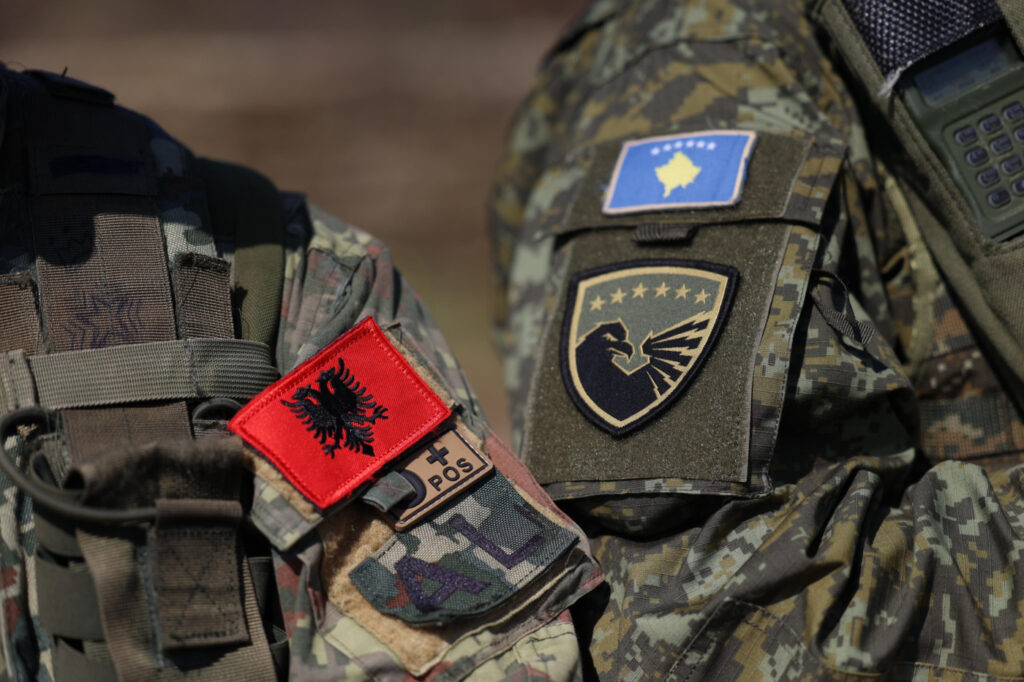
A Serbian deputy prime minister has promised his voters a flag over Prizren. Tirana’s answer has to be read with the sentence Edi Rama put on the record in March: if Kosovo is touched, Albania is touched.
By Ardit Rada (Tirana)
In March, Edi Rama put a sentence on the record. “If Kosovo is touched, Albania is touched,” he told Türkiye Today. If Kosovo is under an existential threat, he said, so is Albania. In the same interview he dismissed Aleksandar Vučić’s charge that Albania, Croatia and Kosovo had formed a military alliance against Serbia.
On 7 October a member of Serbia’s government gave that sentence its occasion. In Raška, a short drive from the Kosovo border, Ivica Dačić told a campaign crowd that Kosovo could be occupied, as the Turks had done, but would never be independent. Then he said: “Sooner or later the Serbian flag will fly over Prizren, be sure of it”. He predicted he would be accused of threatening someone.
The Serbian flag came down in Prizren in June 1999, when Serbian forces withdrew and NATO troops entered the city. Dačić did not say how it would go back up. He is Serbia’s Deputy Prime Minister and Interior Minister, and the police answer to him. He leads the party Slobodan Milošević founded. He was born in Prizren.
Albania’s Foreign Minister, Ferit Hoxha, answered on X, and he did not treat the speech as campaign noise. Such language, he wrote, carries “the very real danger of emboldening those prepared to act on it.” He named Banjska, where an armed Serb group killed a Kosovo police sergeant on 24 September 2023 and where, in his words, “full accountability remains outstanding.” Milan Radoičić, who took responsibility for that attack, lives free in Serbia.
“The Republic of Kosova is an irreversible reality,” the statement says. Albania “has stood by Kosova and will continue to support it in every possible way.” Hoxha called that support “a strategic investment” in the security of the entire region.
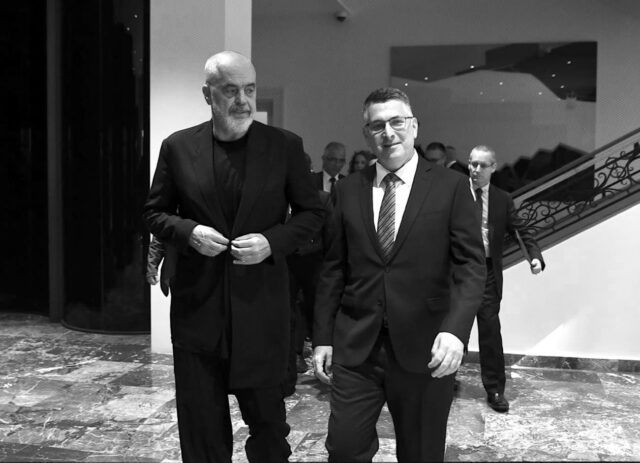
He has spoken this way before, in Rama’s name. On 31 May, on his first official visit to Kosovo as minister, he stood beside Foreign Minister Glauk Konjufca in Pristina and said he had come to convey what the Prime Minister had clearly stressed: “whoever touches Kosovo, touches Albania.” Albania, he said, “will never accept or tolerate” any violation of the security of Kosovo’s citizens and institutions. Banjska and the attack on the Ibër-Lepenc canal could not be forgotten.
Albania has now said it three times in seven months: the Prime Minister in March, his Foreign Minister in Pristina in May, and the same minister after Raška, in reply to a member of Serbia’s government. Rama had put it more bluntly in February 2024, when he told Albanian television that if it came to weapons, Albania would stand by Kosovo. Each time the message is the same. A move against Kosovo is a move against Albania.
The text Vučić was attacking is the declaration on defence cooperation that Albania, Kosovo and Croatia signed in Tirana on 18 March 2025. It creates no mutual-defence obligation. Rama’s sentence did not wait for a treaty.
Rama and Albin Kurti have quarrelled in public for years. In the March interview Rama said he sits in Tirana and sees the dialogue with Serbia differently from Kurti. The existential-threat sentence comes from that same interview. In May, on a Sunday in the middle of an election campaign, Kurti received Hoxha and wrote afterwards that coordination between the two states is a national duty. Their disagreement is over the dialogue. On Kosovo’s security the two governments say the same thing.
Hoxha’s statement keeps Albania’s policy of good neighbourly relations and reconciliation, and it names the price: “There can be no sustainable regional cooperation while realities are denied, the legitimacy of neighbours is questioned, or threatening rhetoric is used for political gain.”
Dačić told his voters to be sure about the flag. Rama’s sentence had been on the record for seven months when he said it: if Kosovo is touched, Albania is touched.