A country sees pink: In Albania, protests are taking place against a planned luxury resort by the Trump family. It’s long since become about more than just a construction project – it’s about criticism of Prime Minister Rama.
For over a month, demonstrations have been taking place every evening in Albania’s capital, Tirana. The protests were sparked by a planned luxury resort on the Zvernec Lagoon and Sazan Island. Among those behind the project is the investment firm of Donald Trump’s son-in-law, Jared Kushner. Environmentalists fear serious damage to a unique bird sanctuary and wetland.
The protests have long since expanded beyond the construction project to include corruption, a lack of transparency, and the current Prime Minister, Edi Rama. The former artist, ex-mayor of Tirana, and national basketball player rejects the accusations.
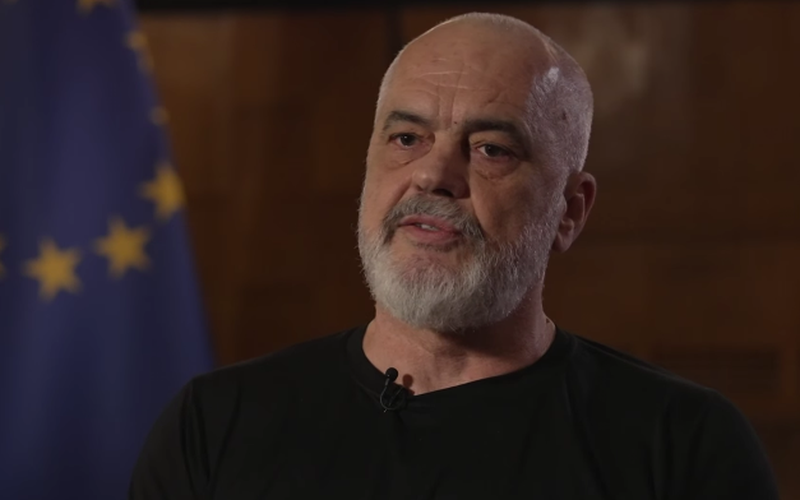
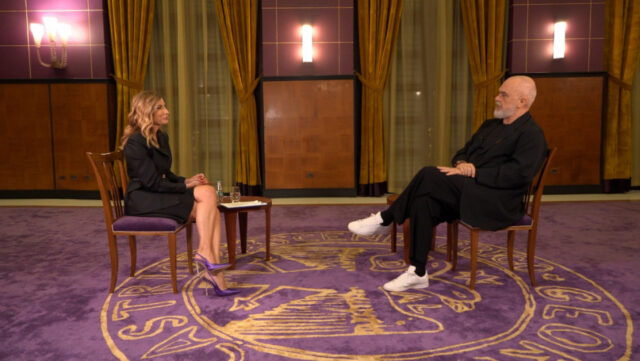
In the interview, Rama talks about the protests, the conflict between politics, nature conservation and investments, and his country’s path to the EU .
ZDFheute: Mr. Prime Minister, we would like to understand the structure and plans of the investors who are planning a holiday resort in Zvernec, right next to the lagoon there. So far, it’s not entirely clear who the investors are and what role the state plays. Can you shed some light on this?
Edi Rama: I don’t know what information you have, but there are a few simple answers. First, it’s private property. Second, private property in Albania is developed through agreements between the owners and potential investors. Third, there isn’t a plan yet because it’s a process in which our state agencies have proceeded very, very carefully to ensure that the plan adheres to a number of rules and standards that are important to us. I don’t know what you’ve found out.
ZDFheute: Regarding the role of the state, we’ve learned that you’ve changed several laws that have weakened nature conservation. You’ve reduced the size of the protected area to allow for the construction of an airport. And you’ve permitted construction projects in this previously protected area. Critics say that in this way you’ve facilitated investment, and therefore you naturally play a role as a state actor.
Rama: There have been no changes to allow construction in the protected area, where no buildings of any kind are permitted. These protected areas have a special status in Albania. The protection of the various areas is based on European Union categories and best practices. This means that not all areas are subject to the same level of protection against development and intervention; there are differences.
ZDFheute: But construction work began a few weeks ago right in the center of the nature reserve. Even though you say there are only plans so far and no official building permit to begin work. This concerns the center of the lagoon; we were there.
Rama: There is no building permit in this area. However, based on Albanian law, private property can be fenced off. If there is preliminary permission to begin preparatory work, including an environmental impact assessment, then it is possible.
ZDFheute: But how can initial work begin, as you say, if the ownership rights are not clarified? As you know, the Supreme Court of Albania has annulled the acquisition of ownership rights in at least two cases and referred them back to the lower court.
Rama: Anyone can have claims, but to turn a claim into a legal position, a court must confirm it. And in the meantime, a claim isn’t enough to halt everything until the court rules otherwise, because our government agencies also operate based on documents, not claims. Before you own a title to the property, you can’t demand that it not be developed simply because you don’t yet own it.
ZDFheute: But aren’t you, as Prime Minister, responsible for political transparency?
Rama: The transparency is so obvious. It’s so easy to see, but if you don’t want to see it, of course it’s invisible. As Prime Minister of this country, I don’t tell you stories. You tell stories.
The Albanian authorities have demanded compliance with the rules and an assessment of the environmental impact. This story is based on facts. The rest is based on interpretation.
ZDFheute: So, you’re sticking with the project?
Rama: We can’t simply say no to an investment of more than four billion euros. And if the overall result is disappointing, we won’t proceed. The Albanian authorities have demanded compliance with the rules and an assessment of the environmental impact. This story is based on facts. The rest is based on interpretation.
ZDFheute: So, you’re sticking with the project?
Rama: We can’t simply say no to an investment of more than four billion euros. And if the overall result is disappointing, we won’t proceed.
ZDFheute: The issue has now taken on a political dimension. Every day, Albanians are demonstrating in the streets against the project in the lagoon, against a lack of transparency and corruption; they call it the Flamingo Revolution. How do you deal with these protests?
Rama: They are demonstrating because they have the right to do so and because they have their own concerns and worries. They have the right to express their opinions, to demonstrate, to criticize, and even to oppose me. As you can see, Zvernec is no longer the focus of the protests. The issue has been off the agenda for weeks. The flamingos have remained as a symbol—because they are a powerful symbol—but people have many different reasons for taking to the streets. And I understand them. I’m not talking about them. The protest movement consists of two parts. On the one hand, there are the ordinary citizens. I treat them with great respect and try to understand what motivates them. On the other hand, there are the organizers, the string-pullers, those who direct and control these protests. It is precisely these people I am referring to when I speak of “lectures.” These are two completely different things.
The interview was conducted by Michael Bewerunge. He is the head of the ZDF foreign studio in Vienna.