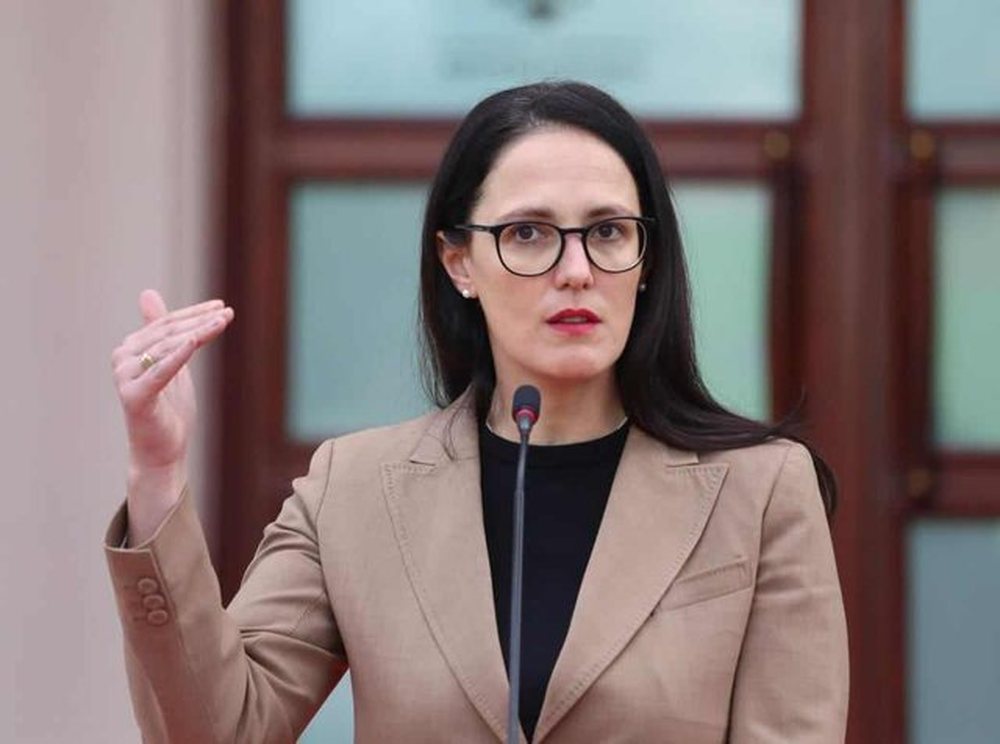
The Economy Minister argues that Albania’s growth rests on tourism, investment and reform, not criminal capital. As the “narco-state” narrative spreads through European politics and media, we ask Delina Ibrahimaj whether the government’s numbers are finally strong enough—and transparent enough—to settle the argument.
by Albatros Rexhaj (Tirana)
Introduction
There is a number in Albania that has stopped being economics and become politics: 94 lek to the euro.
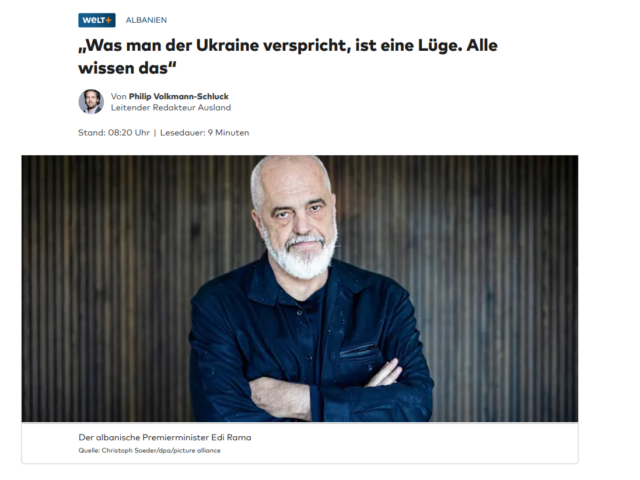
To Gjergj Erebara of BIRN, whose June essay has circulated through every Albanian newsroom and Tirana based diplomats desk, the currency’s decade long climb is a crime chart. Dirty money in the order of hundreds of millions of euros a year, converted into concrete, inflating the lek past its merits, strangling the farms and the garment workshops through an exchange rate the underworld built. To the government, the same chart is a portrait of arrival: twelve million visitors, 5.7 billion euros in travel receipts, more than a billion in remittances, investment stock at record levels, an economy the world has finally begun to buy in bulk.
Both cannot be right about the proportion. And between them sits the void both sides argue across: the data that would settle the question exists in fragments across four institutions, and has never been published in a form that settles anything. The cash share of property transactions, for which no series exists. The financial intelligence unit’s volumes and typologies, reported annually but never in analyzable form. The unexplained residual in the external accounts, printed as a line item and never decomposed. The financing sources of the construction boom, glimpsed only through survey fragments. Four numbers, none of them secret, none of them assembled.
Delina Ibrahimaj is, by any measure, the right minister for this question. She ran INSTAT, the statistical institute whose tables both sides of this argument now throw at each other. She ran the tax administration, the institution that sees the economy’s declared money. She ran the Ministry of Finance and Economy. She has spent her career inside the machinery that produces the numbers Albania publishes, which makes her accountable, in a way no other minister is, for the numbers it does not.
The question has never been more political. The protests on the boulevard are in their fifth week. The narco state label is doing industrial shifts in Belgrade’s information space and finds a ready market in every European due diligence department that prices Albania by reputation rather than by accounts. SPAK’s files keep proving both halves of the paradox at once: the money is real, and it keeps getting caught.
In this edition of HARD TALKS, we press Minister Ibrahimaj on what the IMF’s own study does and does not prove, on what the prosecution files put in the concrete, on the workers the strong lek has priced out, and on the four unassembled numbers.
The Interview
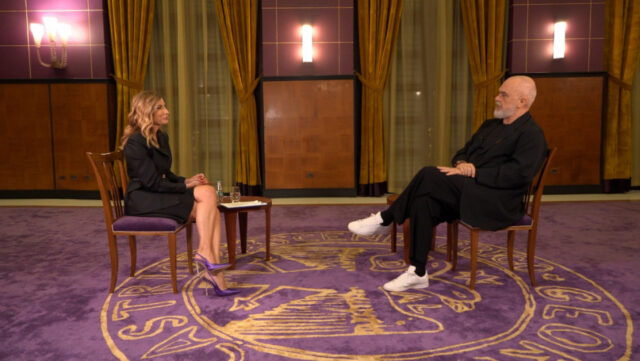
TIRANA EXAMINER: Minister, let me put the thesis to you in its strongest form, because it is not a tabloid invention. Gjergj Erebara is an economic journalist with a graduate degree in economic history, and his claim is specific: dirty money in the order of hundreds of millions of euros a year, converted into concrete, strengthening the lek, suffocating agriculture and manufacturing through the exchange rate. Not “the economy runs on cocaine.” Hundreds of millions a year, with tragic consequences. What in that sentence is false?
IBRAHIMAJ: Nothing in it is false, and that is precisely why his conclusion collapses. Take his number, hundreds of millions a year, and I will take mine: 8.5 billion euros of documented foreign currency entered this economy in 2025 through tourism, remittances and investment, recorded transaction by transaction in the balance of payments. Now do the division he never does. His figure is a single digit percentage of the flows. You cannot suffocate agriculture, strengthen a currency for a decade and rebuild a skyline with the rounding error of the tourism account. He has written an accurate crime story and drawn a macroeconomic conclusion from it. The crime story I accept. The macroeconomics is his, not the evidence’s.
TE: Convenient arithmetic. The IMF, whom you cite constantly, estimates that risk shocks have appreciated the lek by around 11 percent since 2021 and identifies episodes in 2024 when fundamental pressures were compounded by non fundamental forces. Your own central bank spent 2.6 percent of GDP buying euros in nine months of 2024, nearly triple the year before. If this is all sunshine and fundamentals, Minister, what exactly was the Bank of Albania leaning against?
IBRAHIMAJ: Read the paper you are quoting to me. The IMF calls those risk shocks what they are: portfolio flows responding to a falling country risk premium, estimated with declared uncertainty, and it still concludes, in its own words, that the appreciation has been driven largely by fundamentals. Now ask yourself why Albania’s risk premium fell after 2021. We exited the FATF grey list. We opened accession clusters. Public debt fell year after year. When investors reprice a country because its institutions improved, the currency appreciates, and your question invites me to apologize for it. I decline. As for the Bank of Albania, a central bank managing a shallow market against a flood of legal inflows is not evidence of dark money; it is evidence of abundance. Show me the launderer who announces himself to the IMF’s variance decomposition, and I will show you a model that cannot exist. What the model can measure, it attributes to tourism. What it cannot measure, it bounds at 5 to 15 percent. Erebara’s entire thesis lives inside the error term of my strongest critic’s own analysis. That is not my problem. It is his.
TE: Then let us leave models for prosecutions, where the error term has names. SPAK has traced cocaine proceeds in the tens of millions into specific Tirana buildings. The Vlora seizure files describe criminal groups operating simultaneously as investors and as guarantors of property titles. Your own special prosecution says the money is in the concrete. On what basis do you sit here and tell me the buildings are clean?
IBRAHIMAJ: I have never told you the buildings are clean. I am telling you the country is not built from the dirty ones, and the files you are waving prove my point, not yours. Ask yourself what those files are. They are the largest anti laundering operations in this country’s history, carried to former ministers, to sitting officials, to the towers themselves, sequestered floor by floor. A captured state does not produce that record. You are reading the immune system’s activity and diagnosing it as the infection. And notice what the files actually quantify: the most productive network ever prosecuted here traced roughly 150 million euros into Albanian assets across years of peak operation. That is the ceiling the evidence supports, and it fits inside a single quarter of tourism receipts. So yes, the money exists. Yes, we find it. Yes, we take it. And no, an economy of thirty billion euros does not stand on it. Those four sentences are not in tension. They are the whole picture, and only the fourth one is disputed, by people who have never done the division.
TE: BIRN’s property investigation found what it called an anomaly: construction and prices rising while sales contracts, adjusted for demography, shrink. Economists describe construction firms with negligible declared turnover suddenly permitted for projects worth tens of millions, ownership chains running through offshore shells. Registration is not origin, Minister. A presale contract records that money arrived, not where it was earned. Which institution in this country verifies origin, at what rate, and where are its numbers?
IBRAHIMAJ: Registration is not origin, correct, and no economy on this planet certifies origin euro by euro. The international standard is risk based: supervised banks, obligated notaries, a financial intelligence unit, and prosecutors, and on that standard we are assessed by three separate international bodies whose verdicts I will come to. As for the anomaly, it dissolves the moment you handle the data honestly. Presale contracts are not captured as sales in the cadastre series, so a market shifting to presales shows falling “sales” by construction. Adjusting demand by resident population is methodologically blind in a country where 15 percent of purchases are non residents and the diaspora buys in the cities of origin. And if the sector were the laundromat of legend, explain its trajectory: permits down from 1,336 to 1,158 in one year, permitted surface down 47.8 percent, projected investment down 30.5 percent. Laundries do not shut their machines because the water got expensive. Businesses do.
TE: Let me bring you down from the aggregates to a person, because your statistics have victims. The garment workshops are below 2 percent of value added and falling. Livestock farming is in structural decline. A fifty year old seamstress in Berat does not become a hotel receptionist because your GDP grew 3.7 percent. Name me one funded, targeted program for the workers your own tables show being priced out. Name it.
IBRAHIMAJ: I will name it, and it is bigger than any retraining scheme you expected me to recite: it is called the 50,000 lek minimum wage, and her wage nearly doubling in four years is not the tragedy in your question, it is the policy. Be honest with your readers about what the fason model was: foreign fabric, foreign design, Albanian hands at the lowest wage in Europe, and the entire margin was her poverty. That model is leaving for Egypt for one reason, and it is not cocaine: we stopped being the cheapest place in Europe to sew a sleeve, on purpose. Portugal lived this, Romania lived this, Bulgaria lived this, and nobody prescribed them a narcotics investigation; they were called success stories. The seamstress in Berat is why tourism revenue matters: 5.7 billion euros dispersed across guesthouses, kitchens and services in exactly the towns the workshops are leaving, hiring at wages the fason owner never paid her. I will not perform grief for the end of five euro daily labor. I refuse the premise. The strong lek did not price her out of a future. It priced Albania out of a past.
TE: A columnist in this magazine argued that dirty money, by building faster, likely kept apartment prices lower than they would otherwise be. Your notes argue prices need no criminal explanation at all. Both defenses of your government cannot be true, Minister. Pick one: the money is not there, or it is there and subsidized the housing supply.
IBRAHIMAJ: You are asking me to referee a columnist against the balance of payments, and I choose the balance of payments without hesitation. The government’s position is the data: Tirana at 2,000 to 2,200 euros per square meter sits below Belgrade, below Zagreb, level with Prishtina, and half of the euro terms increase since 2015 is the mechanical effect of the exchange rate on assets priced in euros while costs run in lek. Prices that need no exotic explanation get none from me. Your columnist’s counterfactual is his intellectual property, and a newspaper that publishes a range of arguments is doing its job; a minister who adopts every argument published in her defense would be doing yours. I hold the position the evidence holds. He is welcome to his model.
TE: Then let us test how much evidence you are actually willing to show. You wave the FATF delisting and the MONEYVAL ratings, but delisting certifies completion of an action plan and those ratings measure technical compliance, laws on paper, not effectiveness. Meanwhile the numbers that would settle this argument in an afternoon are unpublished: the cash share of property transactions, the FIU’s typologies and volumes in usable form, net errors and omissions decomposed, construction financing sources. A colleague of ours wrote that a government confident of the arithmetic would publish the arithmetic, and that every silent year the void is filled by the tallest tower on the boulevard, with Belgrade’s and Tehran’s information operations working the void for free. Four numbers, Minister. Where are they?
IBRAHIMAJ: On the certificates, I will not let the goalposts move: the action plan FATF certified was precisely the effectiveness agenda, beneficial ownership, financial investigations, sanctions, and the trajectory across FATF, MONEYVAL and the European Commission points one direction across a decade. If the capture thesis were true, name me the indicator that would be improving. There is none, and that silence belongs to my critics, not to me. On the four numbers: your colleague is right about the arithmetic and wrong about the confidence, and I will prove it the only way that counts. The ministry will publish, before the end of this year, a consolidated annual transparency report: cash share of property transactions from the notarial and banking data, the FIU’s volumes and typologies in analyzable form, the decomposition of net errors and omissions with the Bank of Albania, and a construction financing survey. Not because the void is our fault; the data has existed in fragments across four institutions, and fragments are what myths eat. Because I have done the division, I have no reason to hide the numerator. Print that, hold me to the date, and let us see whose thesis survives publication. Mine does not fear the number. Ask Erebara if his does.
TE: Words are cheap in July, Minister, and ministries have promised reports before. Last question, and it is the one your critics can answer about their own thesis: what evidence, specifically, would change your mind? What would make Delina Ibrahimaj stand up and say the drug money thesis was right?
IBRAHIMAJ: A precise question deserves a precise answer, so write it down and keep it. Three indicators, any one of them. A documented, prosecuted annual laundered inflow in the billions rather than the hundreds of millions, sustained across years. A rising cash share of property transactions once we publish it, instead of the falling one the banking data implies. A widening unexplained residual in the external accounts once we decompose it. Those are my falsifiers, on the record, tied to the very report I have just committed to. If the numbers turn against me, I will be the first to say so, because unlike the myth, I have put myself in a position to be proven wrong. Now the exercise runs the other way. Twelve million visitors, 8.5 billion in documented flows, a decade of confiscations, three international assessments, and the question your side has never answered: what number would make the myth let go? If the answer is none, then it was never economics. It was theology, and this ministry does not do theology. It does arithmetic, and in December it will do it in public.
TE: Minister, thank you.