by Aurel Cara (Tirana)
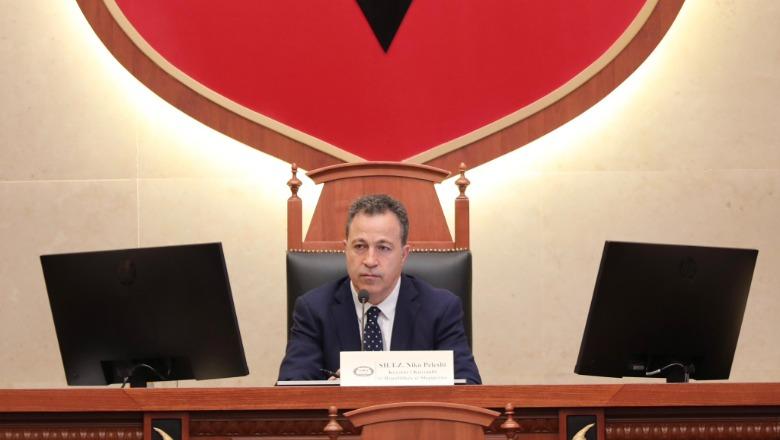
On May 14, the Parliament adopted a joint resolution on Albania’s accession to the European Union. Both the majority and the opposition described the vote as a moment of rare cross-party agreement on the country’s most consequential foreign-policy commitment. The description is accurate, within the narrow band that the negotiations defined. The comparison between the Democratic Party’s original draft and the adopted text shows the precise width of that band, and the precise content of what was kept outside it.
The architecture of the opposition’s draft survived almost intact. The preamble references to the Copenhagen criteria, to the European Commission’s 2025 country report, to the AFET report of 5 May 2026, to the OSCE/ODIHR final report on the 11 May 2025 parliamentary elections, all remained. The substantive commitments on parliamentary oversight, on the legislative and supervisory functions, on the anti-corruption fight, on media freedom and protection of journalists, on dialogue with civil society, all survived in form. The opposition secured, in the structure of the document, the diagnostic frame it had brought to the negotiation.
What did not survive was every formulation that named a specific Albanian fact.
The V-Dem 2026 classification of Albania as an “electoral autocracy” was removed. The Transparency International 2025 reference to the eleven-place decline in the Corruption Perceptions Index was removed. The Reporters Without Borders 2025 reference to the three-place decline in the media freedom index was removed. The OSCE/ODIHR language identifying specific irregularities at the May 2025 elections (misuse of state resources for party purposes, blurring of state and party structures, vote-buying, pressure on the administration and on voters, violation of vote secrecy) was reduced to a general invocation of the report.
“Separation of state from party” was removed. “Mandatory respect for Constitutional Court rulings” was replaced with “full support for constitutional institutions and/or those created by law, including guarantee of the implementation of their lawful decisions,” a formulation that ratifies the obligation in principle while removing the language that would have made non-compliance specifically nameable. “Real inclusion of the opposition in parliamentary functions and in significant national decision-making” was replaced with a softer commitment by the majority to “ensure the conditions for full participation of the opposition in parliamentary activity.” “Effective separation of powers” was replaced with “guaranteeing mechanisms of checks and balances.”
The reference to OLAF findings on the IPARD II programme was removed entirely. The opposition’s demand for transparency and competition in concessions, strategic investments, and urban planning was reduced to a generic line on public procurement. The opposition’s demand for “clear measures for separation of the state from the parties or from the party in power, prevention of misuse of public resources for electoral purposes, and depoliticisation of the administration” was removed and replaced with a line on accelerating administrative reform and applying merit-based recruitment.
A pattern is visible. The opposition was allowed to keep every reference to external instruments. OSCE/ODIHR, the Venice Commission, the European Commission, the European Parliament, the EU acquis, all survived. The opposition was not allowed to keep any formulation that named a domestic Albanian fact. The Balluku case was not named, although it is the inflection point of the IBAR-period diplomatic record. Constitutional Court non-compliance was not specified, although the constitutional record of the past year consists precisely of selective compliance. The misuse of state resources at the May 2025 elections was not described, although the OSCE/ODIHR report describes it explicitly. OLAF was not invoked, although OLAF’s findings are part of the EU’s own institutional record.
Sali Berisha, asked publicly about the absent name, answered with what amounts to a confession of the negotiating logic. Balluku, he said, was implied. The name was not used because otherwise there would have been no consensus. The statement is true on both counts. The implication is real. The veto on naming was also real.
The majority conceded to external referees. The majority did not concede to domestic naming. The resolution gestures toward European standards while declining to identify the specific Albanian failures those standards are designed to address. The document that arrives in Brussels will read as evidence of cross-party consensus on the European path. The document that the Albanian public reads is the same document with one piece of context added: the consensus was built by removing every formulation that would have created an obligation to act on a specific case.
The opposition’s calculation was not unreasonable. A diagnostic frame inside a formal parliamentary instrument carries documentary weight. The OSCE/ODIHR and Venice Commission references are now formal commitments of the Parliament itself. The European Commission’s next progress report and the European Parliament’s next country resolution can both cite the Parliament’s own document. The opposition gained a record. What it lost was the operative content of that record.
The majority’s calculation was more straightforward. A joint resolution on the EU path, adopted on the eve of the IBAR decision, is exactly the kind of evidence that responds to the question European partners ask about institutional functioning. That the resolution names nothing in particular does not weaken its diplomatic function, because the diplomatic function is the consensus itself, not the content. The Balluku case will continue to move through its own track. The Constitutional Court tensions will continue to move through their own track. The May 2025 election findings will continue to move through their own track. The resolution, by design, intersects with none of them.
What it does intersect with is the question Brussels will have to answer about Albania over the coming year. Is consensus of this kind sufficient evidence of democratic functioning, or is the absence of operative naming itself diagnostic? The European Commission can answer either way. The Parliament, with this text, has made the choice harder rather than easier. The document is real, the consensus that produced it is real, and the content that was removed from it is also real. The removal was the price of the consensus.
The distinction the resolution refuses to make is the one that matters. A document that names the structural problem without naming the specific failure has the shape of accountability without the substance of it. The opposition gained a frame. The country gained a paragraph in the next progress report. The case that triggered the negotiation continues, unnamed, on its own timeline.