By Ylli Manjani, former Minister of Justice of Albania
Anyone who follows the course of criminal proceedings with care, particularly those before the Special Court against Corruption and Organized Crime (GJKKO), will notice a phenomenon that is becoming ever more frequent: trials drag on to the maximum limits of pretrial detention. In more than a few cases, those limits expire and the defendants are released while the trial has yet to conclude, and sometimes has not even genuinely entered the examination of the merits.
This happens despite the fact that during the investigative phase the courts confirm the prosecution’s requests almost automatically. In practice, over 98 percent of requests for precautionary measures, interceptions, searches or seizures are granted.
The question is simple: how is it possible that a prosecution which wins nearly every procedural battle during the investigation fails when the case goes to trial?
The answer lies in the distinction between the investigative phase and the trial phase.
During the investigation, the court rules chiefly on the prosecution’s procedural requests. Decisions on arrest, interception, search or seizure are often taken in the absence of a genuinely adversarial process. At that stage, the court sitting in chambers does not yet test the real strength of the evidence, only the formal sufficiency of the prosecutor’s claims.
But the moment the case passes to trial on the merits, the rules change. Suspicions and police reports no longer suffice. Memoranda and operational intelligence no longer suffice. The court is obliged to conduct a full process in which every piece of evidence is subjected to debate, every act is checked for its lawfulness and every claim is tested against the defense.
From the very opening of the trial, scrutiny of the investigative process itself begins. That is precisely where the problems surface. Debates over the nullity of acts, over the violation of constitutional rights, over the manner in which evidence was obtained or over the absence of procedural guarantees consume considerable time. And this does not happen by accident. It happens because many investigative files arrive in court with serious procedural deficiencies.
Then comes the examination of evidence, the hearing of witnesses, the admission of documents, the expert reports, the inspection of material evidence, the arguments of the parties and, at the end, the closing submissions. This is a process that demands its own time.
But there is a logical connection here that cannot be hidden.
The more complete, the clearer and the more lawful the investigative file, the faster the trial proceeds. When the evidence is strong and has been gathered in accordance with the law, the debates narrow and the process moves naturally.
Conversely, the longer a trial stretches on account of disputes over the validity of evidence, the more the weakness of the investigation is exposed.
So when we see detainees released today because the legal deadlines have expired, we should not rush to blame the courts alone. The phenomenon is, above all, a mirror of the poor quality of the investigations.
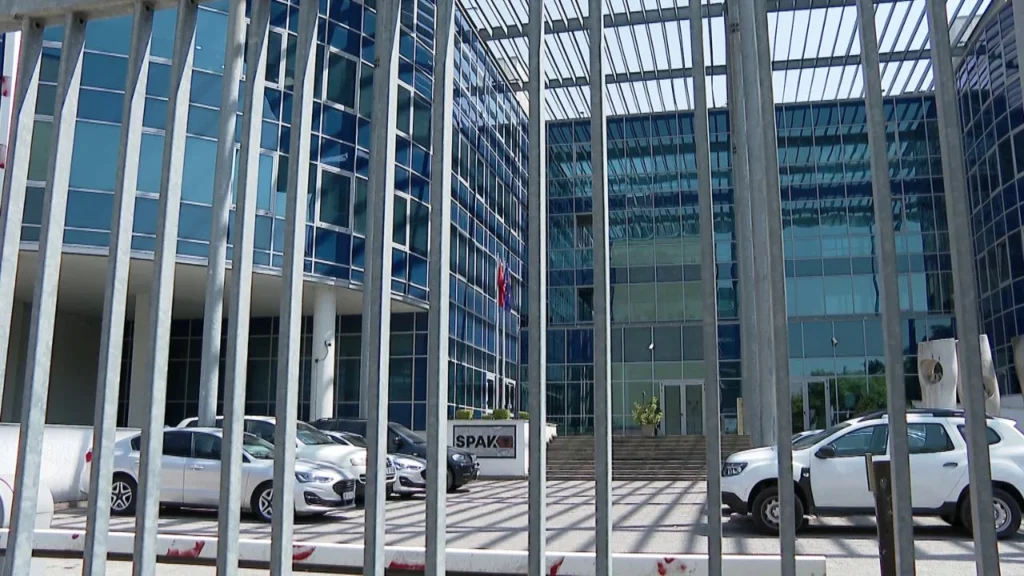
The prosecution, SPAK most of all, which takes pride only in arrests, remains the most problematic link in the criminal process, despite all the political and institutional investment made in the name of the justice reform. Files built on strong, lawful and sufficient evidence are rare. In their place one often finds entire volumes of police reports, subjective interpretations, transcripts of conversations, articles from news portals and hypotheses that never manage to become judicial evidence.
When the moment comes to prove the charges by the standards of due process, many prosecutors are left without arguments. And then time works against them.
The paradox is greater still: even with a judicial practice extraordinarily tolerant of the prosecution’s requests during the investigation, detainees are released all the same, because the cases cannot be concluded within the deadlines the law itself has set.
The courts even lend the prosecution a hand when, during trial, they suspend detention deadlines haphazardly and without legitimate cause. Yet the deadlines expire anyway. If we counted the cases with arbitrarily suspended deadlines as well, the number of those released from detention would be far greater, and the prosecution’s failure would be even more visible.
This logic is the clearest indicator that the problem is not a shortage of arrests but a shortage of quality investigations. It is also strong proof of the thesis that the arrests have been ABUSIVE and UNJUSTIFIED.
The attempt to blame defense lawyers for the delays at trial is legal folklore from prosecutors who have forgotten how to examine a crime scene.
A prosecution that investigates well has no need to hold a person in detention indefinitely. It builds a strong file, takes it swiftly to trial and secures a decision within normal deadlines.
A prosecution that does not investigate as it should seeks to substitute detention time for the evidence it lacks.
So if anyone is looking for a serious measure by which to judge the work of prosecutors, they should not count arrests and press conferences. They should look at how many files are concluded to high procedural standards, and how many detainees are released because the state was unable to try them within the deadlines the law itself has fixed.
Because expired detention deadlines are not a victory for the defendants. They are the proof of the prosecution’s failure.
Ylli Manjani is an Albanian lawyer and former Minister of Justice (2015–2017). Since his dismissal from government — after which he publicly accused the Rama administration of protecting corruption — he has returned to legal practice and become one of Albania’s most persistent critics of prosecutorial overreach and judicial dysfunction.