by Mero Baze (Tirana)
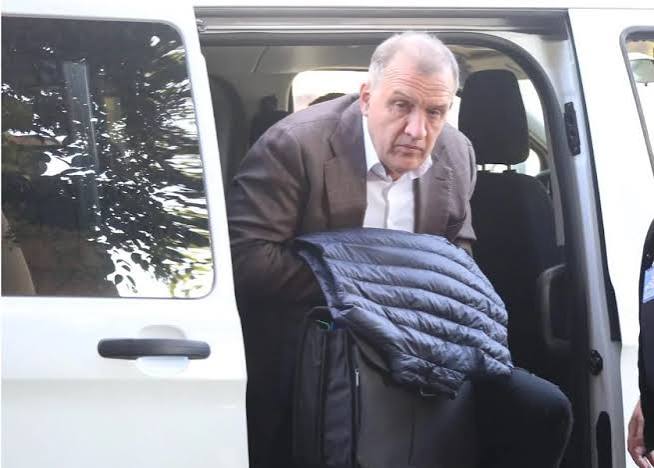
After 25 months in a cell, the Special Anti-Corruption Court ordered the immediate release of Ilir Beqaj in the courtroom itself, because the deadlines for pre-trial detention had expired. The campaign of demonisation against the former health minister, which followed his indictment over the sterilisation concession and then his arrest on corruption charges over his post at the head of the agency coordinating European aid in Albania, fused into a single operation whose object was the victimisation of a senior political figure, without waiting for any serious real fact that would justify an arrest.
Many Albanians believe Ilir Beqaj is in prison over the sterilisation contract. In that case, in fact, he has not only refused an abbreviated trial, convinced of his innocence, but is defending himself by severing his case from the other defendants, over a service that raised the standard of Albanian medicine.
He was arrested without warning in July 2024, on a charge visibly concocted in haste, since they could find nothing serious enough to arrest him for over the sterilisation concession. It looked like a gift to those who had been demanding his arrest.
The accusations, published through the journalists SPAK uses for propaganda, under the direction of its former public relations chief, were as ridiculous as they were monstrous. The portals at SPAK’s command were told, for instance, that he had paid three operators for the same service, and two other businessmen were dragged down with him, arrested on that suspicion.
What was actually at issue was a three-day international conference in Albania, where the service had been divided among three companies: billed not for the same service, but for the same type of service. An aide of his, tangled up in the management of the invoices, very nearly dragged before the courts, exactly as happened to Beqaj, two well-known artists who run restaurant businesses. The conspiracy built around him, and the mud thrown at him, reached its peak when he was treated as a senior official implicated in corruption, when in fact he was not a senior official at all, but the director of a state agency, a post which under our legal framework does not appear on the list of senior officials. For that reason the case was not even within SPAK’s jurisdiction. But SPAK’s appetite for a political statistic, together with a professional competence as exemplary as its competence at propaganda, kept him in a cell for 25 months, on a charge which the court, a few days ago, sent back to SPAK to be completed, because nothing in the propaganda matches the facts.
All the while he went on sitting in a cell as a former senior official, without ever having been one, and as a man accused of corruption, without any concrete evidence.
Against this backdrop they also opened an asset vetting against him, in the hope that this way he would never leave prison at all.
Today we are at the point where the sterilisation trial has concluded: several executives found responsible accepted the abbreviated procedure and were convicted, while Ilir Beqaj has accepted neither the abbreviated trial nor the charge, and is continuing his battle in the hope that justice will recognise his innocence. The banal case fabricated against him, meanwhile, failed for 25 months to find facts, ran past the detention deadlines, and today they were forced to move him to house arrest, a measure still unjustified and unjust, but one that reflects his political persecution as a victim of the new justice.
The story of Ilir Beqaj is the true X-ray of the failure of the Justice Reform, of the use of SPAK as a repressive instrument for producing political statistics, and, at the same time, concrete proof of its professional incompetence and of the barbaric humiliation it has inflicted through the Goebbelsian propaganda of its public relations office, which has, disgracefully, squandered the money of Western governments, above all the British.
Alongside him, collaborators and participants in the public activities of the agency he led are still being held under investigation and under public vilification, in the hope that some fact might yet be extracted from them.
The fact that he was held for 25 months in pre-trial detention without a single convincing piece of evidence of corruption, and that after those 25 months the court was forced to return the file for reinvestigation while his detention deadlines had already run out, shows clearly that what we have had so far is a punitive campaign serving political needs, not justice.
It is the same situation, indeed a graver one, with Erion Veliaj. Furious that the operation to carry him from his office to a cell is failing, after the Constitutional Court ruling that in practice orders his release, they pushed his trial back to 15 September and have begun combing through his travel per diems in search of some violation, since they cannot manage to construct a serious charge against the man they seized from his office.
All of this shows that SPAK’s only real balance sheet under the Justice Reform is its failure to prove the politically driven charges brought against senior officials, and its failure to carry a single process through to the end professionally, proceeding instead by popular trial and by the repressive use of pre-trial detention.
But instead of showing responsibility, when it was to them that we entrusted the fate of the Justice Reform, they showed irresponsibility, busying themselves with the physical fates of their victims, and in doing so turned the Justice Reform itself into their first and greatest victim.
Originally published in Albanian as: Rasti Ilir Beqaj si radiografi e dështimit të drejtësisë së re