(Narco-Patriots, continued)
The political class diagnoses a narco-state. The data point instead to tourism, capital flows, and a textbook case of structural transformation.
by Keler Marku (Washington D.C)
In the first installment of the alleged narco-tale — narco-money in cooperation with the narco-state building narco-resorts for narco-influencers to take Instagram photos of the narco-free flamingos — we explained in Microeconomics 101 terms why money laundering via construction could not have raised apartment prices in Albania; on the contrary, it likely lowered them relative to a but-for world. In this Macroeconomics 101 installment we’ll take on the next exhibit put forth by the prosecutorial-all-knowing analysts in the public square trial against the “narco-traitors.” “The drug money has choked this country so much that even the euro has fallen off the cliff! From 140 a decade ago to merely 94 lek today! Look at what you did you monsters! You killed the fasons (apparel manufacturing), our most beloved bright future, the industry that dresses half of Europe! Don’t you know we were just about to turn their warehouses into NVIDIA chip factories?!” The prosecutorial declaration is succinctly summarized here, with less pathos of course, but you get the gist. The lek’s climb against the euro is read as a crime chart: drug money strengthened the local currency, manufacturing and agriculture withered, housing became unreachable. The prescribed cure follows from the diagnosis. Liberate the country from the flow of drug money, and the currency will relax, the farms will bloom, and prices will cool. Doktor Adhamudhi smiles. Proudly. His disciples have surpassed him: the old man merely amputated limbs; they go straight for the head. In their deep investigatory journey, they even consulted the old books of economics, where they dug up the diagnosis. The Dutch Disease. The remedy: Cut the head, now!
Before checking the remedy, it is worth recalling what the Dutch Disease actually is. The name comes from the Netherlands after the 1959 discovery of the Groningen gas field. Gas exports brought a windfall of foreign currency; spending it raised the price of everything that could not be imported, from housing to haircuts; the currency appreciated in real terms; and Dutch manufacturers found themselves priced out of world markets. The economics literature that ex post tries to rationalize what happened to the Dutch makes two assumptions that seemed reasonable enough for the context of the time. First, there is a windfall, something the world suddenly pays you for. Second, the sector that shrinks is the one that carries future productivity growth, while the sectors that expand carry little. If either assumption fails, the “disease” is just an economy reallocating toward what it does best, which is also known as trade. If the Dutch, poor souls, barely survived the disease, can you imagine what happens if we catch it in Albania? Cut the head, now!
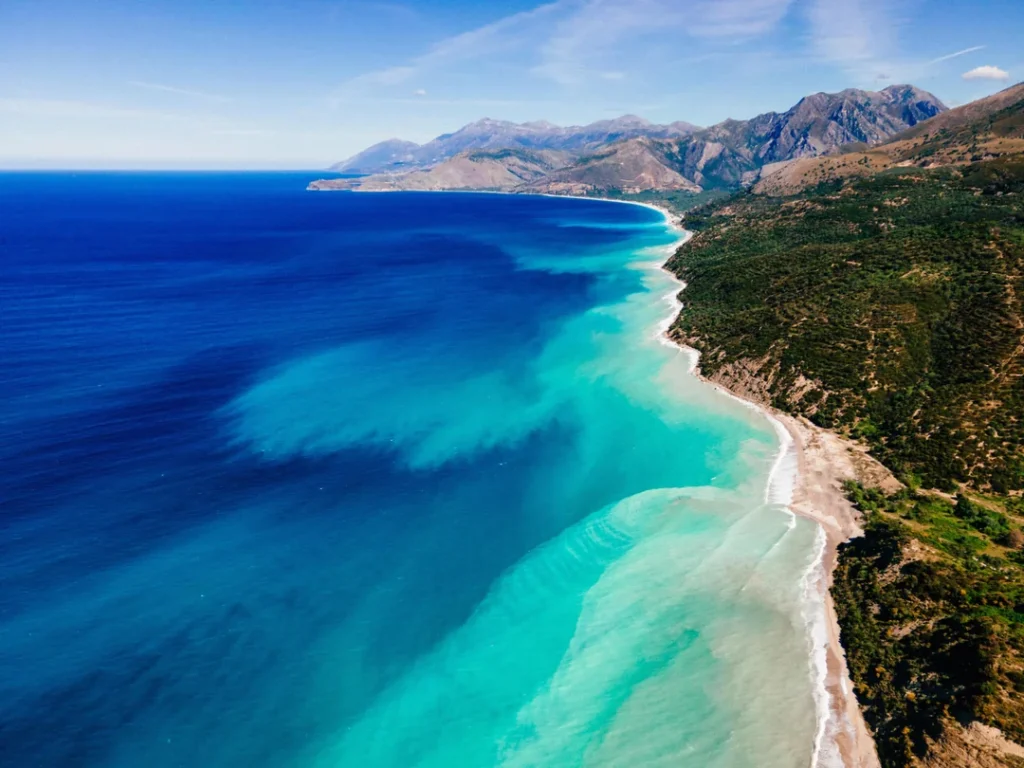
So what is Albania’s windfall? Is it cocaine? The answer is no. To channel Clinton’s 1992 campaign: “It’s the demand, stupid.” Nearly twelve million foreign visitors came in 2024, in a country of 2.4 million residents, leaving behind five billion euros in travel receipts, a fifth more than the year before. The IMF, an institution not famous for romance, concluded in its latest review that the lek’s appreciation is driven mainly by fundamentals, with speculative financial flows playing a modest role, while Albania posts some of the fastest growth in Europe. The central bank bought close to a billion euros in 2024 and more than a billion in 2025 trying to slow the climb, and the lek strengthened anyway. Currencies do that when the world has begun buying, in bulk, something the country sells. Albania’s Groningen field is not cocaine. It is the coastline, and everything around it that twelve million people show up to consume. What Albania sells now is Albania.
There is another point worth mentioning, while importing the Dutch analogy. Unlike gas, Albania’s windfall was not stumbled upon. It was chosen, deliberately. Developing tourism has been a national strategic priority for a decade, sustained across the political spectrum: a published national tourism strategy, priority policy documents, and an infrastructure program of highways, airports and city upgrades whose benefits accrue to residents, with a legitimate case for large spillover effects into other industries. The bet is upmarket coastal tourism, the dish to be served: South of France with a Balkan kick. It is built on assets that make the country more livable in the process. Whether this is a “low-growth sector” destined to starve the productive economy is an assumption hidden, sneakily or inadvertently, in the Adhamudhian diagnosis. An assumption that, in Albania’s context, in my view, is dubious. Turning suspicion into evidence requires careful analysis of the data, which I have not done. But the burden of proof always falls on the prosecution. I doubt they’ll find it, and they should get the basics right before digging deeper, but I’ll gladly read whatever they present.
Where does the dirty money fit? It is simply an accommodating supply response. If the windfall is tourism demand, capital was coming anyway: diaspora savings, foreign investors, eventually EU accession money. Dirty money simply arrived first, because it does not wait for credit committees. Removing it changes the financing of the boom, not its fundamentals. That is a deceleration, not a cure. And, uncomfortable as it is to write down, by building faster it has kept apartment prices lower than they would otherwise be, not higher.
None of this dismisses the Dutch disease. It is a real mechanism and a genuinely hard economics problem to tease out empirically, which is exactly why the economics literature contains a plethora of papers analyzing it in specific contexts, making the appropriate assumptions that fit the country and the moment. Assumptions in the literature are clearly spelled out, and mechanisms of impact are carefully modelled, with prescriptions that come with detailed warning labels on proper use and potential side effects, but unfortunately often written in the Greek letters of modern economics and not in English. Too boring for a slogan. Cut the head, now!
The Dutch disease is a fascinating active area of research in macroeconomics, not just for small countries like Albania. American economists are actively publishing papers arguing that foreign capital flowing into the United States might have slowed innovation there, a financial resource curse for the largest economy on earth. The problem is hard everywhere, and it is an active area of research precisely because nobody has an all-encompassing remedy. The remedies vary with the particular circumstances: some call for sovereign funds, some for sectoral subsidies, others for different monetary policy. What’s the right answer for Albania if the data shows that there are Dutch disease concerns? I don’t know; we’ll have to dive deep into the papers and data for that. But bringing up the Dutch disease in the current political discourse is less a useful diagnosis than another gust of wind under the comforter of the Dutch oven that Tirana’s boulevard has become.
This is not an insult, but a call for opening a window to air out the place a bit. There are bigger, more urgent issues we face that genuinely need in-depth analysis and clear-headed decision making, as best as we can manage. A refresher on the Dutch disease papers is a must for policymakers, not just in Albania but in all countries. Let’s revisit the national strategy of tourism as the main economic driver of the country, especially if we think we have the capabilities to compete in the AI race among countries. Is there a rebalancing between sectors of the economy we need to consider? Should we consider subsidies for current producers in the export sectors, apparel manufacturing and agriculture, so they can withstand the tourism demand shock? Maybe, although I don’t see these as better long-term growth bets than the current version of tourism in Albania. Should we consider a different monetary policy? I don’t know, but I don’t see anything wrong with the current approach, and apparently neither does the IMF, which has looked at this more closely. What should we do in AI? What part of the AI stack should we focus on? Build datacenters? Train the workforce differently? Where’s our comparative advantage? These are the real questions we are wasting time not discussing while we suffocate under the comforter. So let’s pull it off, open that window, and breathe a bit. Let’s leave the narco-patriots out of the public square debate; they have enough trouble ahead with their real prosecutions. And let’s stop pulling tomorrow’s protest slogan from a Narcos Netflix episode. This matters. It’s time for evolution, not revolution.
Keler Marku, PhD, is an economist based in Washington, DC.